Share:
63 views
#تكلسات أوتار الكتف #Calcific Shoulder Tendinopathy
Understanding Calcific Shoulder Tendinopathy
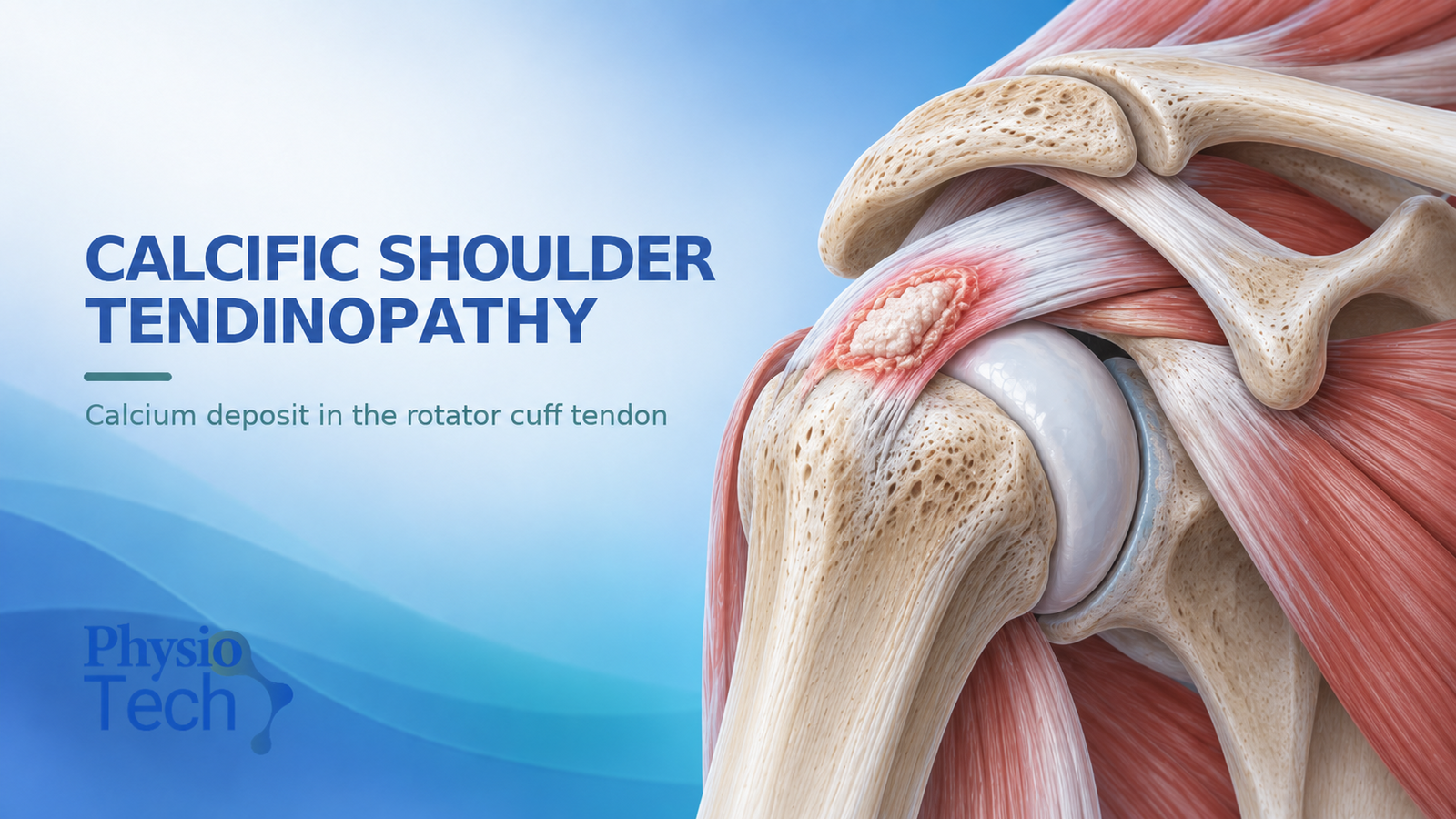
Calcific tendinopathy involves calcium deposits within a rotator-cuff tendon, commonly supraspinatus. Deposits may be painless on imaging or become highly irritable, limiting elevation and sleep. Assessment therefore combines symptom behaviour, movement, strength and shoulder tests with X-ray or ultrasound when indicated; the scan alone does not prove the pain source.
Symptoms and Clinical Assessment
Management may include temporary modification of highly provocative activity, comfortable motion, and progressive rotator-cuff, scapular and overhead loading. Manual therapy, therapeutic ultrasound or electrotherapy may support selected short-term goals but do not replace exercise and graded loading. PhysioTech does not currently provide shockwave therapy. When ultrasound-guided lavage, injection or surgical opinion is appropriate, referral is preferable to unrealistic promises.
Physiotherapy and Rehabilitation
Progressive Exercise and Load Management
Seek medical review after major trauma, sudden weakness, inability to elevate the arm, fever with a red hot joint, or severe unremitting symptoms. Many cases do not need surgery; decisions depend on symptoms, function and response rather than deposit size alone.
Return to Activity and When Medical Review Is Important
CTA: If shoulder pain persists or imaging reports calcification, book an assessment at PhysioTech Clinic in Zahraa El Maadi to connect the scan with your symptoms and function.