Share:
101 views
#شد الرقبة #غضروف الرقبة #ألم الرقبة #تنميل الذراع #Cervical traction
Cervical Traction: Does It Treat a Herniated Disc?
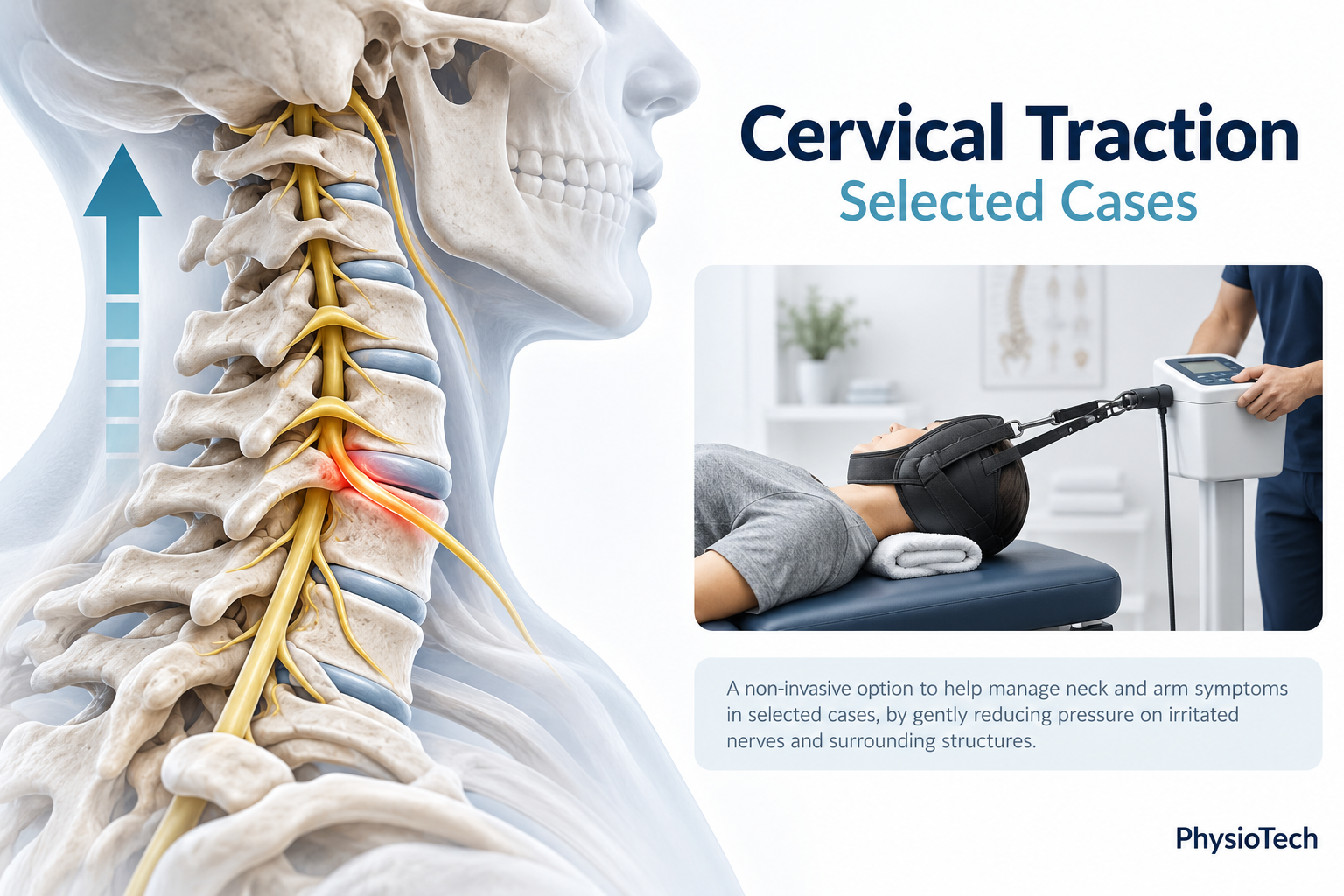
اقرأ المقال بالعربيةCervical traction applies a gentle, measured pulling force to the neck, manually or with a clinical device. It may reduce symptoms in selected people with neck pain that travels into the arm or nerve-root irritation. It does not push a herniated disc permanently back into place or repair imaging changes.
How can traction help?
Temporary unloading may reduce sensitivity in irritated structures, ease muscle guarding and make movement more comfortable. Responses vary. Some people notice less arm pain or tingling during or after treatment; others gain no benefit or feel worse. Traction should therefore be a monitored treatment trial after assessment, not a routine treatment for every neck complaint.
Who may benefit?
A therapist may consider traction when pain travels from the neck into the shoulder or arm and the examination suggests cervical radiculopathy, particularly when unloading positions reduce symptoms. Diagnosis is not based on imaging alone. History, neck movement, strength, sensation, reflexes and neurological tests all matter.
Does traction cure a cervical disc problem?
No. The realistic aim is symptom modification and better ability to move and exercise. Disc changes are common on scans in people without pain, and symptoms may improve while imaging looks unchanged. Care should focus on sleep, work, function, neck and shoulder capacity and neurological safety.
When should traction be avoided?
Medical assessment is needed when fracture, cervical instability, severe osteoporosis, tumour, infection, active inflammatory disease or a vascular problem is suspected. Traction should not be used when signs suggest spinal-cord involvement, such as worsening hand or leg weakness, gait disturbance, loss of coordination, or bladder or bowel change. Severe dizziness, fainting, double vision or an unusual headache also requires assessment.
What happens during treatment?
The clinician selects position, angle, force and duration according to the examination and response. A low dose is commonly tested first while arm pain, tingling and dizziness are monitored. Increasing distal symptoms, weakness or dizziness means the technique is stopped and reassessed.
Traction is not a complete program
When appropriate, traction is usually combined with education, activity modification, neck mobility, deep neck and shoulder-blade strengthening and selected nerve-mobility exercises. Manual therapy, electrotherapy or kinesio taping may be added. Sustainable recovery depends on progressive function, not permanent reliance on a machine.
PhysioTech assessment
At PhysioTech in Zahraa El Maadi, Cairo, we first determine whether symptoms appear muscular, joint-related or neurological and screen for contraindications. If traction is suitable, it is dosed carefully and linked to home exercise and a return-to-activity plan. We do not promise to “put the disc back”; we focus on safe, measurable improvement.
Frequently asked questions
When should I notice a result?
A temporary change may occur during one session, but usefulness is judged across visits by pain and function. No response means the plan should change.
Are home traction devices safe?
Use should follow assessment, dosing advice and education, especially when numbness or weakness is present.
Can traction replace exercise?
No. It is generally an adjunct, while exercise and load management build longer-term capacity.
This article is educational and does not replace individual medical assessment.


