Share:
38 views
#ألم وتر البايسبس عند الكوع #Distal Biceps Tendon Pain #علاج طبيعي #physiotherapy #Cairo
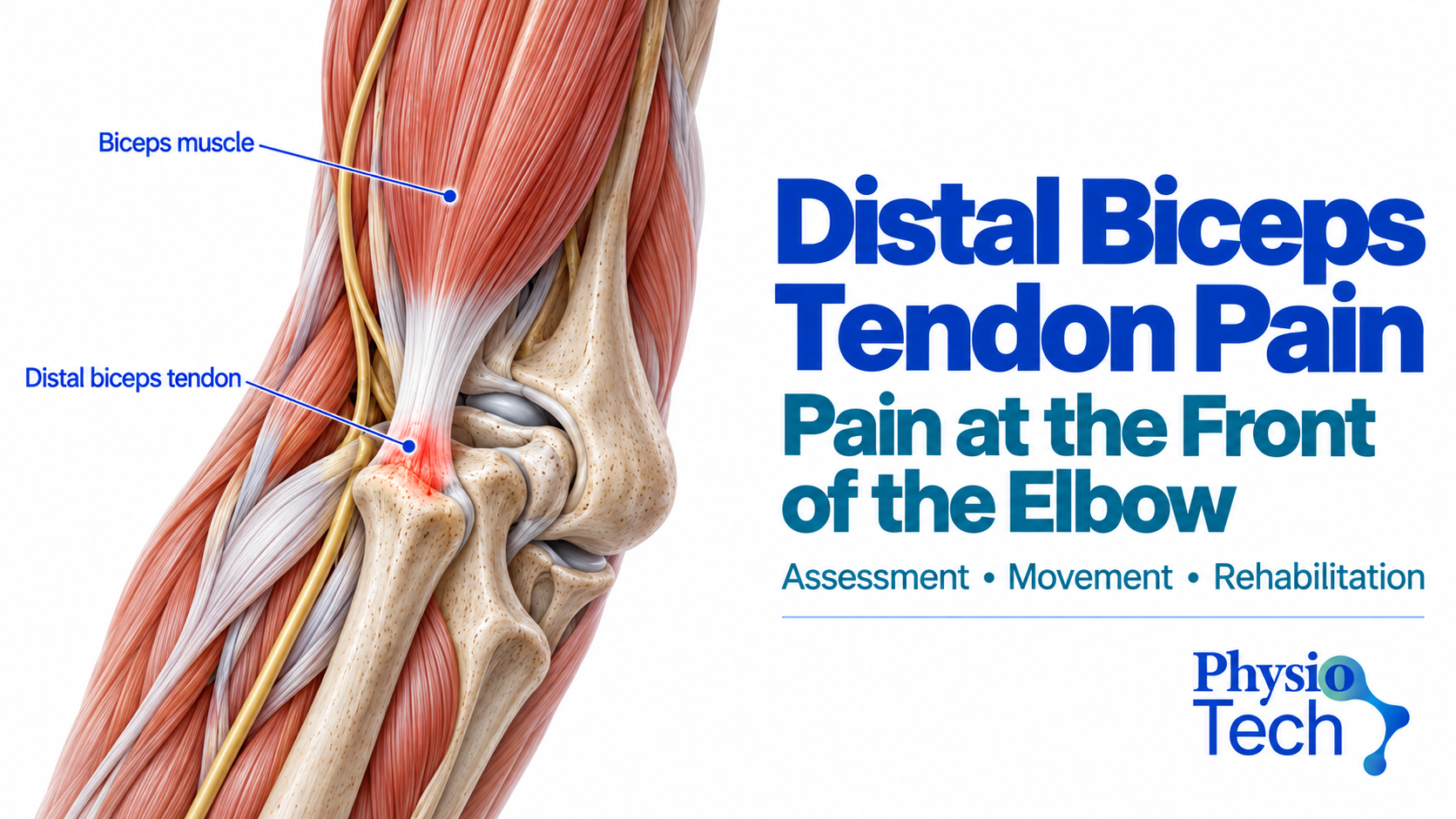
Front-of-elbow pain while carrying, curling or turning the palm upward may involve the distal biceps tendon. A gradual overload presentation differs from an acute event with a pop, bruising and obvious weakness.
اقرأ المقال بالعربيةAt PhysioTech Clinic in Zahraa El Maadi, Cairo, treatment begins with the person’s symptoms, examination and goals rather than a technique selected from a label alone. This article explains the condition but cannot replace an individual assessment or urgent care when warning signs are present.
What Is Happening Anatomically?
The tendon attaches the biceps to the radius near the elbow and contributes strongly to elbow flexion and forearm supination. Pulling and lifting loads can irritate it, especially after a sudden training increase.
Symptoms You May Notice
Pain with resisted flexion or supination, tenderness near the attachment and reduced pulling tolerance are common. Acute rupture may cause a pop, bruising, altered muscle contour and marked supination weakness.
How Is It Assessed?
We clarify the mechanism, load, bruising and deformity, then examine contour, motion, flexion and supination strength and other elbow structures. Suspected complete rupture needs early orthopaedic assessment and imaging when advised.
PhysioTech does not base a diagnosis on one scan or one provocative test. We connect the history with symptom distribution, daily behaviour, movement, strength and the tasks that matter to the patient. The working explanation is tested by changing a relevant load or treatment variable and measuring the response. If the findings do not fit, the diagnosis is reconsidered and the examination or referral pathway is expanded. This keeps care focused on measurable function rather than a label alone.
What Else Could It Be?
Brachialis pain, elbow joint disorders, median nerve symptoms and proximal biceps or shoulder conditions can overlap. Pain location alone is insufficient.
Physiotherapy at PhysioTech
First Phase: Settle Provocative Load
For gradual tendinopathy, highly provocative lifting is temporarily reduced before flexion and supination loading progress from light or isometric work to heavier and faster tasks. Post-operative rehabilitation follows surgeon protection and loading timelines.
Next Phase: Build Capacity
As symptoms settle, therapeutic exercise and graded loading are matched to your response and goals. Manual or symptom-relief techniques may be adjuncts when useful, but they do not replace exercise and repeated assessment. Recovery timelines vary with severity, health and activity demands.
A key part of the plan is understanding why each exercise was chosen and how to adjust its dose. We agree on an acceptable symptom response during activity, review what happens later and the next day, and then progress repetitions, resistance, speed or task complexity. The aim is not to make a session feel hard; it is to improve capacity for work, walking and sport without an escalating flare. Sleep, workload distribution, general health and confidence in movement are considered alongside local tissue loading.
Progression and Return to Activity
How Do We Measure Progress?
Load tolerance, supination strength, next-day pain and return to meaningful tasks are tracked. Sustainable improvement matters more than rushing toward a target weight.
What Can You Do at Home?
Avoid repeatedly testing a maximum lift. Use a comfortable grip and range for now and maintain exercises that do not cause a persistent flare.
When Is Medical Review Needed?
An acute pop with bruising, deformity or substantial strength loss needs prompt orthopaedic assessment, particularly for an active person.
Frequently Asked Questions
Is all front-of-elbow pain a tear?
No. Gradual tendinopathy is possible, while an acute bruising and weakness pattern needs early review.
Must I stop the gym?
Load is usually modified and rebuilt unless a tear or surgical restriction changes the plan.
Is pain during exercise acceptable?
The acceptable dose is individual and should not create escalating post-exercise symptoms.
Book an Assessment in Cairo
If Distal Biceps Tendon Pain affects work, walking or sport, book an individual assessment at PhysioTech in Zahraa El Maadi, Cairo. We explain the findings clearly, decide whether physiotherapy is appropriate or medical referral is needed, and agree on measurable rehabilitation goals.