Share:
95 views
#Dry Needling #الإبر الجافة #Myofascial Pain #Trigger Points #Physiotherapy Cairo #علاج طبيعي #Zahraa El Maadi #Manual Therapy
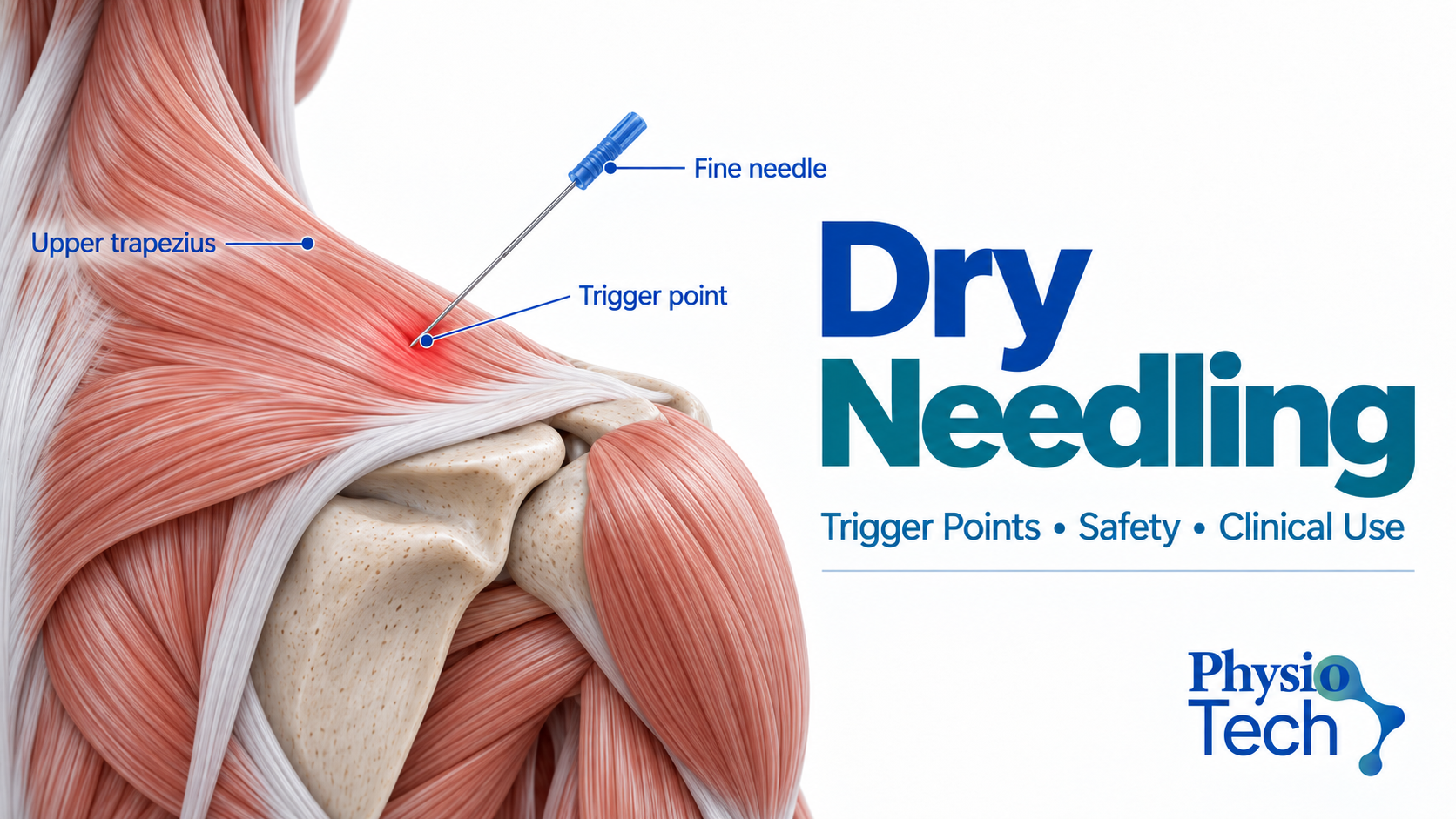
Dry needling is a technique in which a trained physiotherapist inserts a thin, sterile solid-filament needle through the skin into selected muscles or other targeted tissues following a clinical assessment. No medication is injected, which is why the technique is described as “dry.” It may be used as one part of a broader rehabilitation plan to reduce pain and improve movement when clinically appropriate.
Dry needling is not a miracle treatment, it is not suitable for every patient, and it does not replace exercise therapy or treatment of the underlying problem. The decision to use it depends on the diagnosis, symptom irritability, medical history and the patient’s goals.
What is the difference between dry needling and an injection?
Dry needling uses a fine solid needle without injecting medication. A medical injection introduces a drug, anaesthetic or another substance and follows a different clinical procedure and scope of practice. Dry needling also differs from acupuncture in its clinical reasoning and point selection: physiotherapists target tissues according to a musculoskeletal and functional assessment.
How may dry needling work?
There is no single mechanism that explains every reported effect. Mechanical stimulation of a targeted tissue may create local and nervous-system changes that can reduce pain sensitivity or temporarily improve movement in some patients. A brief local twitch response may occur, but it is not required for every successful treatment.
Any short-term reduction in pain or improvement in motion should create an opportunity to progress the most important parts of rehabilitation: mobility, strength, movement control and appropriate load management.
Which conditions may benefit?
A physiotherapist may consider dry needling in selected presentations such as:
• Neck or shoulder pain with a relevant muscular component.
• Myofascial pain and clinically identified tender points.
• Some cases of tennis elbow or forearm pain.
• Selected presentations of low-back, hip or thigh pain.
• Muscular pain in athletes when assessment identifies an appropriate target.
• Pain-related movement restriction in suitable cases.
Pain in a body region does not automatically mean dry needling is appropriate. Symptoms can arise from a joint, tendon, nerve or another medical cause. Assessment therefore comes before the technique and should identify red flags or a need for medical referral.
Is dry needling effective?
Systematic reviews suggest that dry needling may reduce pain and improve pressure-pain sensitivity or movement in the short term for some people with musculoskeletal pain. However, evidence quality and treatment response vary, and long-term benefits are not consistently established. Some trials have found little or no meaningful additional functional benefit when dry needling is added to good guideline-based physiotherapy.
For this reason, PhysioTech uses dry needling as a possible adjunct rather than a complete treatment plan. Sustainable progress relies on education, exercise therapy, progressive loading and addressing the factors that maintain or repeatedly trigger symptoms.
What should you expect during a session?
The physiotherapist first reviews your medical history and examines movement, strength and symptom behaviour. After explaining the goal, potential benefits and risks and obtaining consent, the skin is cleaned and sterile single-use needles are used. You may feel a small prick, a brief ache or a short muscle twitch.
Temporary post-treatment soreness similar to exercise soreness or a small bruise may occur. Tell the clinician immediately if you feel faint, develop unusual pain, shortness of breath or any concerning symptom.
Is dry needling safe?
Dry needling is generally considered a low-risk procedure when performed by a properly trained practitioner using accurate anatomical knowledge and infection-control procedures. Common minor effects include temporary soreness, small amounts of bleeding and bruising. Rare but potentially serious complications can occur, particularly near the chest, nerves or blood vessels, which is why clinician training, anatomical precision and patient selection matter.
When may it be unsuitable?
Treatment may be avoided or postponed when there is an infection or open wound at the treatment site, a significant bleeding disorder, medication that increases bleeding risk, severe needle anxiety, or an inability to provide informed consent. Pregnancy, immune suppression and certain chronic conditions may require additional precautions and an individual risk assessment. Tell your physiotherapist about all medication and relevant medical conditions.
Dry needling at PhysioTech Clinic
At PhysioTech Clinic in Zahraa El Maadi, Cairo, treatment starts with an individual assessment of the likely pain source, mobility, strength, neural signs and functional demands. When dry needling is suitable, it may be combined with manual therapy, exercise therapy and kinesio taping. Electrotherapy or therapeutic ultrasound may also be considered in selected cases as adjuncts.
Not every treatment is used for every patient. The plan is based on examination findings, the stage of the condition and the patient’s goal of returning to daily activity, work or sport. The aim is not simply to mask pain for a few hours, but to improve function and reduce the factors that contribute to recurrence.
Frequently asked questions
Does dry needling hurt?
The experience varies. Some people feel a brief prick, ache or muscle twitch. Discomfort is usually limited and temporary.
How many sessions will I need?
There is no fixed number. It depends on the diagnosis, response and rehabilitation goals. Benefit should be reassessed rather than repeating the technique automatically.
Can I exercise afterwards?
This depends on the treated area and your response. Light movement or prescribed exercises may be appropriate, while heavy loading may be modified if soreness is significant.
Can dry needling cure a herniated disc?
No. Dry needling does not move a disc back into place. It may sometimes address a related muscular component after a full assessment, but it does not replace rehabilitation or medical referral when important neurological signs are present.
When should you arrange an assessment?
Arrange a physiotherapy assessment if pain persists, restricts movement, sleep or work, repeatedly returns during sport, or is accompanied by weakness or numbness. Seek urgent medical care for progressive weakness, loss of bladder or bowel control, chest pain, shortness of breath, unexplained fever or a major injury.
Scientific references
Gattie E, et al. Effectiveness of Trigger Point Dry Needling for Musculoskeletal Conditions. JOSPT. 2017.
Blanpied PR, et al. Neck Pain Clinical Practice Guidelines. JOSPT. 2017.
Stieven FF, et al. Dry Needling Combined With Guideline-Based Physical Therapy for Chronic Neck Pain. JOSPT. 2020.
Sánchez-Montoya M, et al. Safety and Anatomical Accuracy of Dry Needling Procedures. Journal of Manual & Manipulative Therapy. 2026.


