Share:
53 views
#الوقاية من السقوط لكبار السن #تمارين التوازن #علاج طبيعي كبار السن #تقوية كبار السن #تأهيل المشي
Falls are not an inevitable part of ageing. They commonly reflect several interacting factors that can be modified, including strength and balance loss, dizziness, medication effects, vision, footwear and home hazards. Early assessment matters after a first fall or when fear begins to limit walking.
اقرأ المقال بالعربيةWhat Is the Condition?
Fall prevention identifies personal risk factors and builds a combined plan for balance, strength, gait, environment and general health. One exercise or generic handout cannot address every presentation.
Fear of falling can reduce activity, leading to further deconditioning and greater risk. The goal is to rebuild safety and confidence progressively rather than force unsafe tasks.
Common Symptoms
• Repeated trips or using furniture for support.
• Difficulty rising from a chair or climbing stairs.
• Slow gait or instability while turning.
• Dizziness or fear of walking outside alone.
Causes and Contributing Factors
Leg weakness, balance or sensory changes, postural hypotension, medication effects, reduced vision, foot and footwear problems, inactivity, pain and home hazards may combine.
Conditions That Can Look Similar
Cardiovascular syncope, vestibular disorders, neuropathy, stroke and medication reactions must be considered; not every fall is simply muscle weakness.
How PhysioTech Assesses the Problem
We review falls, medication, dizziness, vision and home factors, then assess walking speed, chair rise, balance in safe positions, leg strength, turning and obstacle negotiation.
Baseline and Follow-up Measures
Timed Up and Go when appropriate, chair-rise performance, gait speed, side-by-side or semi-tandem standing, dual-task walking and confidence with daily mobility.
When Imaging or Medical Referral May Be Needed
Loss of consciousness, chest pain, palpitations, sudden weakness, speech change, symptomatic head injury, suspected fracture or unexplained sudden falls need prompt medical care.
Balance Rehabilitation and Fall Prevention Treatment
1. Understand the Problem and Manage Load
Explain personal risk factors and prioritise changes. This may include medical review of medication, blood pressure and vision, better lighting and removal of loose rugs or bathroom and stair hazards.
2. Restore Movement and Control
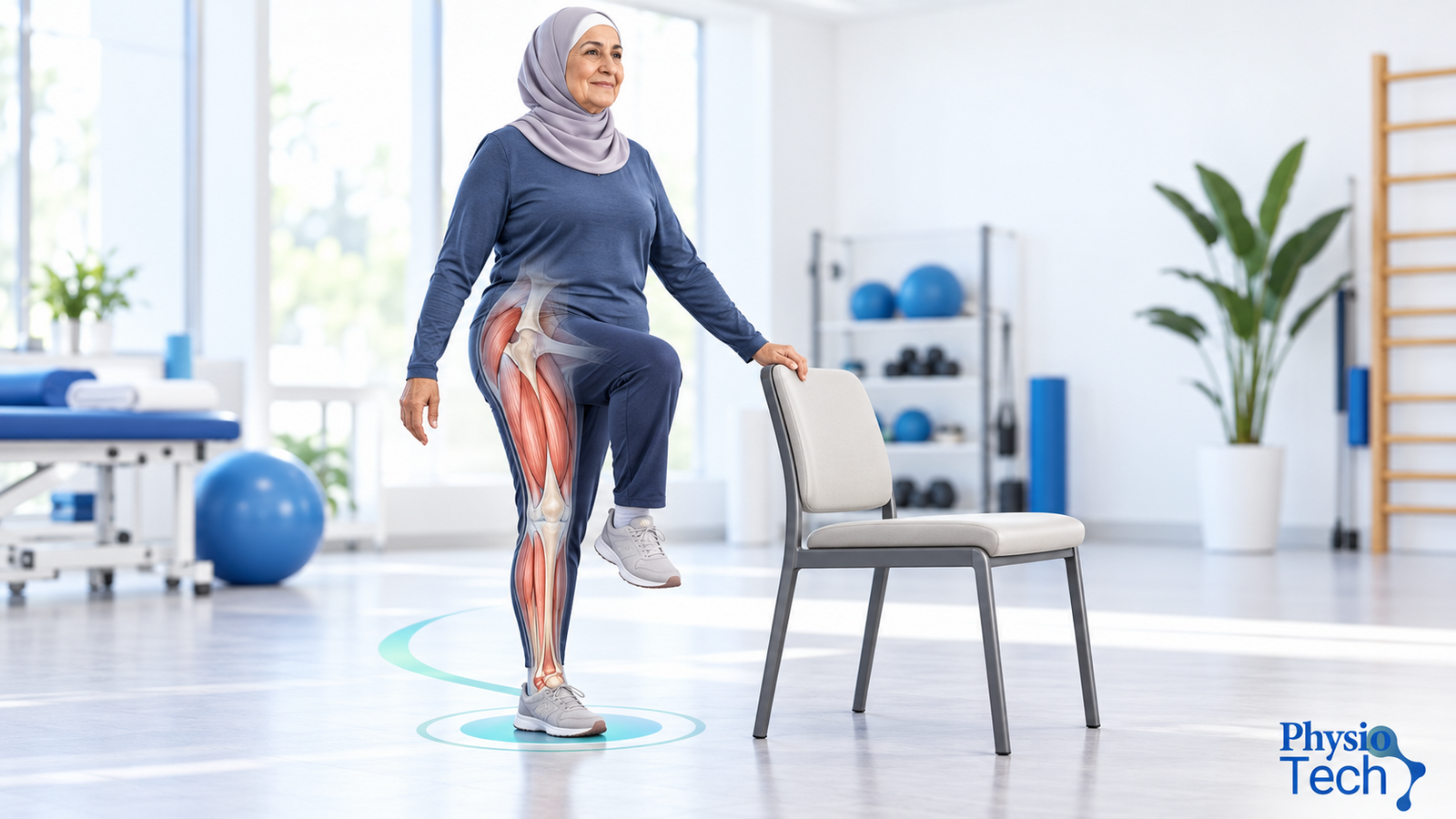
Begin balance work at a safe level beside stable support, then progress foot positions, turning, speed and surfaces. Safety and supervision matter more than copying a generic video.
3. Build Strength and Capacity
Strengthen the hips, thighs and calves and practise chair rise and stairs. Regular progressive practice is more valuable than an occasional exhausting session.
4. Return to Activity and Reduce Recurrence
Connect exercise to real walking indoors and outdoors. When a mobility aid is needed, its height and technique are trained and reviewed; the aim is safe independence rather than unexamined permanent dependence.
The PhysioTech Treatment Philosophy in Cairo
At PhysioTech Clinic in Zahraa El Maadi, Cairo, treatment starts with assessment rather than an imaging label alone. We connect symptoms with movement, strength, capacity and the demands of work or sport, record clear baseline measures and retest them. Manual therapy or other adjuncts may be used for a defined purpose, but education, therapeutic exercise, graded loading and safe return to activity remain central.
We neither stop movement because of fear nor ignore risk. The programme provides enough challenge to improve balance and strength within a safe environment and involves family when helpful without removing the person’s independence.
Red Flags That Need Prompt Medical Review
Loss of consciousness, chest pain or palpitations before a fall, sudden weakness or numbness, speech difficulty, severe headache after a head impact, inability to bear weight or visible deformity.
Frequently Asked Questions
Are falls normal with age?
No. Age changes some abilities, but many risk factors are modifiable and a targeted plan can reduce risk.
Does a walker fix poor balance?
It can improve safety when indicated, but it does not replace cause assessment, strength and balance training, and it must be fitted and taught correctly.
Are home balance exercises safe?
They can be after the right level and support are selected. A high-risk person should be assessed before training alone.
When Should You Book an Assessment?
After a fall or increasing unsteadiness, book a balance and strength assessment at PhysioTech Clinic in Zahraa El Maadi, Cairo, for a safe individual plan.


