Share:
38 views
#تيبس إصبع القدم الكبير #Hallux rigidus #خشونة إصبع القدم #ألم الإصبع الكبير #علاج القدم
Pain and stiffness at the big-toe joint can make brisk walking, running and stairs harder, especially during push-off. Hallux rigidus is osteoarthritis and reduced motion at the first metatarsophalangeal joint, but imaging severity alone does not determine pain or the best plan.
اقرأ المقال بالعربيةWhat Is the Condition?
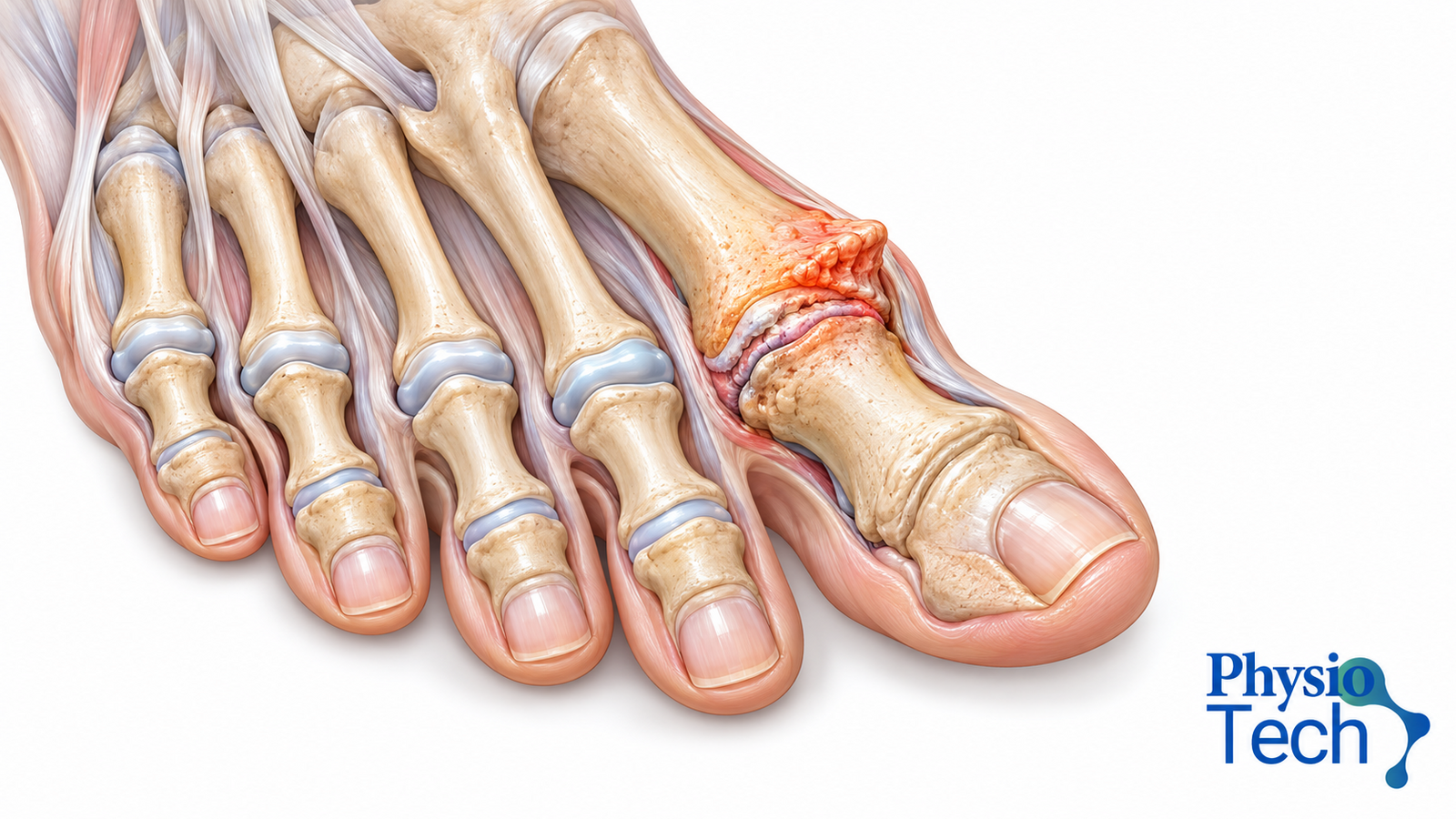
The first MTP joint allows the big toe to extend as the body moves over the foot. Osteoarthritis may reduce cartilage thickness and create a dorsal osteophyte that limits motion and rubs inside footwear.
Conservative care does not regrow cartilage. It aims to reduce irritation, improve load distribution and help the person walk and exercise more comfortably without forcing a painful end range.
Common Symptoms
• Pain or stiffness at the base of the big toe.
• Pain during push-off in walking or running.
• A dorsal bump or swelling that rubs against shoes.
• Changing the walking pattern to avoid the toe.
Causes and Contributing Factors
Joint shape, previous injury, repeated loading, age and foot mechanics may interact. A sudden increase in running or narrow, very flexible footwear may raise irritation, but no single factor explains every case.
Conditions That Can Look Similar
Gout, inflammatory arthritis, turf-toe injury, stress fracture, tendon pain and sesamoid disorders beneath the big toe.
How PhysioTech Assesses the Problem
We map tenderness and swelling, compare active and passive motion, observe walking and push-off, and review footwear and recent load. Calf and intrinsic foot strength and ankle mobility are also assessed.
Baseline and Follow-up Measures
Big-toe extension, pain during a defined task, walking time, calf strength, heel-raise ability and the next-day response to loading.
When Imaging or Medical Referral May Be Needed
Sudden hot red swelling, severe night pain, a wound or sensory loss, major trauma with inability to bear weight, or failure of a well-delivered conservative plan may require medical review and imaging.
Hallux Rigidus Treatment and Physiotherapy
1. Understand the Problem and Manage Load
Temporarily modify painful distances, speed and surfaces. A wider toe box, stiffer sole or rocker shoe may reduce painful joint motion in selected cases; supports are chosen individually rather than prescribed automatically.
2. Restore Movement and Control
Use tolerable big-toe and ankle movement without repeatedly forcing a painful end range. Improving ankle function and the overall step can reduce unnecessary forefoot demand.
3. Build Strength and Capacity
Progress foot, calf and hip strength, then rebuild heel raises and push-off according to irritability. Dosage is adjusted using the exercise response and next-day symptoms.
4. Return to Activity and Reduce Recurrence
Increase walking, running and stairs with objective movement and capacity targets. If major functional limits persist despite good conservative care, foot-and-ankle medical options can be discussed.
The PhysioTech Treatment Philosophy in Cairo
At PhysioTech Clinic in Zahraa El Maadi, Cairo, treatment starts with assessment rather than an imaging label alone. We connect symptoms with movement, strength, capacity and the demands of work or sport, record clear baseline measures and retest them. Manual therapy or other adjuncts may be used for a defined purpose, but education, therapeutic exercise, graded loading and safe return to activity remain central.
We do not chase a perfect toe-motion number when it is not required for the patient’s goal. The useful combination of available motion, footwear, strength and load distribution matters more.
Red Flags That Need Prompt Medical Review
Marked heat, redness and sudden swelling, fever, a non-healing wound, colour change, sensory loss, severe post-traumatic pain or complete inability to bear weight.
Frequently Asked Questions
Does hallux rigidus always require surgery?
No. Many people improve function with footwear, load modification and exercise. Surgery is considered when pain and disability remain substantial despite appropriate conservative care.
Should I force the toe to stretch?
Aggressive stretching may irritate an arthritic joint. Range and dosage should match the presentation and goals.
Must I stop walking?
Usually not. Distance, pace and footwear are adjusted while monitoring response unless a red flag is present.
When Should You Book an Assessment?
If big-toe pain is changing your gait or limiting sport, book an assessment at PhysioTech Clinic in Zahraa El Maadi, Cairo, to identify the main drivers and build a graded plan.


