Share:
102 views
#انحشار مفصل الفخذ #FAI syndrome #hip pain #physiotherapy Maadi
Femoroacetabular impingement syndrome may cause deep groin pain during sitting, squatting or sport. An imaging finding alone does not establish the diagnosis; symptoms, clinical signs and imaging must be interpreted together.
اقرأ المقال بالعربيةWhat Is Hip Impingement?
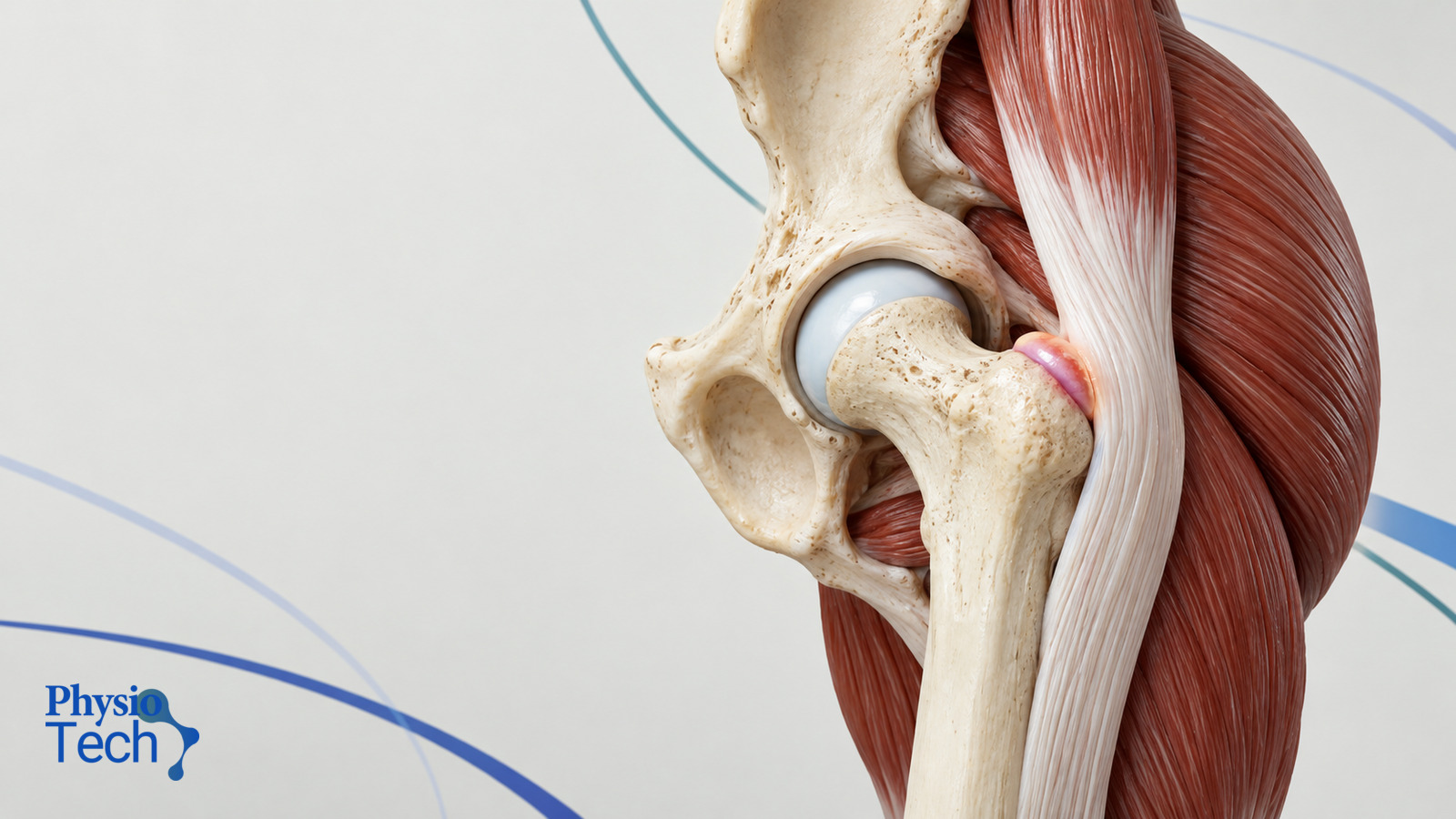
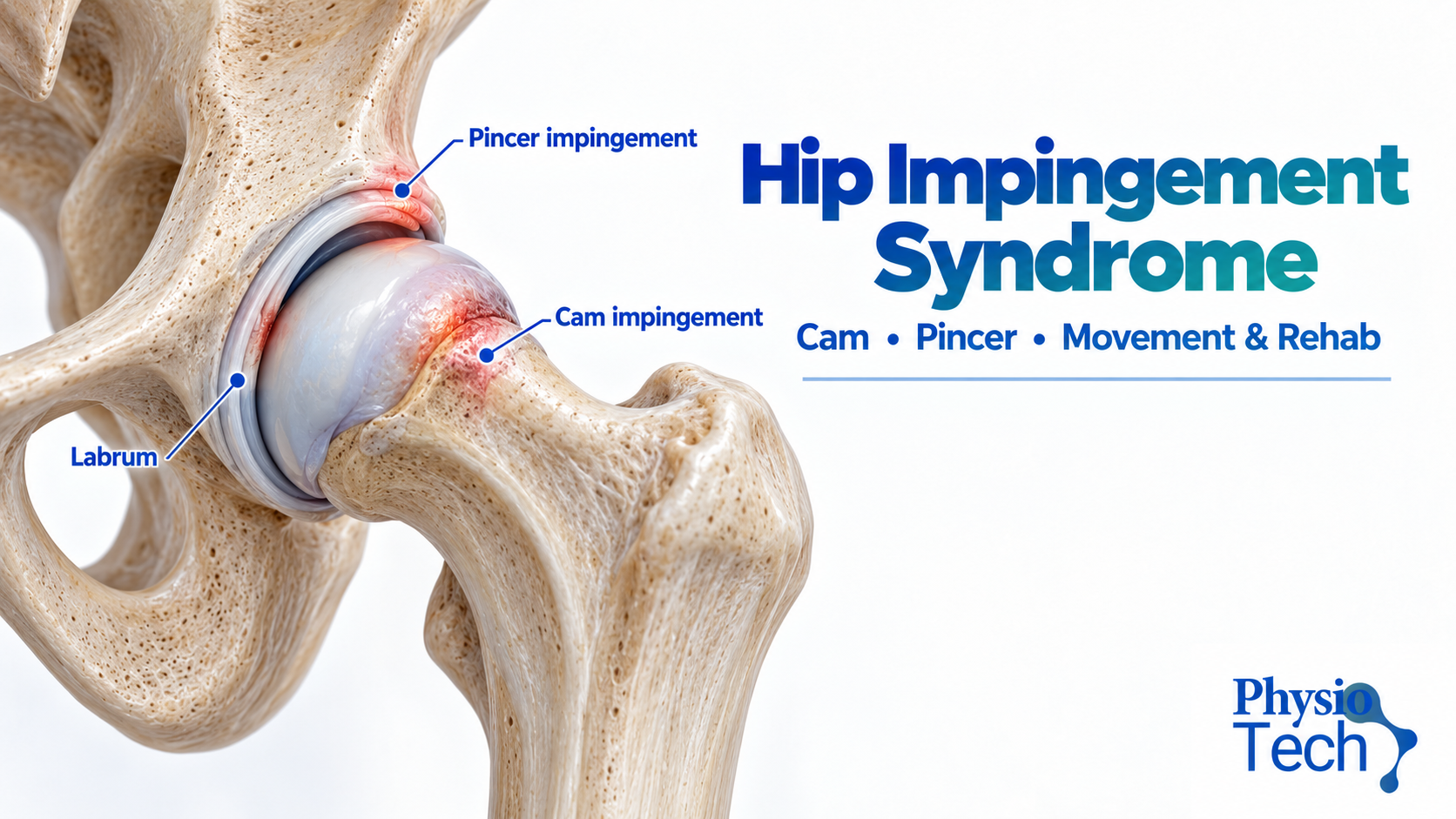
FAI syndrome describes earlier contact between the femoral head-neck region and the acetabular rim during deep hip flexion or rotation. Cam morphology, pincer morphology or both may be present, including in people without pain.
Common Symptoms
1. Deep groin or anterior hip pain.
2. Pain during prolonged sitting or driving.
3. Symptoms with deep squatting or pivoting.
4. Reduced hip motion.
5. Pain during running or change-of-direction sport.
6. Clicking or catching in some cases.
Assessment at PhysioTech
Assessment reviews pain location and behaviour, hip motion, hip and trunk strength, and movement during squatting, walking or running. Provocation tests are interpreted as part of a group of findings, with screening of the lumbar spine and sacroiliac region when indicated.
Can FAI Be Managed Without Surgery?
Conservative care and rehabilitation are suitable options for many patients, but no program can guarantee that surgery will be avoided. Treatment may include temporary activity modification, tolerable mobility work, progressive hip and trunk strengthening, movement retraining and staged return to sport with planned reassessment.
Manual Therapy and Adjunct Treatments
Manual therapy may support short-term symptom relief or a relevant mobility goal. Kinesio taping, electrotherapy or therapeutic ultrasound may be considered for a defined supporting purpose. They do not alter bone shape and do not replace assessment, exercise and graded loading. Dry needling is not a primary treatment for an intra-articular problem.
When to Seek Medical Review
Seek medical assessment after significant trauma, inability to bear weight, rapidly increasing pain, fever or systemic illness, unusual night pain or marked loss of motion.
Frequently Asked Questions
Does Every Cam or Pincer Finding Need Treatment?
No. These shapes may be present without symptoms. Treatment is directed at the clinical syndrome, not the image alone.
Should I Stop Squatting Completely?
Not necessarily. Depth, stance or load may be modified temporarily and rebuilt progressively according to symptoms and goals.
How Long Does Rehabilitation Take?
There is no fixed duration. It depends on irritability, symptom duration, current capacity and response to loading.
Book an Assessment in Zahraa El Maadi
At PhysioTech, symptoms are connected with examination findings, movement and daily or sporting demands before an individualized and measurable rehabilitation plan is built.