Share:
56 views
#خشونة الفخذ #مفصل الفخذ #علاج طبيعي #تمارين #المعادي
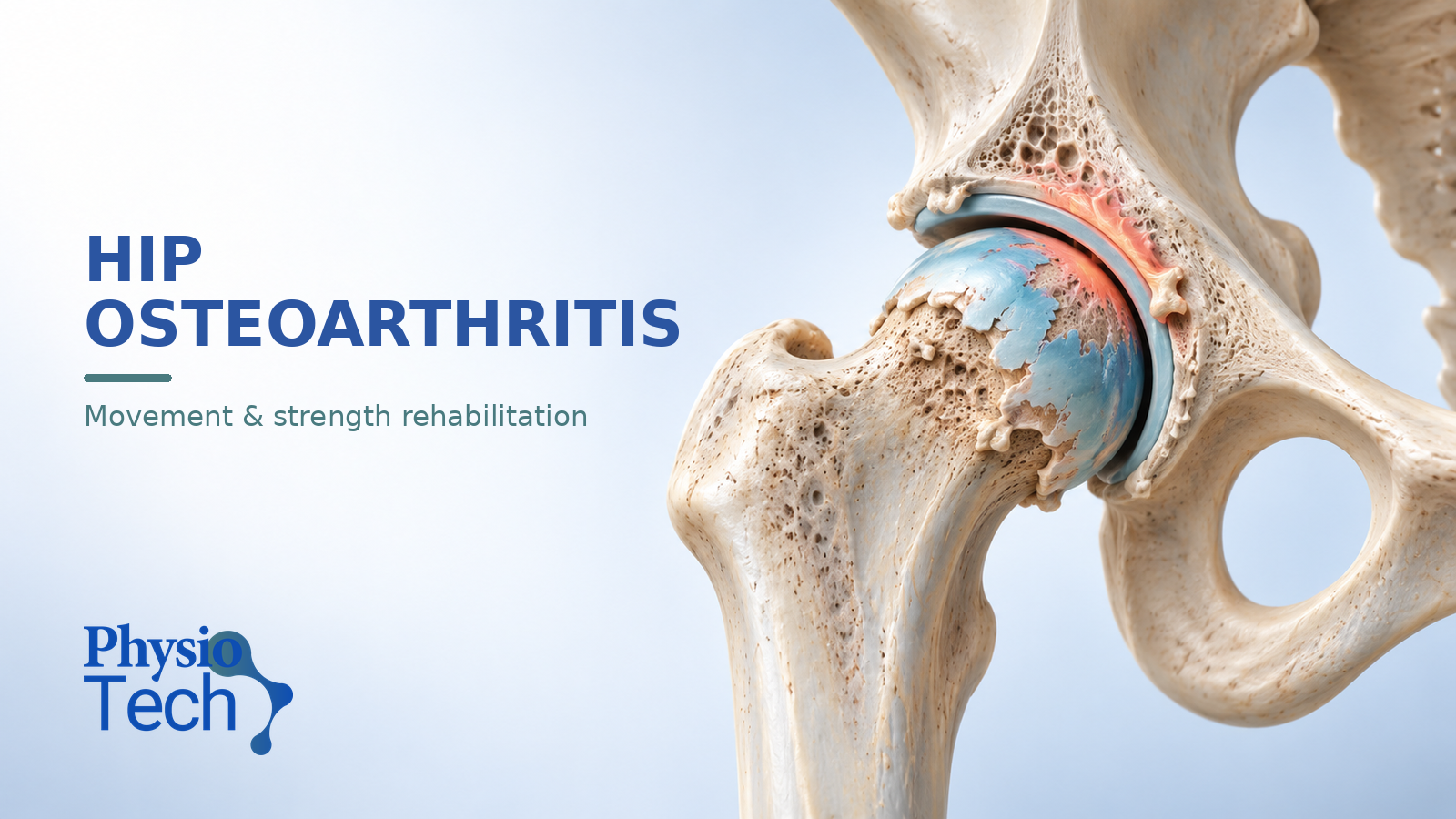
Hip osteoarthritis involves changes to cartilage and bone within the joint and may be associated with pain, stiffness, and reduced walking or stair capacity. The severity seen on an X-ray does not always match symptoms. Management should therefore focus on what the person can do, what they want to regain, and how the condition affects daily life.
اقرأ المقال بالعربيةCommon symptoms
Pain is often felt in the groin or upper thigh and may spread toward the buttock or knee. Short-lasting morning stiffness, difficulty putting on shoes and socks, reduced hip movement, and lower tolerance for walking or standing are common. Symptoms may flare rather than worsen at a constant rate.
How is it assessed?
Assessment considers age, symptoms, physical examination, and the effect on function. We examine hip movement, strength, walking, balance, and daily tasks. Imaging is not required at every follow-up but may help when the diagnosis is uncertain or joint replacement is being discussed.
Exercise is a core treatment
Guidelines recommend therapeutic exercise tailored to the individual, including hip and leg strengthening, aerobic activity, and walking capacity. A small temporary increase in discomfort can occur when exercise begins, but consistent, appropriately dosed activity improves pain and function over time.
Activity and weight management
Highly provocative activities can be modified temporarily while walking, cycling, or swimming is selected according to tolerance. When excess weight contributes to symptoms, gradual weight loss may improve pain and function without blame or extreme dieting. The goal is a sustainable plan.
Manual therapy and walking aids
Joint or soft-tissue techniques may be used as an adjunct to exercise, not as a stand-alone treatment. A walking stick can temporarily help selected patients. Insoles, braces, or supports are not routinely required unless assessment identifies a specific mechanical need and likely benefit.
When is joint replacement discussed?
Referral is considered when pain, stiffness, and loss of function substantially affect quality of life and suitable non-surgical care has not provided enough improvement or is unsuitable. The decision is based on clinical assessment and shared discussion, not age or an X-ray score alone.
Book a hip assessment at PhysioTech
If hip pain is limiting walking, sleep, or work, book an assessment at PhysioTech Clinic in Zahraa El Maadi. We measure movement, strength, and capacity, build a progressive plan, and recommend orthopedic referral when joint-replacement discussion is appropriate.
Medical sources
This article draws on NICE osteoarthritis guidance and AAOS information on hip osteoarthritis. It is educational and does not replace individual assessment.