Share:
86 views
#خشونة الركبة #ألم الركبة #تمارين الركبة #Knee osteoarthritis #علاج طبيعي
Knee Osteoarthritis Physiotherapy: Can Surgery Be Avoided?
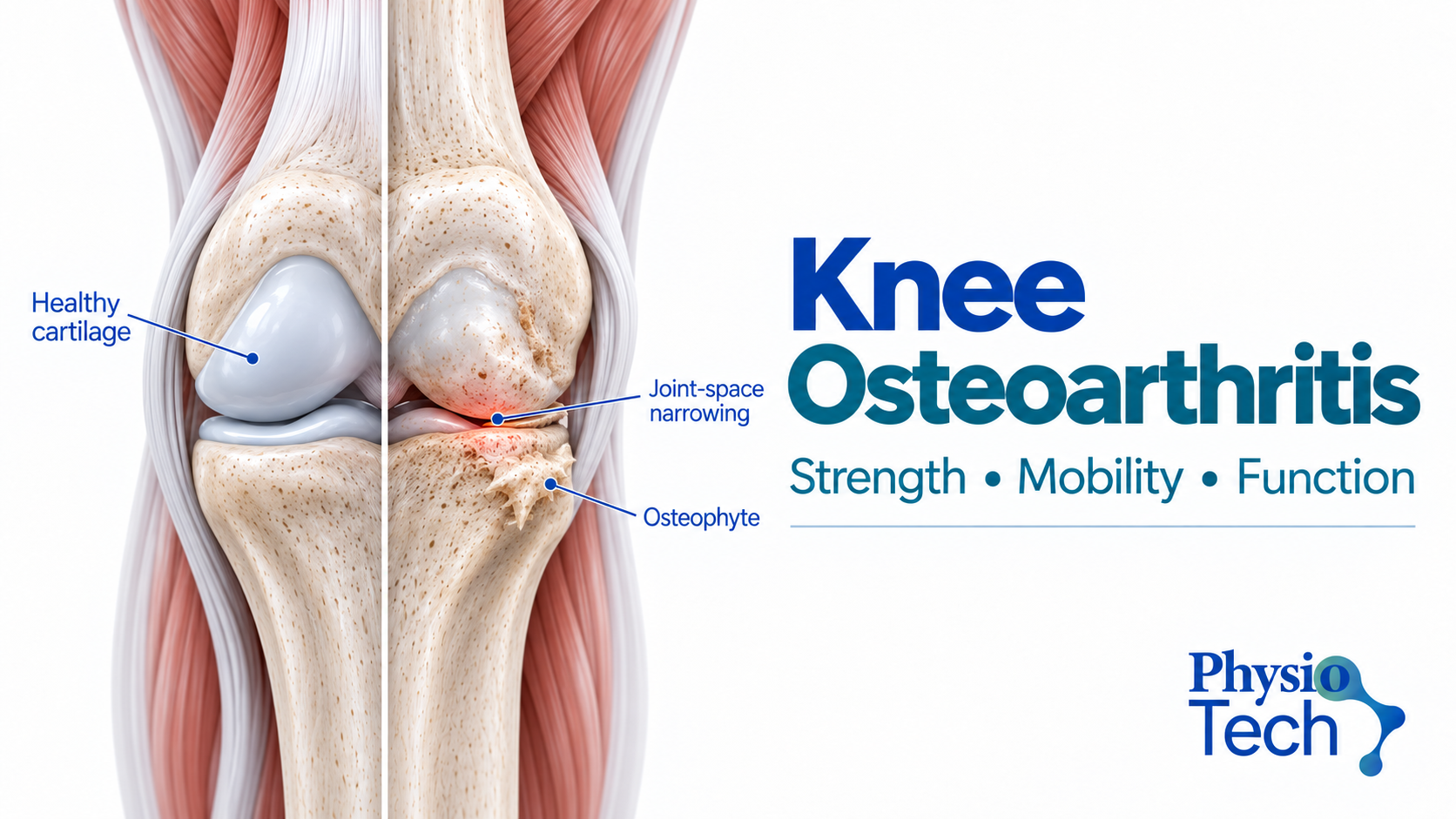
اقرأ المقال بالعربيةKnee osteoarthritis involves changes across the joint and may cause pain, stiffness, weakness and difficulty walking or climbing stairs. X-ray severity does not always match symptom severity. Some people remain active with marked imaging changes, while others have significant pain with less visible change.
Can physiotherapy help avoid surgery?
Many people improve pain and function with non-surgical care, especially education, exercise and weight management when relevant. Physiotherapy cannot guarantee that every person will avoid surgery. Joint replacement is generally discussed when severe, persistent symptoms and disability remain after an appropriate conservative-care trial and when the decision matches the patient’s goals.
Why move a painful joint?
Prolonged rest reduces muscle capacity and can make activity harder. Appropriate exercise helps muscles manage load and improves fitness and confidence. Mild, temporary discomfort during a suitable exercise does not automatically mean new damage. Dose and the knee’s response later that day and the next day guide progression.
Which exercises are useful?
Programs may combine quadriceps, hamstring, hip and calf strengthening with mobility, balance, walking, cycling or pool exercise. The starting point should match current ability, from sit-to-stand using a high chair to squats and stairs as capacity improves. There is no single magic exercise; consistency matters.
Weight and daily activity
When body weight is above a healthy range, a meaningful reduction may lessen symptoms and joint load. Support should be practical and non-judgmental. Walking, stairs and work demands are progressed rather than stopped completely or increased suddenly.
Do machines and passive treatments help?
A suitable cane or selected brace may improve mobility for some people. Manual therapy, electrotherapy, therapeutic ultrasound or kinesio taping can support symptom management, but longer-term care should not rely on devices alone. Exercise, activity and education are central.
Medication and injections
Pain medication, anti-inflammatory drugs or selected injections may be considered by a physician. Physiotherapists do not prescribe medication. Blood pressure and heart, kidney or stomach conditions can change medication safety.
Measuring improvement
Progress is more than a pain score. We track sit-to-stand ability, walking and stairs, motion, strength, balance, sleep, work and activity participation. Function may improve before pain disappears.
Seek medical assessment for sudden major swelling, a hot red joint with fever, inability to bear weight after injury, repeated true locking or unusual night pain. Calf swelling or shortness of breath requires urgent care.
PhysioTech program
At PhysioTech in Zahraa El Maadi, Cairo, we identify difficult activities, measure strength, motion and gait and build supervised and home exercise. We review the response and adjust dosage, adding supportive treatments only when they offer clear value.
Frequently asked questions
How many sessions are needed?
It depends on limitations, goals and the ability to exercise independently. Assessment and review are more useful than one fixed number.
Does knee cracking mean damage?
Noise without pain or swelling may be harmless. Locking or loss of function should be assessed.
Does exercise wear out cartilage?
Appropriate exercise does not mean “using up” the joint and usually improves activity tolerance.
This article is educational and does not replace individual medical assessment.


