Share:
92 views
#Plantar Fasciitis #Plantar Heel Pain #Heel Pain #Foot Pain #Physiotherapy Cairo #Zahraa El Maadi #Exercise Therapy #Manual Therapy
Heel pain on waking, or pain with the first few steps after sitting, is one of the most common foot complaints seen in physiotherapy. In many cases, the cause is plantar heel pain, commonly called plantar fasciitis. It can affect walking, work, training and quality of life, but it often responds to a progressive rehabilitation plan based on accurate assessment, load management and strengthening.
What is the plantar fascia?
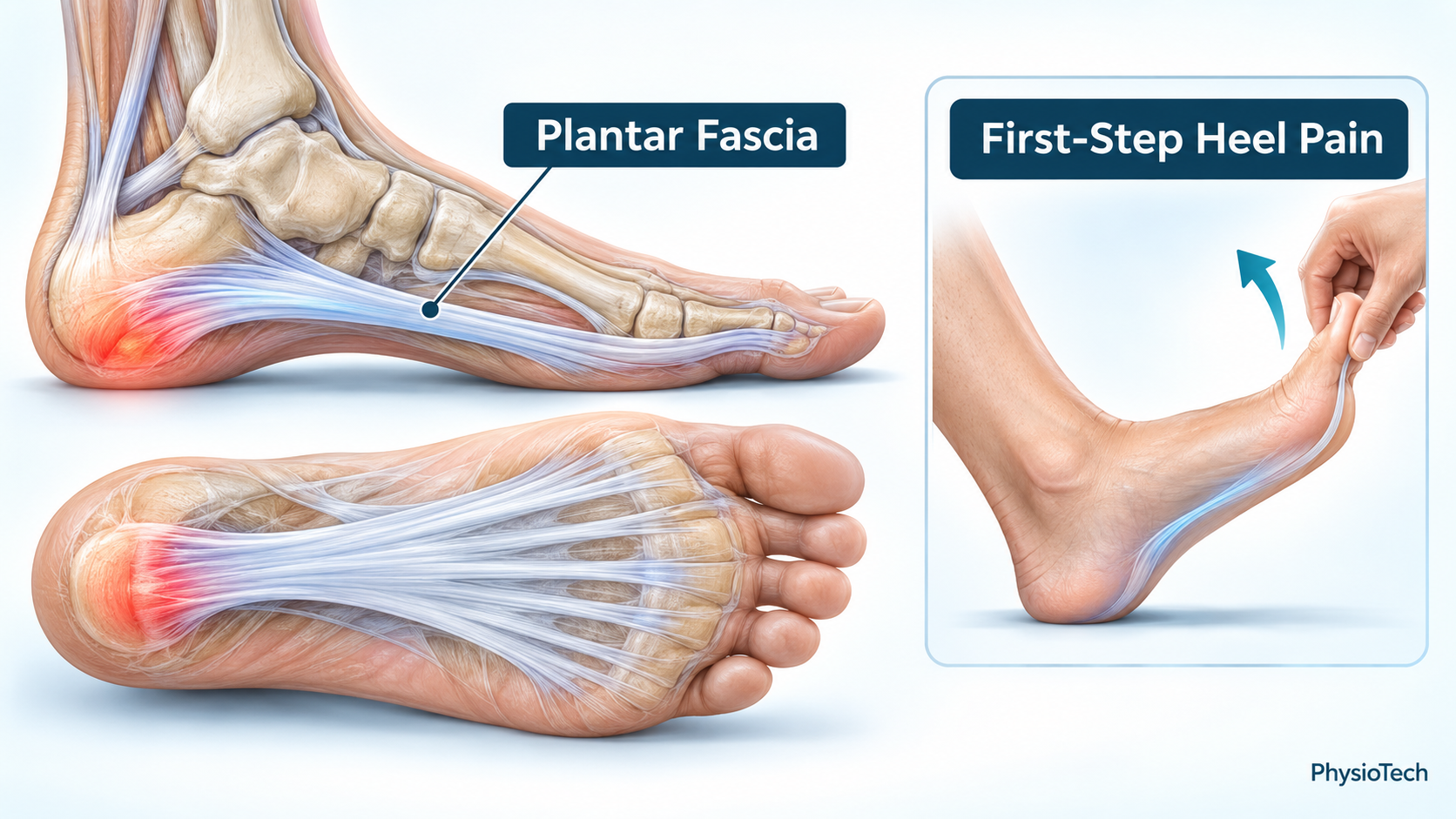
The plantar fascia is a strong band of connective tissue that runs under the foot from the heel bone toward the toes. It helps support the arch and manage force during standing, walking and running. Pain may develop near the inner underside of the heel when repeated load exceeds the tissue’s current capacity.
Although the word “fasciitis” suggests inflammation, persistent cases are not always a simple inflammatory problem. They may involve load-related tissue changes and reduced capacity. This is why rest or passive modalities alone rarely address every contributing factor.
Common plantar fasciitis symptoms
Typical features include:
• Pain under or toward the inner side of the heel.
• Marked pain with the first steps in the morning or after rest.
• Some easing after moving, followed by increased pain with prolonged standing, walking or running.
• Tenderness near the plantar fascia attachment at the heel.
• Difficulty walking barefoot on hard surfaces or completing normal activities.
Symptoms vary, and not every case of heel pain is plantar fasciitis. A clinical assessment is important before choosing treatment.
Causes and risk factors
There is rarely one single cause. Symptoms may follow a sudden increase in walking or running, long hours of standing, a rapid return to sport, higher body weight, calf tightness, weakness in the foot and lower-leg muscles, or footwear that does not match the activity. Runners may notice pain after changing training distance, speed, surface or frequency without enough time to adapt.
Does a heel spur cause the pain?
A heel spur may appear on an X-ray in someone who has no symptoms, while another person can have significant pain without the spur being the main cause. Diagnosis should therefore be based on the history, symptom pattern and physical examination—not on imaging alone. Treatment should focus on the person’s pain, function and loading capacity.
How physiotherapists assess heel pain
At PhysioTech, assessment begins with the exact location and behaviour of the pain, recent changes in activity and the patient’s work or sports demands. The physiotherapist examines ankle and foot mobility, calf flexibility, muscle strength, balance, walking pattern and the response to appropriate loading tests.
Other causes must be considered, including a calcaneal stress fracture, nerve irritation, heel fat-pad problems, Achilles tendon disorders or pain referred from the lower back. Medical review or imaging may be recommended when symptoms are unusual, severe or related to significant trauma.
Plantar fasciitis treatment at PhysioTech
An effective plan is individual rather than a one-size-fits-all protocol. It may include:
1. Education and load management
Load management does not always mean complete rest. Walking, running and standing may be temporarily adjusted, then rebuilt gradually according to the response of symptoms. This helps maintain activity while allowing the tissues to adapt.
2. Plantar fascia and calf stretching
The programme may include plantar fascia-specific stretching and calf stretching, particularly when ankle movement is limited. Consistency matters more than forcing a strong stretch, and exercises should not produce sharp pain.
3. Progressive strengthening
Strengthening targets the foot, calf and ankle muscles to improve capacity. The programme starts at a tolerable level and progresses toward longer standing, stairs, brisk walking, running or jumping according to the patient’s goal.
4. Manual therapy
Manual Therapy may be used to improve relevant ankle or foot mobility and reduce restrictions affecting walking. It is an adjunct within an active programme, not a substitute for progressive exercise.
5. Kinesio taping or supportive taping
Taping may provide short-term pain relief and support during activity for some patients. It does not correct the whole problem by itself, so it is combined with exercise and load modification.
6. Selected adjuncts
Foot orthoses or a night splint may be considered for selected patients according to their symptoms. Electrotherapy or Therapeutic Ultrasound may also be used as supportive tools when clinically appropriate, but not as replacements for active rehabilitation. Dry Needling may be considered for relevant calf trigger points or muscle tightness after screening for suitability.
Can I start exercises at home?
Some people can begin with gentle plantar fascia stretching before the first morning step, calf stretching with the heel supported and gradually loaded heel raises. However, the correct dosage, number of repetitions and acceptable pain level depend on how long the condition has been present and on the person’s health and activity. If pain rises substantially or remains more irritable the next day, the load should be adjusted rather than forced.
How long does recovery take?
There is no single recovery timeline. Progress depends on symptom duration, daily loading, programme consistency, sleep, body weight and associated health conditions. Improvement is usually gradual, and restoring full tissue capacity may take weeks or months. The goal is not only one pain-free day, but a safe return to walking, work and sport with a lower risk of recurrence.
When should heel pain be medically reviewed?
Seek prompt medical assessment after a fall or injury with severe pain, inability to bear weight, marked swelling, redness or heat, numbness or weakness, fever, worsening night pain, a wound or circulation problem. A person with diabetes should also obtain timely assessment for a new foot problem.
Why choose PhysioTech for heel pain rehabilitation?
At PhysioTech in Zahraa El Maadi, Cairo, care begins with a detailed assessment followed by a plan matched to the patient’s needs and goals. The clinic combines Exercise Therapy, Manual Therapy, Kinesio Taping, Dry Needling and appropriate supportive modalities while monitoring progress and adjusting load.
If heel pain is limiting your walking, work or return to sport, book an assessment at PhysioTech to identify contributing factors and build a safe, individual physiotherapy programme.
Scientific reference
Heel Pain—Plantar Fasciitis: Revision 2023 Clinical Practice Guideline, Journal of Orthopaedic & Sports Physical Therapy. This article is educational and does not replace an individual medical assessment.


