Share:
39 views
#تمزق اللوح الأخمصي #Plantar plate injury #ألم باطن القدم #ألم تحت الإصبع الثاني #علاج القدم
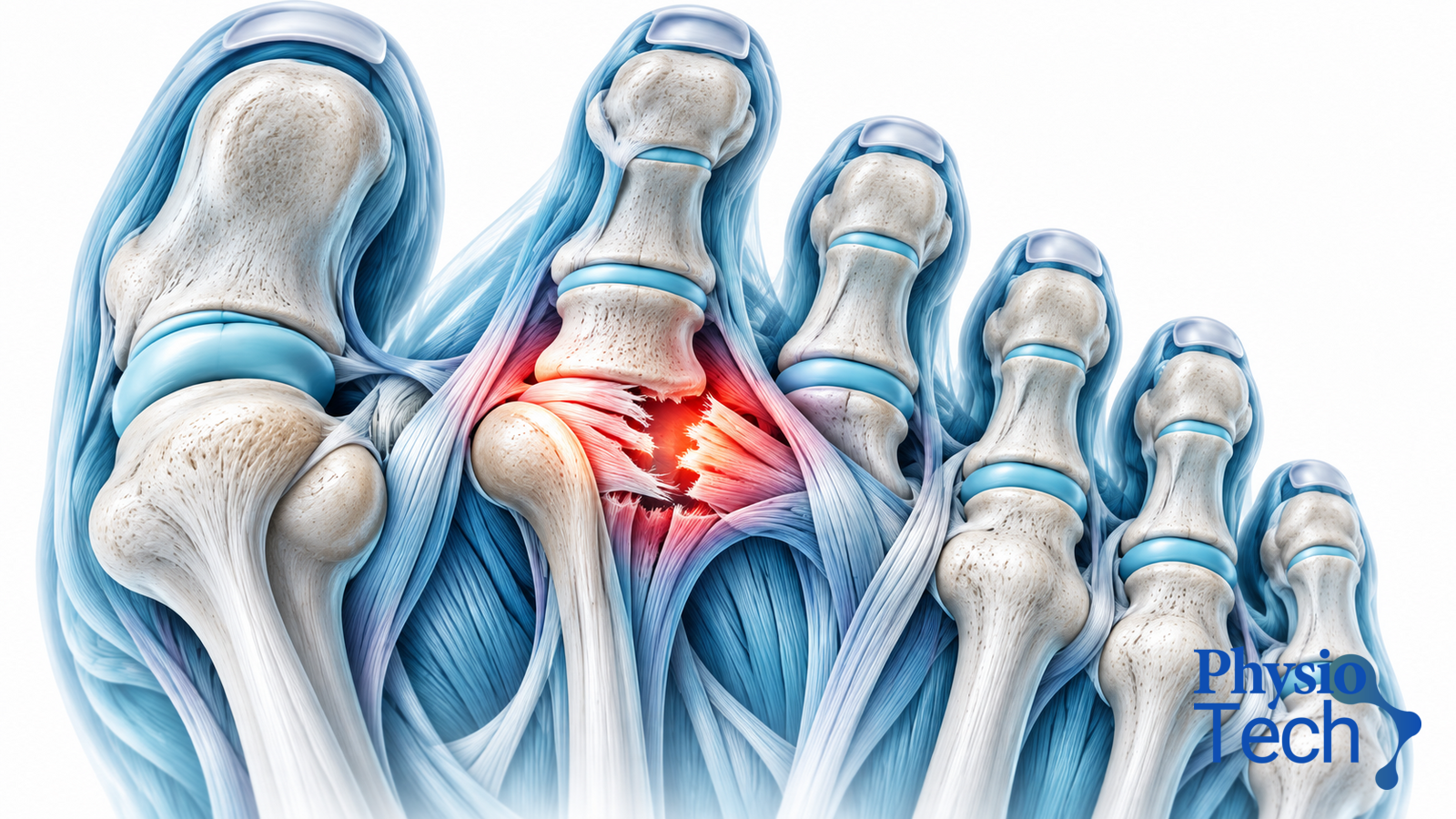
Pain beneath the base of the second toe, especially when barefoot or pushing off, can arise from the plantar plate. This fibrocartilaginous structure helps stabilise the toe joint and resist upward drift.
اقرأ المقال بالعربيةThe following information is educational and does not replace an individual examination, especially after major trauma or when warning signs are present.
What Is the Condition?
The plantar plate sits beneath the metatarsophalangeal joints and attaches near the toe base. Repeated loading can cause irritation or progressive tearing, and the toe may elevate or drift as injury advances.
Symptoms You May Notice
• Pain under the second or third toe base.
• A pebble or bruised feeling under the forefoot.
• Local swelling or tenderness.
• Toe drift or increasing gap between toes.
• More pain in flexible shoes or high heels.
Causes and Contributing Factors
Increased walking or running, repeated forefoot pressure, a relatively long second toe, hallux valgus or unsuitable footwear may contribute. An acute push-off or twist can also injure the structure.
Conditions That Can Look Similar
General metatarsalgia, Morton’s neuroma, stress fracture, inflammatory joint pain, sesamoid disorders and nerve irritation.
How Is It Assessed at PhysioTech?
The pain site, toe alignment and stability, skin and footwear are examined, together with gait and heel raise. Increasing deformity or substantial tear may require imaging or foot-and-ankle review.
What Do We Measure?
Walking time, barefoot and shod pain, toe position, heel-raise capacity, foot and calf strength and next-day load response.
We record a meaningful task such as walking, running, stairs or reaching, the response during it and what happens later and the next day. Movement, strength, capacity and task quality are compared over time rather than judging progress only by short-term relief in the session.
When May Imaging or Medical Referral Be Needed?
Rapid deformity, major trauma, inability to bear weight, marked heat and redness, a wound or sensory loss, or suspected fracture needs medical review.
Imaging is not required for every patient. It becomes important after major trauma, with warning signs, when progress is unexpectedly poor, or when the result would change loading, referral or surgical decisions. Imaging decisions are coordinated with the appropriate physician.
Plantar Plate Injury Treatment at PhysioTech
1. Protect the Area and Manage Load
Temporarily reduce running, jumping and long walks and use a supportive, wide toe-box shoe. Appropriate taping or padding may reduce pressure when positioned correctly.
2. Restore Movement and Control
Maintain comfortable ankle and toe motion and retrain weight transfer without repeated painful push-off.
3. Build Strength and Capacity
Progress foot, calf and hip strength and rebuild heel raise and propulsion according to injury stage.
4. Return to Activity or Sport
Increase walking and then running through volume, surface and footwear changes, reviewing persistent pain or deformity rather than pushing through it.
A central part of care is understanding why each exercise was chosen and how to adjust the dose. We agree on an acceptable symptom response, then progress repetitions, resistance, speed or task complexity. We do not promise a fixed recovery date because injury severity, general health and activity demands vary.
The PhysioTech Treatment Philosophy in Cairo
At PhysioTech Clinic in Zahraa El Maadi, Cairo, care starts with assessment rather than an imaging label alone. We connect symptom behaviour with movement, strength, capacity and work or sport demands, record clear baseline measures and retest them. Manual therapy, dry needling, kinesio taping, electrotherapy or therapeutic ultrasound may be used for a defined purpose, but they do not replace education, therapeutic exercise and graded loading.
Not every forefoot pain is the same. Identifying the exact joint, toe and plantar-plate stability changes footwear, loading and exercise choices.
Red Flags That Need Prompt Medical Review
Colour change or marked heat, a wound with sensory loss, rapid deformity, inability to bear weight or severe post-traumatic pain.
Frequently Asked Questions
Is the plantar plate a ligament?
It is a fibrocartilaginous stabiliser that works with the joint capsule, ligaments and tendons.
Is barefoot walking helpful?
It can raise pressure during an irritable stage; footwear and surface are selected from the response.
Can exercise realign the toe?
It improves strength and loading, while fixed deformity or a large tear may need specialist review.
When Should You Book an Assessment?
If pain under the second toe is changing your gait, book a foot assessment at PhysioTech in Zahraa El Maadi, Cairo.
Trusted References
• nhsaaa.net
• pmc.ncbi.nlm.nih.gov


