Share:
162 views
#proximal hamstring tendinopathy #hamstring rehab #running injury #علاج طبيعي #إصابات الملاعب
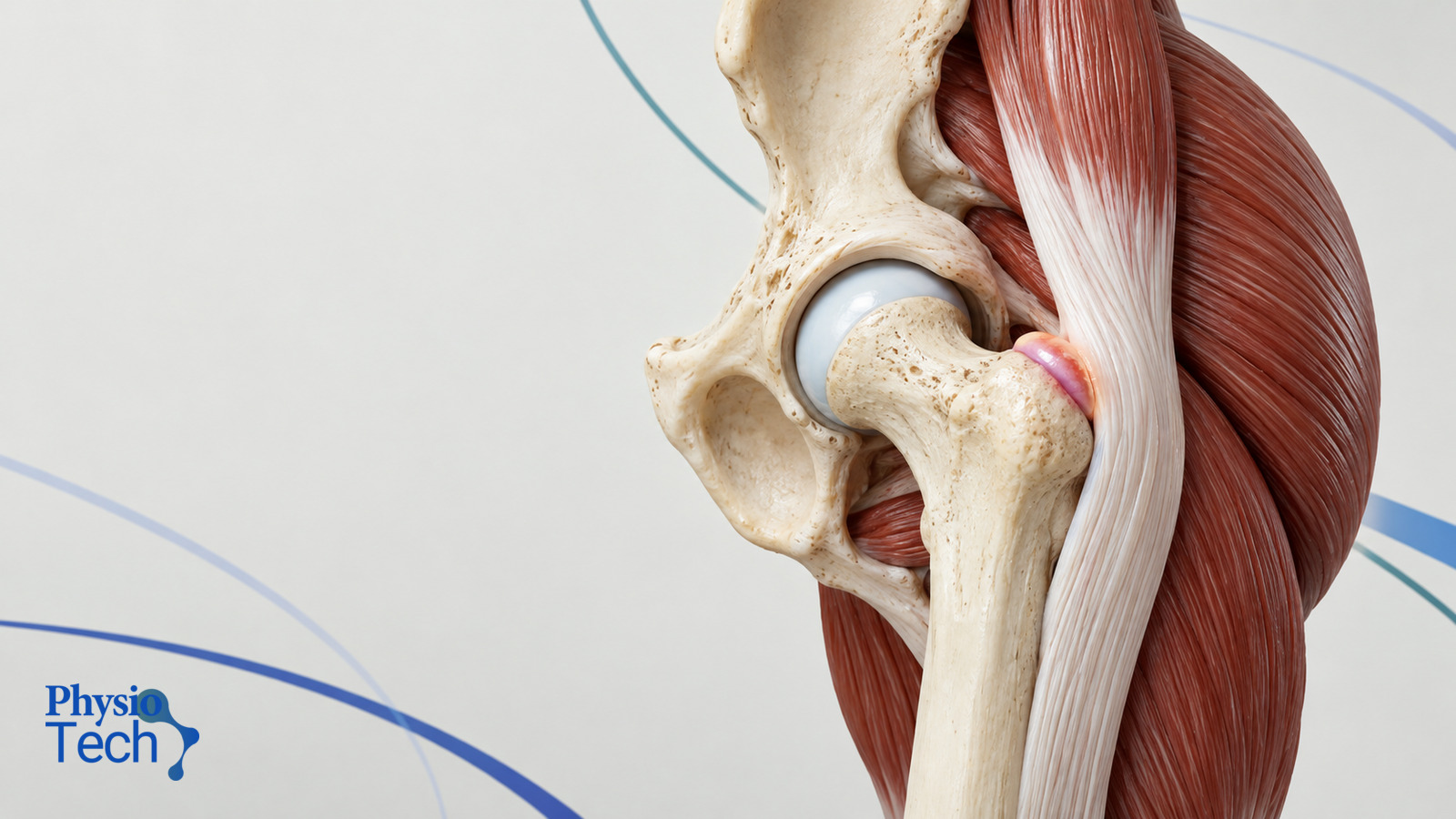
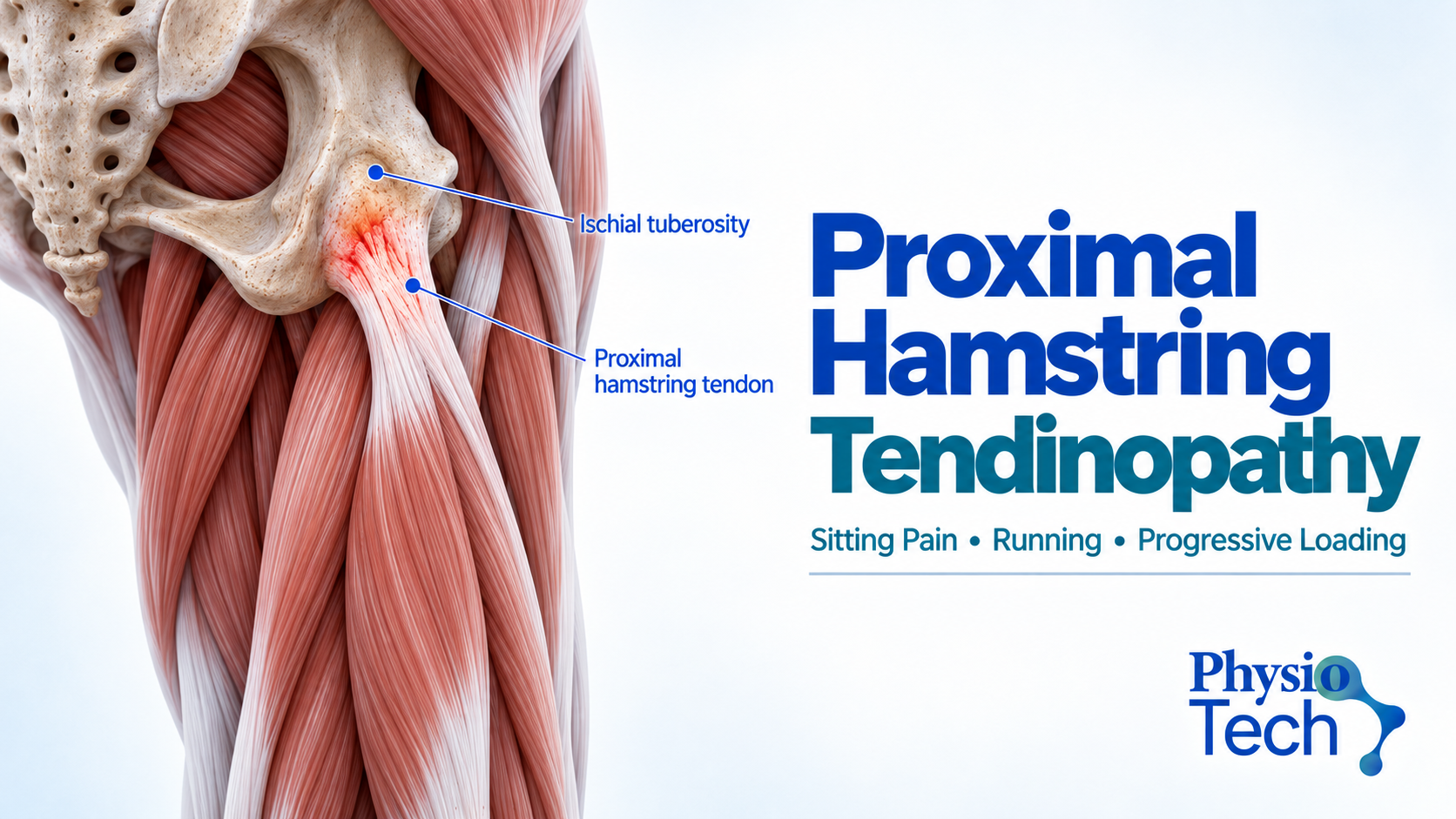
Most hamstring tendons originate around the ischial tuberosity, commonly called the sitting bone. When tendon capacity no longer matches the demands of running, hinging or prolonged sitting, proximal hamstring tendinopathy may cause deep pain below the buttock that increases with compression or loading.
اقرأ المقال بالعربيةThis presentation differs from an acute strain or avulsion, which usually begins with a sudden force and may produce immediate weakness, bruising or a popping sensation. A clinical assessment is still important because tendon, nerve, lumbar and hip symptoms can overlap.
Common symptoms
- Deep focal pain close to the sitting bone.
- Pain during prolonged sitting, especially on a firm surface.
- Symptoms with faster running, hills, lunges or deep squats.
- Pain when the hamstring is loaded or stretched with combined hip flexion and knee extension.
- Stiffness or discomfort at the beginning of activity or afterward.
- Reduced tolerance for sprinting or normal running volume.
Pain may spread slightly down the posterior thigh. Numbness or electrical symptoms extending toward the leg or foot increase the possibility of neural involvement and require broader examination.
Why does it develop?
A common pattern is a rise in demand that exceeds recovery and adaptation: more distance, speed or hills; a rapid return after a break; or heavy strength work in deep hip flexion. Previous injury, general strength, sleep and recovery can influence capacity.
Sitting places compression near the tendon origin, which can maintain irritability even when running has stopped. The problem is not always a “tight hamstring,” and aggressive stretching may aggravate a highly irritable tendon by adding both compression and tensile load.
How is it diagnosed?
History
The clinician reviews symptom onset, training changes, sitting exposure and provocative tasks. A sudden event with a pop, bruising or major weakness raises concern for an acute tear or avulsion.
Physical examination
Assessment may include palpation at the tendon origin, targeted loading and stretch tests, knee-flexion and hip-extension strength, hip and lumbar examination, and a neurological screen when indicated. No single test confirms the diagnosis.
MRI or ultrasound
Imaging may help when diagnosis is uncertain, after acute trauma, with marked weakness, or when progress is not as expected. Tendon changes can also appear in people without pain, so scans do not determine severity or recovery time by themselves.
Tendinopathy versus an acute tear
Tendinopathy is commonly gradual and related to sustained sitting or repeated loading. An acute tear more often follows a sudden high-force movement and may include a pop, bruising, swelling or loss of force. A suspected complete tear or avulsion requires prompt medical assessment.
Physiotherapy stages
1. Reduce compression and irritability
Load management is not complete rest. Faster running, hills and prolonged sitting may be reduced temporarily, with movement breaks or seat modification. Isometric exercise in a lower-compression position may provide a tolerable entry to loading.
2. Build strength
The program progresses knee-flexion and hip-extension resistance through exercises such as bridges, leg curls or hip extension. Resistance and range increase gradually while next-day response is monitored.
3. Load at longer muscle lengths
Once initial strength work is tolerated, exercises in greater hip flexion—such as modified deadlift or split-squat patterns—can be introduced. This stage requires careful dosing because compression and tensile demand increase.
4. Restore energy storage and running
Runners and field athletes need gradual exposure to speed, jumping and change of direction, not slow strength alone. Running resumes at a manageable dose, with distance, speed and hills progressed separately.
Is pain during exercise acceptable?
Some programs allow limited discomfort when it does not escalate or cause a sustained next-day decline. There is no universal pain threshold. Irritability and individual goals guide the rule. Sharp pain or sudden strength loss requires reassessment.
Manual therapy and adjunct treatments
Manual therapy may address a relevant hip or lumbar movement restriction that limits exercise. Dry needling may be considered for selected muscular symptoms. Evidence specific to proximal hamstring tendinopathy remains limited, and these options do not replace assessment, exercise therapy and progressive loading.
Electrotherapy or therapeutic ultrasound may be considered for short-term symptom management in selected cases, but they cannot independently restore the capacity needed for sitting, running or sport.
How long does recovery take?
Long-standing cases may require several months. Duration depends on irritability, symptom history, activity demands and adherence. Sitting tolerance, strength, running exposure and function are more useful milestones than a promised number of weeks or sessions.
When is medical referral needed?
Seek prompt review after a sudden injury with a pop or substantial bruising, severe weakness, inability to walk, progressive neurological symptoms, unexplained night pain or systemic illness, or changes in bladder or bowel control.
The PhysioTech approach
At PhysioTech Clinic in Zahraa El Maadi, assessment differentiates tendinopathy from acute tearing and lumbar or neural sources. We measure strength, sitting tolerance and relevant movement, then build progressive loading and a criteria-based return to running or sport. Adjunct treatments are used only when they support a defined functional goal.
Frequently asked questions
Does sitting-bone pain always mean hamstring tendinopathy?
No. Lumbar, neural, hip, bursal and acute tendon problems can overlap. Differential assessment is necessary.
Should I stretch the hamstring every day?
Not automatically. Strong stretching can aggravate compression-sensitive symptoms. Timing and dose should be individualized.
Must I stop running?
Running may need temporary modification rather than complete cessation. Speed, distance or hills can be reduced and progressively restored.
Does MRI determine return to sport?
Not alone. Return depends on symptoms, strength, running tolerance and sport-specific performance, with imaging used when clinically indicated.
Can prolonged sitting delay progress?
Continued compression can irritate symptoms. Breaking up sitting and modifying the seat may help, while the long-term goal remains restoring sitting tolerance.
Book an assessment in Zahraa El Maadi
If deep buttock pain increases with sitting or running, book an assessment at PhysioTech Clinic in Zahraa El Maadi, Cairo to distinguish tendinopathy from acute or neural causes and plan progressive loading.