Share:
89 views
#Rotator Cuff Pain #Shoulder Tendinopathy #Shoulder Impingement #Shoulder Pain #Shoulder Rehab #Physiotherapy Cairo #Zahraa El Maadi #Exercise Therapy
Shoulder pain when lifting the arm or sleeping on one side is common in adults and athletes. It may be labelled rotator cuff tendinitis or shoulder impingement, while modern guidance often uses rotator cuff–related shoulder pain to describe several presentations involving the rotator cuff tendons and surrounding tissues. Accurate assessment and progressive rehabilitation can restore movement and strength without assuming that every painful shoulder has a serious tear.
What is the rotator cuff?
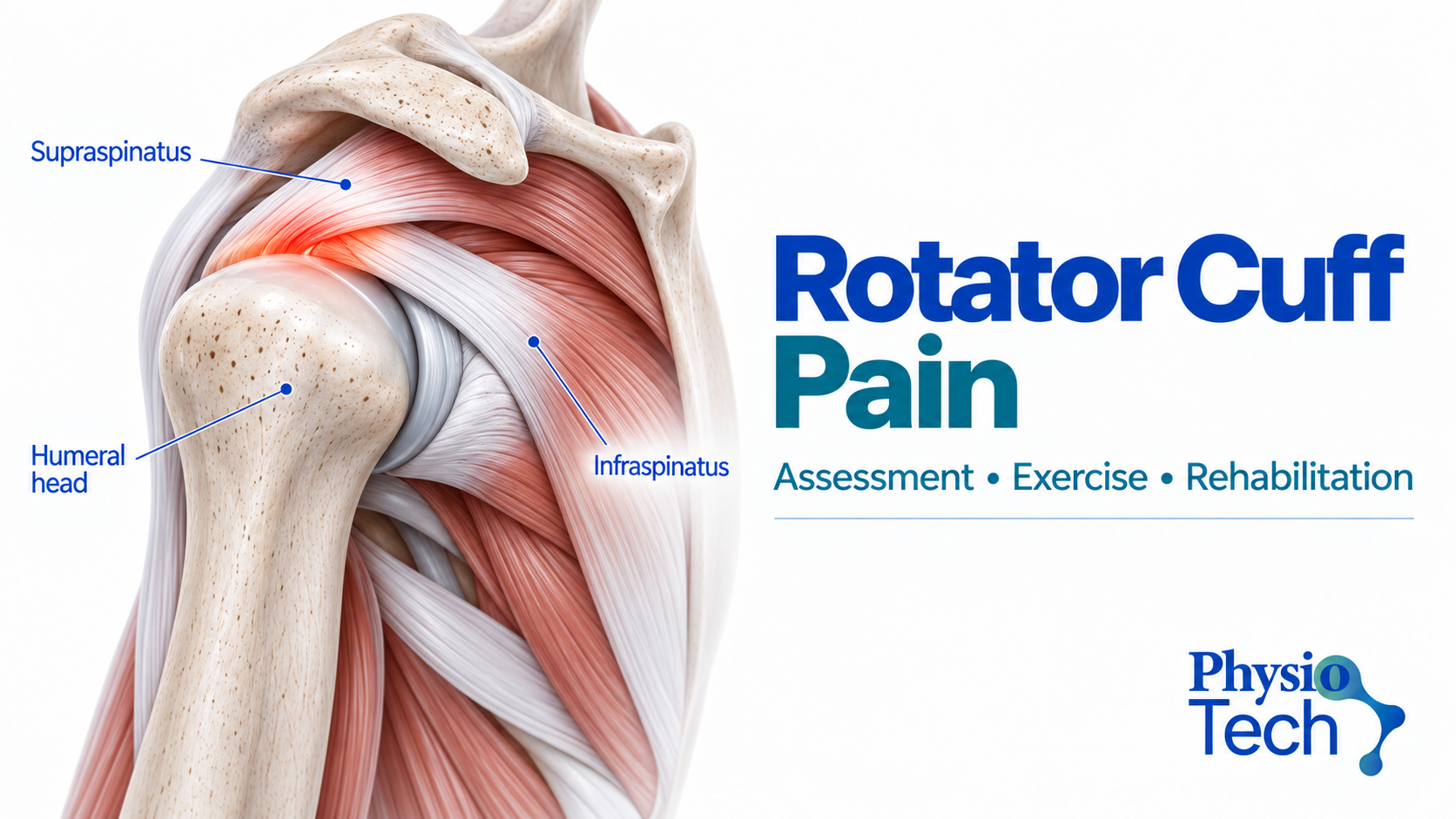
The rotator cuff consists of four muscles and their tendons surrounding the shoulder joint. They help centre the upper-arm bone and guide the arm during lifting, rotation, pushing and pulling. Tendons can become sensitive when loading changes rapidly or muscle capacity is reduced.
Common rotator cuff pain symptoms
Symptoms may include:
• Pain at the front or outer side of the shoulder.
• Increased pain when lifting the arm or reaching overhead.
• Pain while dressing or reaching behind the back.
• Discomfort when lying on the affected side.
• Pain or weakness when carrying, pushing or pulling.
• Difficulty with swimming, throwing or overhead gym exercises.
Pain may travel to the middle of the upper arm but does not usually extend into the hand. Numbness or tingling may require assessment of the neck and nerves.
Does shoulder impingement mean permanent pinching?
The word impingement can suggest that bone pinches the tendon during every movement, but shoulder pain is more complex. Symptoms are influenced by tissue capacity, muscle performance, load, sleep, general health and the pain experience. Many people have imaging changes without symptoms, so a scan does not explain the patient’s condition by itself.
Why does rotator cuff pain develop?
Pain may follow an increase in shoulder training, repeated overhead work, swimming or throwing, frequent lifting or a rapid return to sport. Reduced shoulder or scapular strength, limited movement, poor endurance and previous injury can contribute. Sometimes symptoms begin without one obvious event.
How is rotator cuff pain assessed?
Assessment combines the symptom history with clinical examination. The physiotherapist examines movement range, lifting and rotation strength, scapular function, the neck and neurological signs, then tests activities that reproduce symptoms.
Imaging is not required for every patient. Medical review or a scan may be appropriate after major trauma, suspected fracture or dislocation, or sudden marked weakness with inability to raise the arm. Even when a partial tear or tendon change appears, symptoms, function and response to care determine its relevance.
Rotator cuff treatment at PhysioTech
Clinical guidance recommends an active rehabilitation programme as the foundation of nonsurgical care.
1. Education and load management
Movements that substantially aggravate pain—such as heavy overhead pressing or carrying weight far from the body—may be adjusted temporarily. This does not mean immobilising the shoulder; the aim is to maintain useful movement and rebuild load gradually.
2. Mobility exercises
The programme may restore arm elevation, rotation and behind-the-back movement within an appropriate range. Dosage depends on pain and stiffness, and the joint should not be forced into sharp pain.
3. Rotator cuff strengthening
Rotation and elevation exercises begin with suitable resistance and progress toward heavier, functional tasks. Developing strength and endurance matters more than finding one “perfect” exercise.
4. Scapular and upper-limb training
Scapular, chest, arm and trunk exercises may be added when they support the patient’s goal. Athletes later need speed, power and overhead tasks that reflect their sport.
5. Manual therapy
Manual Therapy may improve movement and provide short-term pain relief when assessment indicates a relevant restriction. It works best alongside exercise rather than as a replacement.
6. Supportive modalities
Kinesio Taping may provide short-term support for selected patients. Electrotherapy or Therapeutic Ultrasound may also be used as adjuncts when appropriate. Dry Needling can be considered for relevant trigger points or muscle tightness in the shoulder or neck after screening. These tools do not replace progressive strength and load exposure.
Should I avoid raising my arm?
Not always. Prolonged fear and avoidance can reduce strength and confidence. The lifting angle, weight or repetitions can be modified and then progressed toward full range. Mild acceptable discomfort during exercise may be safe in some cases when it does not lead to a lasting flare-up, but the dose should be individual.
How long does shoulder rehabilitation take?
Pain and function may improve within weeks, while rebuilding strength and returning fully to the gym or sport may take several months. Time depends on symptom duration, weakness, work demands, sleep, programme adherence and associated health conditions.
When is urgent medical assessment needed?
Seek urgent assessment after a fall or possible dislocation, with visible deformity or major swelling, or after sudden loss of the ability to lift the arm. Redness, heat and fever, chest pain or shortness of breath, worsening neurological weakness or unusual severe night pain also require medical attention.
Returning to the gym and sport
Return should not depend only on pain disappearing. Rehabilitation assesses movement range, lifting and rotation strength, repetition tolerance, overhead control and sport-specific skills for swimming, throwing or training. Weight, speed and volume are increased gradually.
Why choose PhysioTech for shoulder pain?
At PhysioTech Clinic in Zahraa El Maadi, Cairo, care begins with assessment of the shoulder, scapula, neck and upper-limb strength. Physiotherapists build an Exercise Therapy and load-management plan, with Manual Therapy, Kinesio Taping, Dry Needling and supportive modalities added when clinically relevant.
If shoulder pain limits sleep, work or exercise, book an assessment at PhysioTech to identify contributing factors and build a goal-based rehabilitation programme.
Scientific reference
Desmeules F, et al. Rotator Cuff Tendinopathy: Diagnosis, Nonsurgical Medical Care and Rehabilitation Clinical Practice Guideline. Journal of Orthopaedic & Sports Physical Therapy. 2025.
This article is educational and does not replace an individual medical assessment.


