Share:
114 views
#أوتار الكتف #الكفة المدورة #تأهيل ما بعد العمليات #علاج طبيعي #rotator cuff
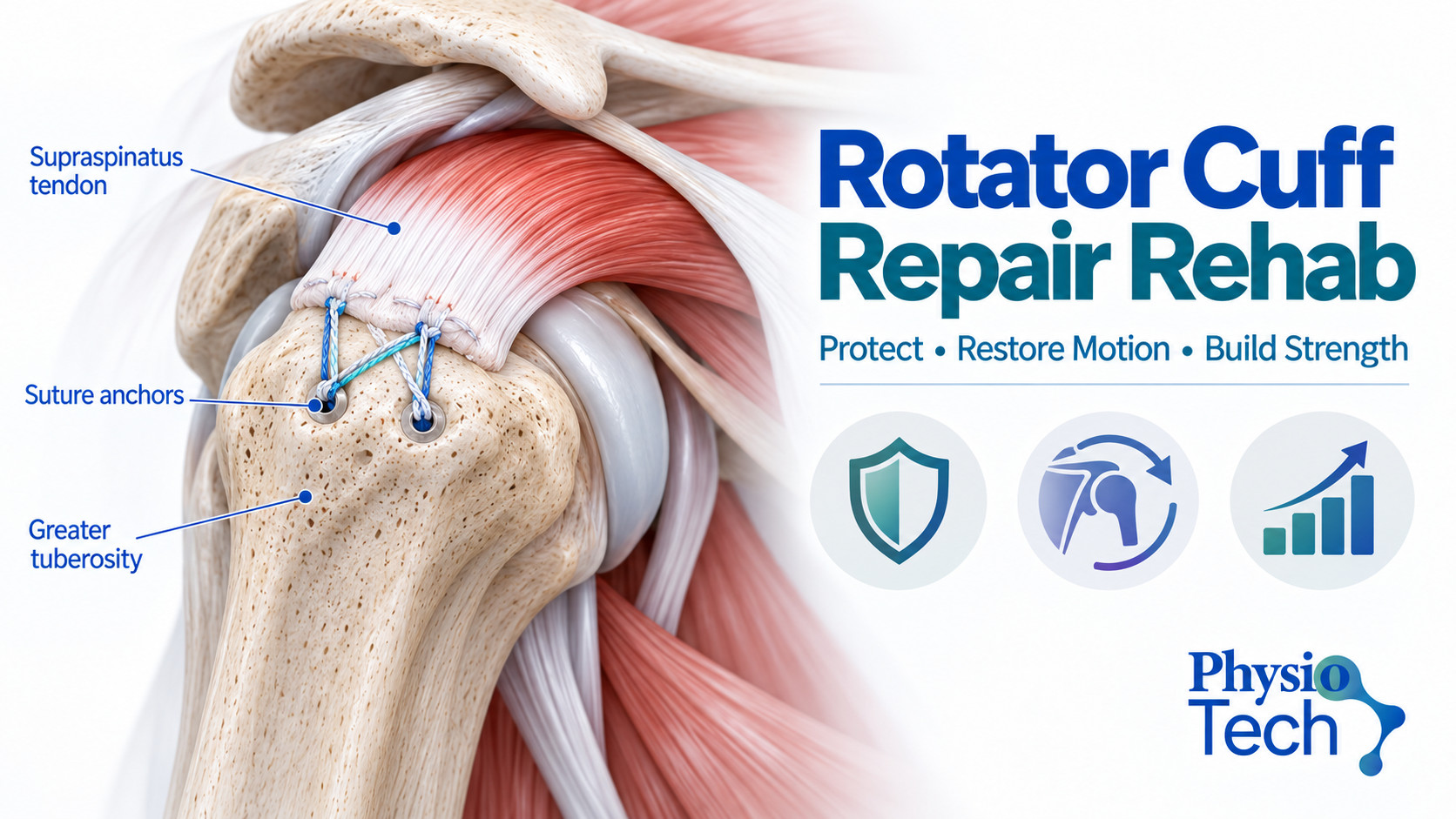
Rotator Cuff Repair Rehabilitation
اقرأ المقال بالعربيةRehabilitation after rotator cuff repair balances protection of the reattached tendon with gradual restoration of shoulder mobility, strength and function. The program varies with tear size, tissue quality, surgical technique, age and the surgeon’s instructions. There is no single timeline for every patient.
Early protection phase
The first priority is to protect healing tissue and manage pain. A sling and specific passive-motion limits may be prescribed. Active lifting, carrying weight and resisted shoulder exercise should not begin until cleared. Feeling less pain does not mean the tendon has completed healing.
The therapist teaches safe sleeping and daily-life positions, hand, elbow and neck exercises, and the shoulder motion permitted by the surgical plan. Increasing wound redness or drainage, fever, unusual escalating pain, or sudden numbness and weakness require prompt medical advice.
Restoring mobility
Movement commonly progresses from passive to assisted and then active exercise, according to surgeon guidance and shoulder response. The aim is useful mobility without forcing the joint or provoking persistent symptoms. Manual therapy may support appropriate joint and soft-tissue mobility while respecting repair precautions.
Building strength and control
Once healing allows, exercises gradually target the shoulder blade muscles and rotator cuff, followed by functional resistance, reaching, pushing and pulling tasks. Movement quality and the 24-hour symptom response guide progression. Return to overhead work or throwing sports requires specific preparation and testing, not time alone.
PhysioTech postoperative care
At PhysioTech in Zahraa El Maadi, Cairo, we review the operative report and surgeon protocol before building an individual plan. Exercise therapy and movement retraining form the foundation. Manual therapy, electrotherapy, therapeutic ultrasound, kinesio taping or dry needling may be used when safe and clinically appropriate. These options support, but do not replace, protection and progressive loading.
Frequently asked questions
Should the shoulder move early?
The type and timing of movement depend on the repair. Follow the surgeon-specific plan.
When can I sleep on the operated side or lift weights?
Only after medical clearance and when mobility, strength and control are adequate.
Should rehabilitation hurt?
Mild temporary discomfort can occur, but escalating or persistent pain means the load needs reassessment.
Book an assessment
Bring your operative report and rehabilitation protocol to PhysioTech. We can guide the transition from protection to mobility, strength and return to activity with measurable goals.
This article is educational and does not replace your surgeon’s instructions or an individual assessment.


