Share:
41 views
#ضغط العصب فوق الكتف #Suprascapular Nerve Entrapment #علاج طبيعي #physiotherapy #Cairo
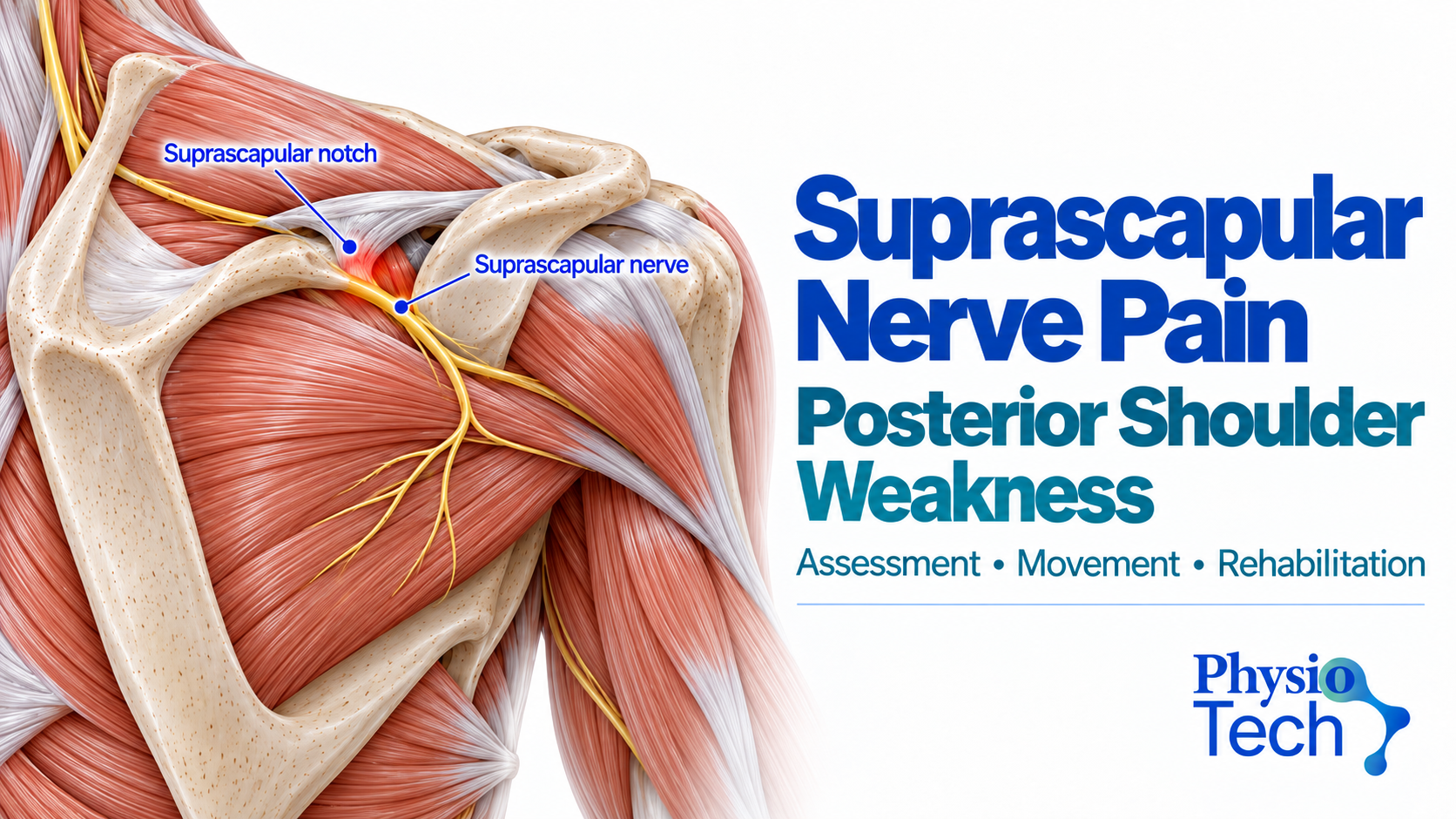
Deep posterior shoulder pain with weakness in elevation or external rotation may raise concern about the suprascapular nerve. It is less common than rotator cuff disorders, so symptoms alone should not be used to label it.
اقرأ المقال بالعربيةAt PhysioTech Clinic in Zahraa El Maadi, Cairo, treatment begins with the person’s symptoms, examination and goals rather than a technique selected from a label alone. This article explains the condition but cannot replace an individual assessment or urgent care when warning signs are present.
What Is Happening Anatomically?
The nerve travels from the neck through confined spaces in the scapula and supplies the supraspinatus and infraspinatus muscles. Repetitive overhead traction, a nearby cyst or other shoulder changes may affect it.
Symptoms You May Notice
A dull posterior ache, weak initiation of elevation or external rotation and sometimes visible muscle wasting may occur. Some nerve presentations produce disproportionate weakness with relatively modest pain.
How Is It Assessed?
We assess the cervical spine and shoulder, selective muscle strength, joint and scapular movement, and compare tendon and labral findings. Clear weakness or wasting may require nerve testing, imaging and specialist referral.
PhysioTech does not base a diagnosis on one scan or one provocative test. We connect the history with symptom distribution, daily behaviour, movement, strength and the tasks that matter to the patient. The working explanation is tested by changing a relevant load or treatment variable and measuring the response. If the findings do not fit, the diagnosis is reconsidered and the examination or referral pathway is expanded. This keeps care focused on measurable function rather than a label alone.
What Else Could It Be?
Rotator cuff tear, shoulder tendinopathy, cervical radiculopathy and labral injury can overlap. One resisted test cannot localise the problem reliably.
Physiotherapy at PhysioTech
First Phase: Settle Provocative Load
When urgent structural management is not indicated, overhead throwing or lifting load is modified and shoulder and scapular capacity are rebuilt. Rotation and elevation exercises progress with technique and sport load. Manual therapy may assist movement but cannot restore nerve function on its own.
Next Phase: Build Capacity
As symptoms settle, therapeutic exercise and graded loading are matched to your response and goals. Manual or symptom-relief techniques may be adjuncts when useful, but they do not replace exercise and repeated assessment. Recovery timelines vary with severity, health and activity demands.
A key part of the plan is understanding why each exercise was chosen and how to adjust its dose. We agree on an acceptable symptom response during activity, review what happens later and the next day, and then progress repetitions, resistance, speed or task complexity. The aim is not to make a session feel hard; it is to improve capacity for work, walking and sport without an escalating flare. Sleep, workload distribution, general health and confidence in movement are considered alongside local tissue loading.
Progression and Return to Activity
How Do We Measure Progress?
External-rotation strength, arm control and overhead tolerance are measured. Persistent weakness or wasting despite appropriate care needs specialist review.
What Can You Do at Home?
Reduce repetitions that increase weakness or pain and avoid training to severe failure. Maintain comfortable movement while assessment is arranged.
When Is Medical Review Needed?
Rapid weakness, visible wasting, major trauma with loss of function or broader neurological symptoms requires medical assessment.
Frequently Asked Questions
Is this the same as a rotator cuff tear?
No, although symptoms can overlap and both can coexist.
Is MRI enough?
It may reveal a compressive cause, while examination and nerve studies can also be important.
Can I keep throwing?
Load should be adjusted to strength and symptoms rather than continued through deterioration.
Book an Assessment in Cairo
If Suprascapular Nerve Entrapment affects work, walking or sport, book an individual assessment at PhysioTech in Zahraa El Maadi, Cairo. We explain the findings clearly, decide whether physiotherapy is appropriate or medical referral is needed, and agree on measurable rehabilitation goals.