Share:
105 views
#أوتار الكتف #supraspinatus #shoulder rehab #علاج طبيعي
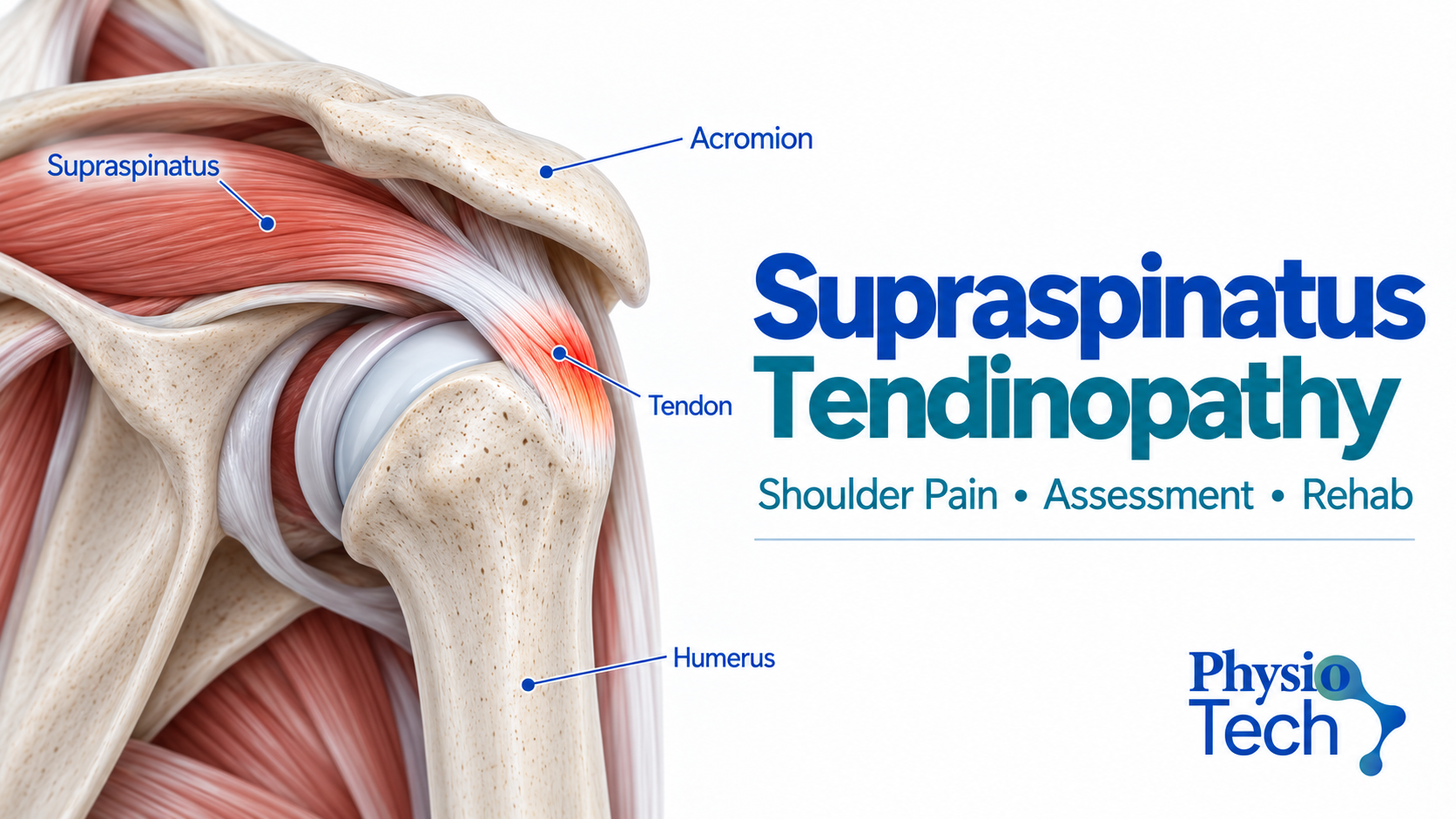
The supraspinatus is one of the four rotator-cuff muscles. Its tendon passes above the humeral head and contributes to arm elevation and shoulder stability. Pain can develop when tendon capacity does not match training, work or daily load. For many persistent cases, tendinopathy is more accurate than “tendinitis”; pain does not necessarily mean an acutely inflamed tendon or damage proportional to symptom intensity.
Common symptoms
• Front or outer shoulder pain, sometimes extending to the mid-upper arm.
• Pain during arm elevation, dressing or overhead reaching.
• Night pain when lying on the affected side.
• Weakness or reduced confidence when lifting away from the body.
• A flare after a sudden increase in gym, swimming or overhead workload.
These findings are not unique to the supraspinatus. Subacromial pain, a rotator-cuff tear, frozen shoulder and neck-related pain can look similar.
Assessment
Diagnosis should not depend on one special test or MRI finding. Assessment at PhysioTech reviews symptom behavior, shoulder and neck range, elevation and rotation strength, scapular control and task tolerance. Sudden weakness after trauma, marked global stiffness and arm tingling require a broader differential diagnosis.
Imaging may be considered after significant trauma, obvious weakness, suspected major tear or an unexpected clinical course. Structural findings on a scan do not always match pain severity.
Physiotherapy management
Load management
Temporarily modify the most provocative angles and weights while maintaining tolerable movement. Prolonged complete rest can increase stiffness and reduce capacity.
Progressive rotator-cuff exercise
Exercise begins with tolerable elevation and external-rotation resistance, then progresses in load, range and speed. Scapular, pushing, pulling and overhead tasks are added according to the patient’s goals.
Return to function
Readiness for work or training is based on movement, strength, load tolerance and the response after activity—not one pain-free day.
Manual therapy, kinesio taping, electrotherapy or therapeutic ultrasound may support comfort in selected cases. Dry needling may be considered for a relevant muscular component. These are adjuncts and do not replace assessment, exercise therapy or graded loading.
Red flags
Seek medical review after trauma with deformity, sudden inability to elevate the arm, severe pain with fever or redness, chest pain or breathing difficulty, or progressive weakness and numbness.
FAQ
Does supraspinatus pain mean the tendon is torn?
No. Tendon pain can occur without a tear, and scan changes can exist without symptoms. Assessment connects symptoms, strength, function and imaging when needed.
Should I stop shoulder exercise?
Usually the load is modified rather than stopped completely, then progressed according to symptoms and movement quality.
How long does rehabilitation take?
It varies with symptom duration, tear status, strength, sleep, workload and adherence. Functional milestones are more useful than a fixed promise.
Local CTA
For shoulder pain affecting sleep, dressing or training, book an assessment at PhysioTech Clinic in Zahraa El Maadi, Cairo for an individualized rehabilitation plan.