Share:
89 views
#وتر أخيل #تأهيل بعد العملية #علاج طبيعي #السمانة #Achilles repair
Rehabilitation After Achilles Tendon Repair
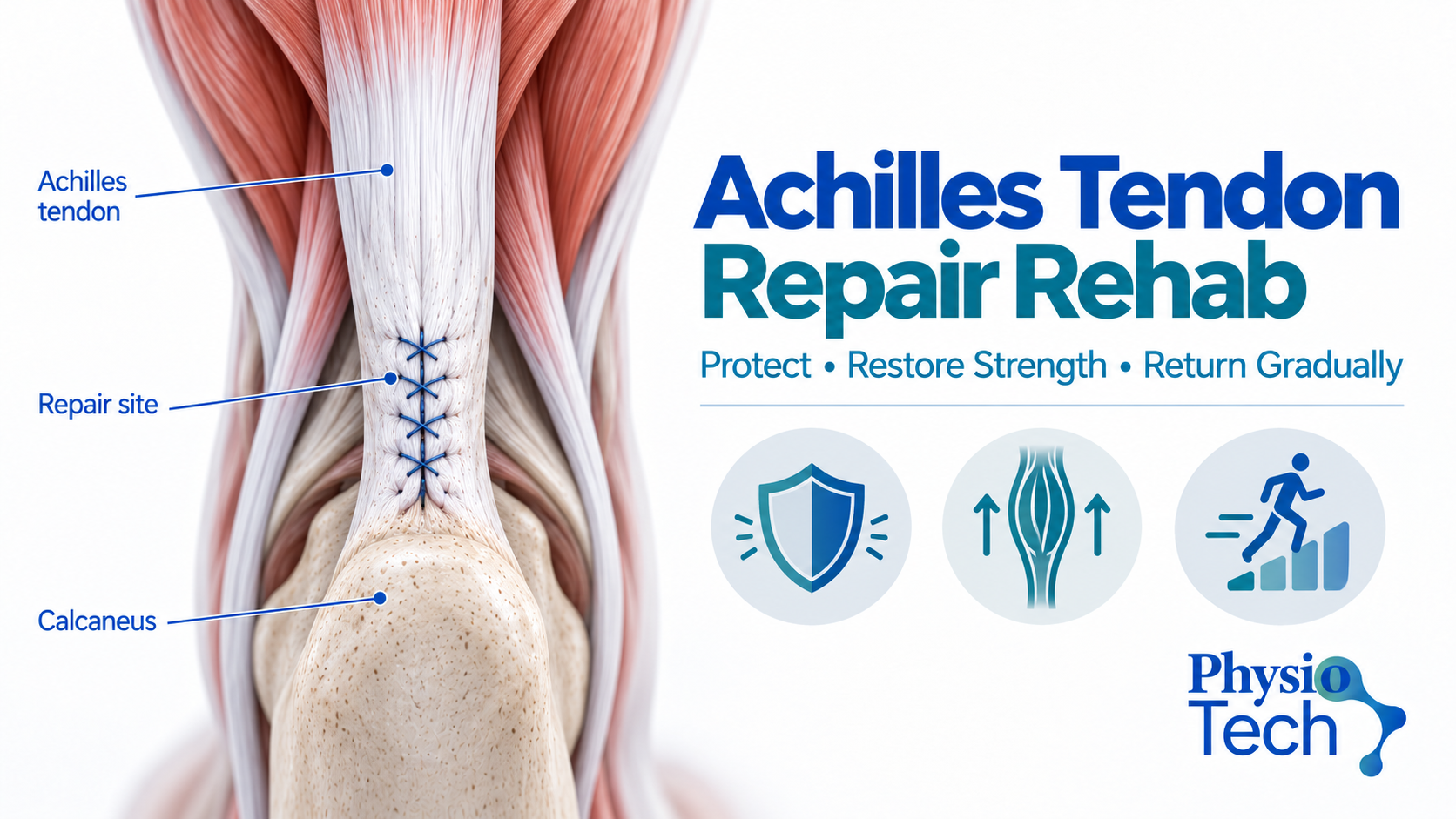
اقرأ المقال بالعربيةA surgically repaired Achilles tendon needs protection alongside carefully progressed loading. Rehabilitation aims to restore ankle mobility, walking, calf strength and the capacity for running or sport without rushing and overstretching the healing tendon.
Protection and early loading
The surgeon determines the boot or cast, heel-wedge height and permitted weight bearing. Some protocols allow early functional loading inside a protective boot, but plans vary. Do not increase ankle dorsiflexion or remove heel wedges earlier than instructed.
Early goals include swelling control, maintaining knee, hip and trunk capacity, safe crutch use and ankle movement within permitted limits.
Mobility and strength
Ankle motion and loading progress after reviewing wound healing and tendon response. Calf strengthening advances from suitable seated work to standing, double-leg heel raises and eventually single-leg raises. Foot strength, balance and gait quality are also trained.
Walking may look better before calf capacity has returned. Heel-raise height, push-off strength and endurance help guide progression. Mild temporary discomfort may occur, but increasing swelling, loss of strength or deteriorating gait requires load reassessment.
Return to running and sport
Running should not start by date alone. Readiness may include brisk walking without a limp or reactive swelling, suitable motion, adequate calf strength and endurance, and control during introductory hopping tasks. Distance and speed are rebuilt gradually before jumping, cutting and unrestricted sport.
PhysioTech care
At PhysioTech in Zahraa El Maadi, Cairo, we review the operative report and surgeon protocol and assess ankle motion, calf strength, gait and balance. Exercise therapy and progressive loading are central. Manual therapy, electrotherapy, therapeutic ultrasound or kinesio taping may support care when appropriate. Dry needling is considered only away from the wound and when fully safe; it does not replace strength training.
Seek help for increasing wound redness or drainage, fever, severe calf pain or swelling, or a new pop followed by loss of push-off. Chest pain or shortness of breath requires emergency care.
Book an assessment
Bring the operative report and boot and loading instructions to PhysioTech for an individual plan to rebuild walking, strength and activity.
This article is educational and does not replace surgeon instructions or individual assessment.


