Share:
51 views
#ألم مفاصل الرقبة #Cervical facet joint pain #تيبس الرقبة #صداع من الرقبة #علاج طبيعي الرقبة
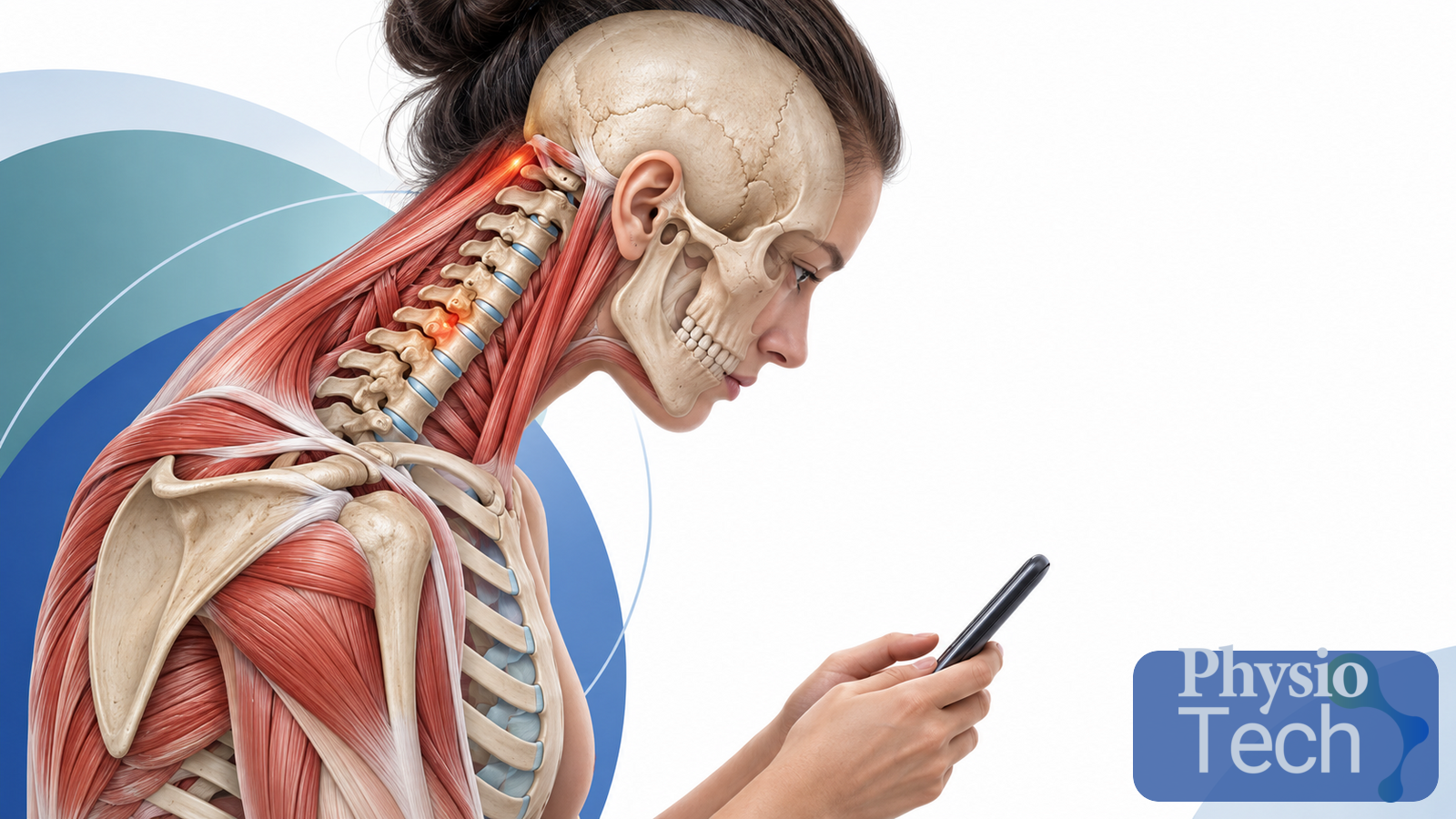
Local one-sided neck pain that increases with rotation or looking up can fit a cervical facet-joint pattern, but pain location alone does not prove it. Muscles, discs, nerves and headache disorders can look similar.
اقرأ المقال بالعربيةThe following information is educational and does not replace an individual examination, especially after major trauma or when warning signs are present.
What Is the Condition?
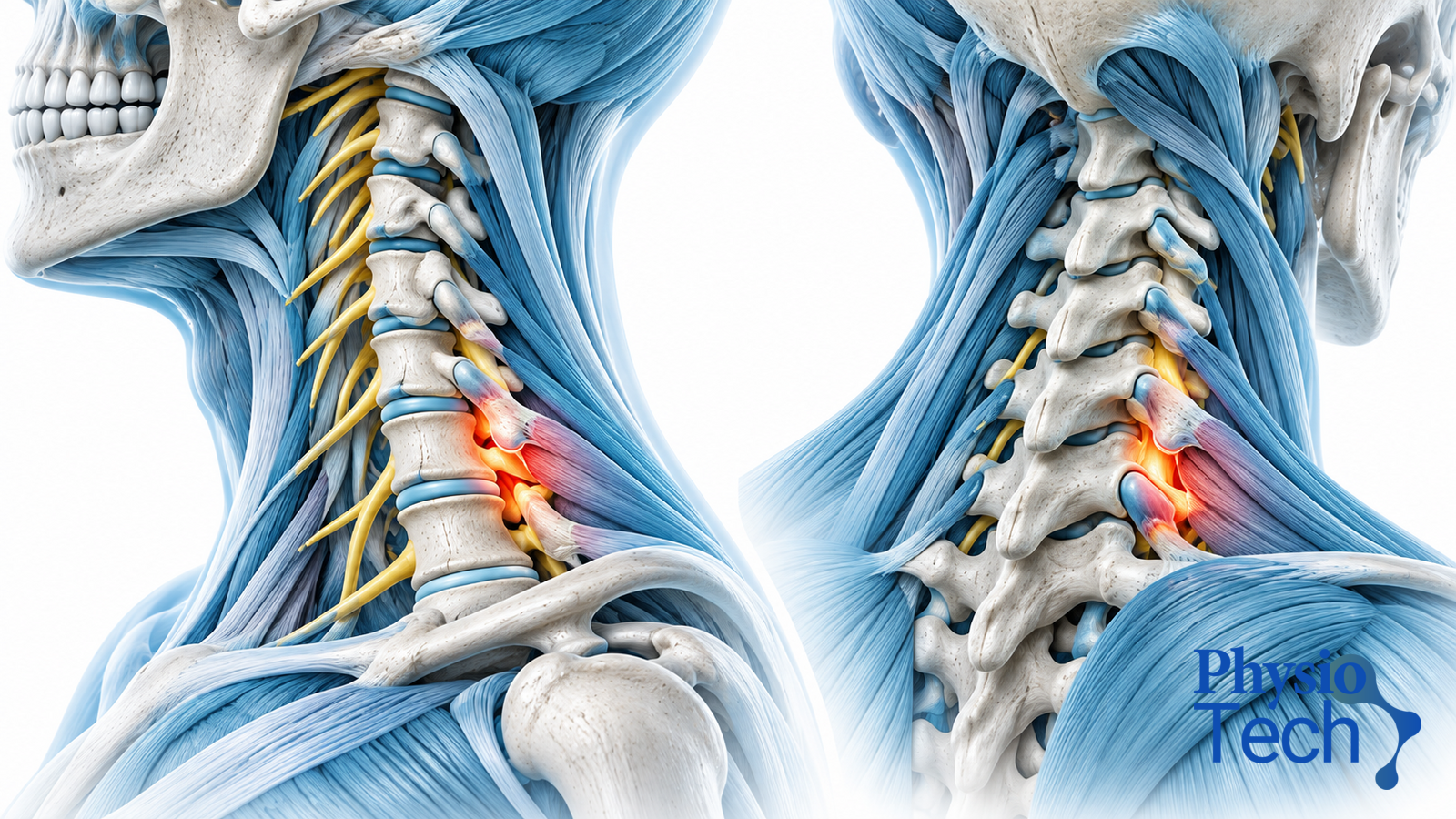
Facet joints link adjacent vertebrae and guide movement. Their capsule is innervated and may become sensitive after sudden motion, repeated load or age-related change, but imaging change does not equal pain.
Symptoms You May Notice
• Local one-sided neck pain.
• Pain with rotation or looking upward.
• Stiffness after sleep or prolonged sitting.
• Referral toward the head or scapula without a clear nerve pattern.
• Movement loss affecting driving or work.
Causes and Contributing Factors
Sudden movement, limited position variety, work or sport load, whiplash and joint change may contribute. The problem does not mean a vertebra is out of place.
Conditions That Can Look Similar
Cervical radiculopathy, cervicogenic headache, muscular pain, disc-related pain, myelopathy and vascular or other rare disorders.
How Is It Assessed at PhysioTech?
Pain behaviour, headache, tingling, dizziness and trauma are reviewed, then cervical motion, strength, neurological status and shoulder are examined. A movement and test pattern matters more than pressing one spot.
What Do We Measure?
Rotation range, driving and work tolerance, pain during a defined motion, neck and shoulder strength, and daily and post-exercise symptom behaviour.
We record a meaningful task such as walking, running, stairs or reaching, the response during it and what happens later and the next day. Movement, strength, capacity and task quality are compared over time rather than judging progress only by short-term relief in the session.
When May Imaging or Medical Referral Be Needed?
Increasing weakness or numbness, gait or hand dysfunction, sudden severe headache, neurological dizziness, fever or major trauma needs medical review.
Imaging is not required for every patient. It becomes important after major trauma, with warning signs, when progress is unexpectedly poor, or when the result would change loading, referral or surgical decisions. Imaging decisions are coordinated with the appropriate physician.
Cervical Facet Joint Pain Treatment at PhysioTech
1. Protect the Area and Manage Load
Temporarily reduce strongly aggravating positions while maintaining comfortable movement instead of prolonged rest.
2. Restore Movement and Control
Use graded cervical and thoracic motion; manual therapy can be a short-term adjunct when safe and appropriate.
3. Build Strength and Capacity
Build neck and shoulder strength and tolerance for sitting, driving and work progressively.
4. Return to Activity or Sport
Return to speed or load-based sport and tasks after motion, strength and confidence improve without neurological symptoms.
A central part of care is understanding why each exercise was chosen and how to adjust the dose. We agree on an acceptable symptom response, then progress repetitions, resistance, speed or task complexity. We do not promise a fixed recovery date because injury severity, general health and activity demands vary.
The PhysioTech Treatment Philosophy in Cairo
At PhysioTech Clinic in Zahraa El Maadi, Cairo, care starts with assessment rather than an imaging label alone. We connect symptom behaviour with movement, strength, capacity and work or sport demands, record clear baseline measures and retest them. Manual therapy, dry needling, kinesio taping, electrotherapy or therapeutic ultrasound may be used for a defined purpose, but they do not replace education, therapeutic exercise and graded loading.
A vertebra is not being put back into place. We test modifiable movement, load and strength, using manual therapy to support rather than replace exercise.
Red Flags That Need Prompt Medical Review
Thunderclap headache, dizziness with double vision or speech change, increasing weakness or numbness, imbalance, bladder or bowel change, fever or major trauma.
Frequently Asked Questions
Does imaging prove the joint causes pain?
No. Changes are common and must match symptoms and examination.
Does clicking mean damage?
Not necessarily; sound alone does not determine diagnosis or treatment.
Is manual therapy enough?
It may help short term, while movement, strength and load management remain central.
When Should You Book an Assessment?
If neck pain limits turning or driving, book an assessment at PhysioTech in Zahraa El Maadi, Cairo.
Trusted References
• jospt.org