Share:
59 views
#كسر نهاية عظمة الكعبرة #Distal radius fracture #تأهيل بعد كسر الرسغ #تيبس الرسغ #علاج طبيعي اليد
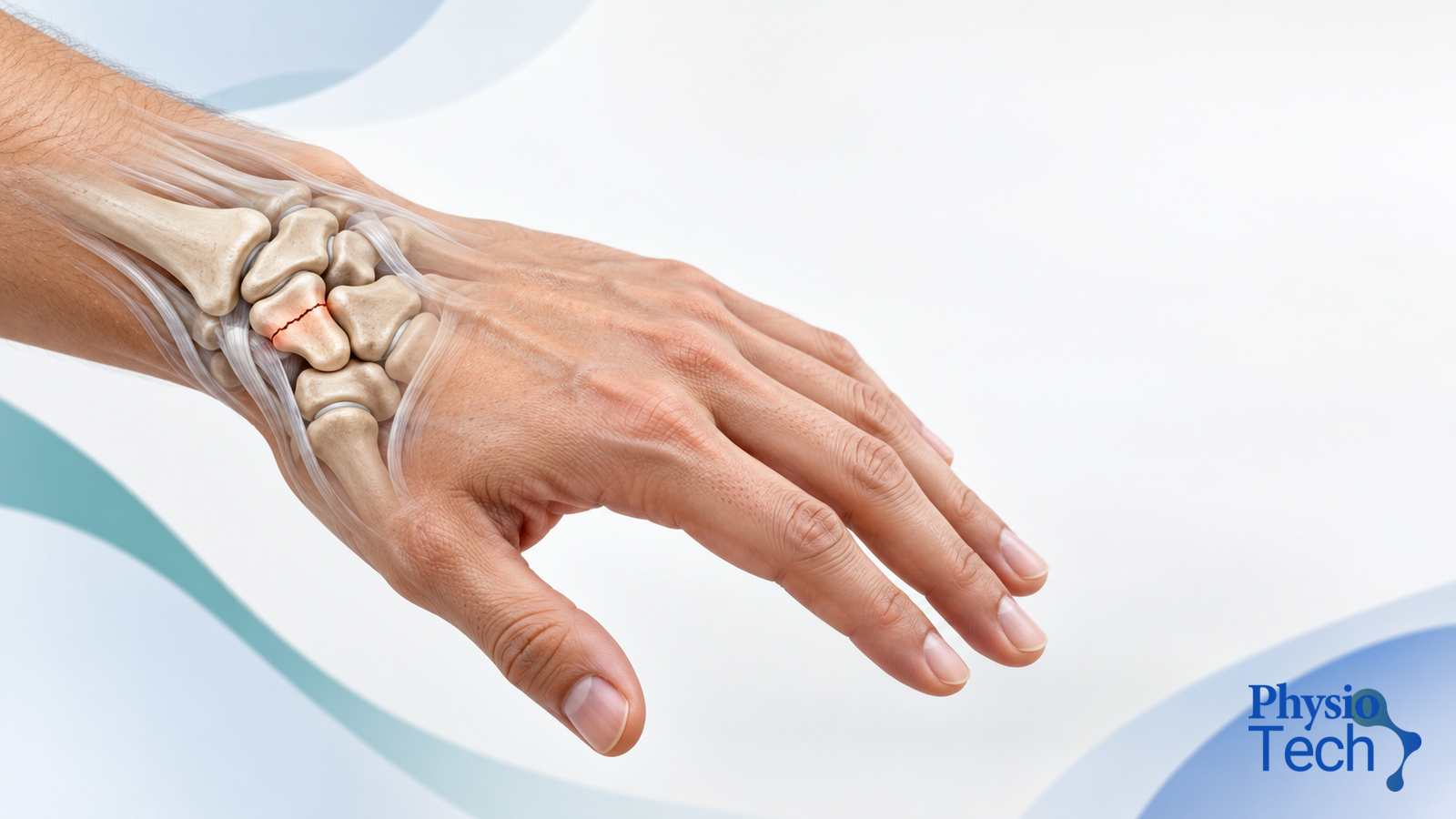
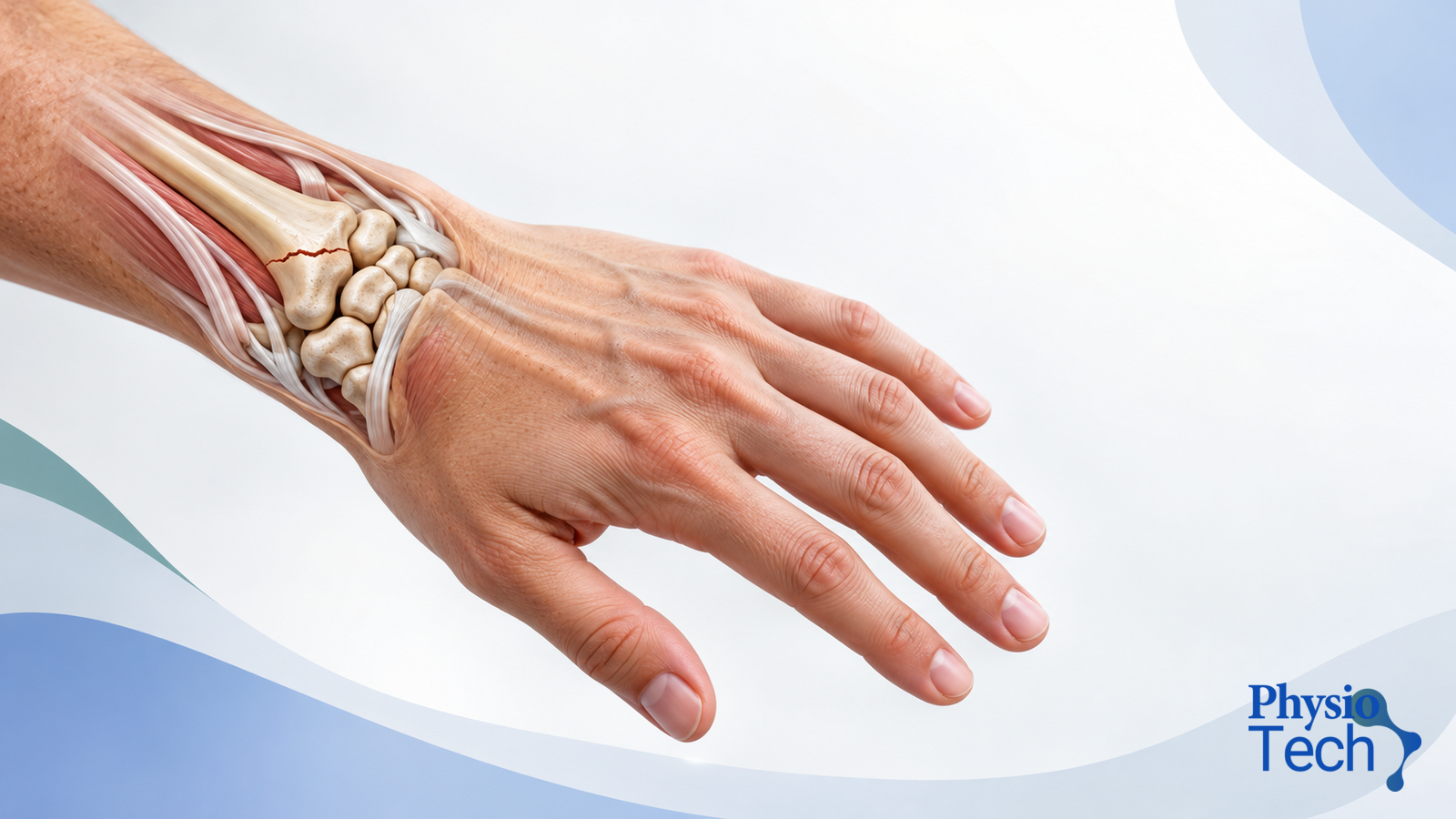
A distal radius fracture commonly follows a fall onto the hand. After casting or surgery, swelling, stiffness, weak grip and fear of use can remain. Rehabilitation must respect fracture stability and surgeon instructions.
اقرأ المقال بالعربيةThe following information is educational and does not replace an individual examination, especially after major trauma or when warning signs are present.
What Is the Condition?
The distal radius meets the carpal bones and contributes to forearm rotation. Joint involvement, displacement and fixation method affect motion and permitted loading, so no one protocol fits every fracture.
Symptoms You May Notice
• Wrist and finger swelling and stiffness.
• Weak grip and difficulty opening containers.
• Limited palm-up or palm-down rotation.
• Pain during pushing or carrying.
• Possible median-nerve tingling.
Causes and Contributing Factors
Falls are common and low bone density raises risk. Immobilisation, swelling, scarring and fear can contribute to later limitation.
Conditions That Can Look Similar
TFCC injury, scaphoid fracture, wrist-ligament injury, median-nerve compression and complex regional pain syndrome.
How Is It Assessed at PhysioTech?
Imaging and load restrictions are reviewed, followed by wound, swelling, finger, wrist and forearm motion, sensation and circulation. Grip is measured when healing permits.
What Do We Measure?
Flexion, extension, deviation and rotation, swelling, grip and pinch strength, and writing, work, pushing and carrying function.
We record a meaningful task such as walking, running, stairs or reaching, the response during it and what happens later and the next day. Movement, strength, capacity and task quality are compared over time rather than judging progress only by short-term relief in the session.
When May Imaging or Medical Referral Be Needed?
Increasing pain with heat and redness, wound discharge, progressive numbness, finger colour change or disproportionate pain and swelling needs medical review.
Imaging is not required for every patient. It becomes important after major trauma, with warning signs, when progress is unexpectedly poor, or when the result would change loading, referral or surgical decisions. Imaging decisions are coordinated with the appropriate physician.
Distal Radius Fracture Treatment at PhysioTech
1. Protect the Area and Manage Load
During immobilisation, maintain finger, elbow and shoulder movement and manage swelling as instructed; do not load the fracture before clearance.
2. Restore Movement and Control
After immobilisation, restore wrist and forearm motion gradually and manage scar and skin without aggressive painful stretching.
3. Build Strength and Capacity
Begin grip and light resistance, then progress carrying and pushing as imaging stability and symptoms allow.
4. Return to Activity or Sport
Return to work and sport with graded task simulation and medical protection advice for falls or contact sport.
A central part of care is understanding why each exercise was chosen and how to adjust the dose. We agree on an acceptable symptom response, then progress repetitions, resistance, speed or task complexity. We do not promise a fixed recovery date because injury severity, general health and activity demands vary.
The PhysioTech Treatment Philosophy in Cairo
At PhysioTech Clinic in Zahraa El Maadi, Cairo, care starts with assessment rather than an imaging label alone. We connect symptom behaviour with movement, strength, capacity and work or sport demands, record clear baseline measures and retest them. Manual therapy, dry needling, kinesio taping, electrotherapy or therapeutic ultrasound may be used for a defined purpose, but they do not replace education, therapeutic exercise and graded loading.
The aim is not only a larger angle. The hand must return to meaningful tasks with strength and confidence, while neuropathic or complex pain is recognised early.
Red Flags That Need Prompt Medical Review
Cold or blue fingers, increasing numbness, severe disproportionate pain, wound heat or discharge, a new fall or sudden movement loss.
Frequently Asked Questions
When can wrist motion start?
According to stability, treatment and physician instructions; finger motion often begins earlier.
Is stiffness normal?
It is common after immobilisation but needs graded care rather than random painful stretching.
When can I lift weights?
After healing is confirmed and resistance is progressively reintroduced.
When Should You Book an Assessment?
After wrist fracture or fixation, book hand and wrist rehabilitation at PhysioTech in Zahraa El Maadi, Cairo.
Trusted References
• aaos.org
• aaos.org