Share:
31 views
#PhysioTech #Cairo #evidence-based physiotherapy #NMES After ACL Surgery
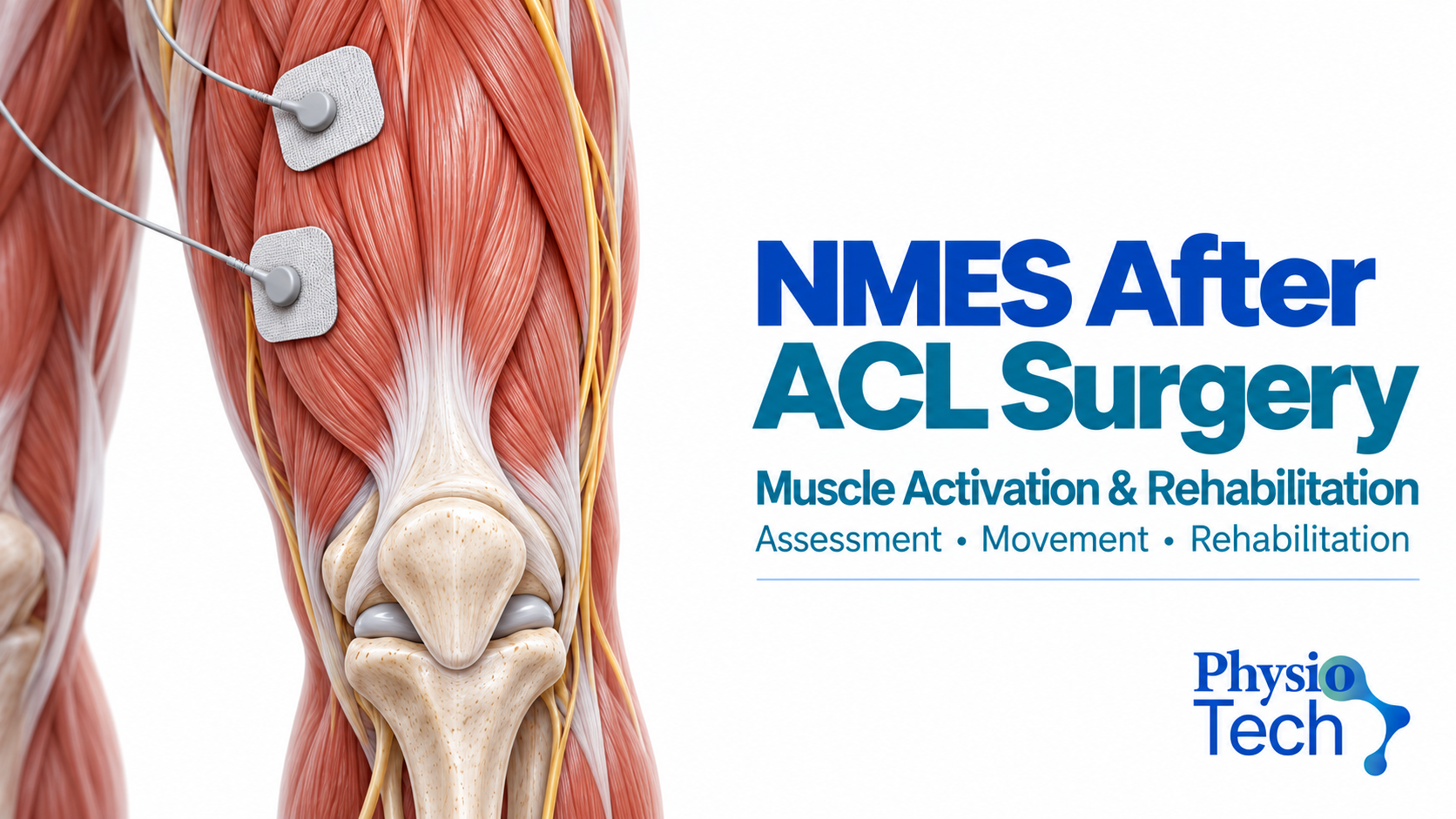
After ACL reconstruction, trying to tighten the quadriceps can feel unexpectedly difficult. Reduced activation is not simply a lack of effort: pain, swelling and changes in signals around the knee can make contraction harder. Neuromuscular electrical stimulation, or NMES, may assist during this phase. However, not every electrical treatment has the same purpose, and a device alone cannot prepare someone for running or return to sport.
اقرأ المقال بالعربيةWhat does NMES do?
A contraction, not just a tingling sensation
Electrodes placed on the skin deliver stimulation intended to produce contraction in the target muscle. The aim is activation, not merely a pleasant sensation or temporary pain relief. Electrode placement, contraction intensity, knee position and tolerance all matter. A familiar device name is not enough: the clinician must identify the deficit being targeted and monitor the response.
What does Aspetar recommend?
An early adjunct
Aspetar’s ACL rehabilitation guideline recommends NMES in the very early phase to help muscle activation or minimise anticipated disuse atrophy. Exercise remains the mainstay of rehabilitation. Calling all electrical stimulation useless after ACL surgery is therefore inaccurate; claiming that NMES removes the need for rehabilitation is equally misleading.
Why do responses differ?
Surgical details and knee status
Meniscal repair or other procedures may introduce additional restrictions. Swelling, pain, range of motion and voluntary activation also vary. These details inform position and stimulation settings. Do not copy another patient’s device programme, and do not interpret sharp pain during a contraction as evidence that treatment is stronger or more effective.
How does the device fit into rehabilitation?
From activation to strength and function
A suitable voluntary effort may be combined with stimulation before training progresses within surgical restrictions. Later rehabilitation needs meaningful strength and control during standing, walking and sport-specific tasks. These demands cannot all be reproduced by a contraction on a treatment couch. Dependence on an adjunct should decrease as the patient can participate more effectively in training.
How is progress measured at PhysioTech?
A defined result rather than session counts
At PhysioTech in Zahraa El Maadi, Cairo, we review swelling, knee extension, activation and tolerance of stage-appropriate activities. Strength and function are assessed with suitable measures when safe. Feeling better after stimulation does not amount to clearance for sport. The home programme includes an explanation of the device’s purpose and a point for reassessing whether it remains useful.
Safety and when to contact the surgical team
A device does not treat complications
Skin, sensation, medical history and implanted devices need screening before stimulation. An implanted electronic device requires specialised advice; do not start unsupervised treatment. Sudden painful calf swelling, breathlessness, fever with increasing wound redness, or discharge needs appropriate medical evaluation. Follow the surgical team’s guidance rather than adding electrical treatment when a new complication appears.
Frequently asked questions
Is NMES the same as TENS?
No. NMES aims to produce muscle contraction, whereas TENS is usually used for sensory-level pain modulation. One device may have several programmes with different purposes.
Is it needed throughout rehabilitation?
Not necessarily. Need is reviewed against activation, strength and exercise participation. Continuing indefinitely without a target or outcome measure is not a requirement for recovery.
When can I return to sport?
Not after a fixed number of electrical sessions. Healing time, testing, function, psychological readiness and the rehabilitation team’s assessment inform the decision.
Assessment and treatment planning in Cairo
If this issue affects movement or work, you can book an assessment at PhysioTech in Zahraa El Maadi, Cairo, Egypt. We discuss your goals and examination findings, explain the options and limitations of each intervention, and agree an appropriate review plan. An article cannot determine the required number of sessions or guarantee an outcome; individual assessment is necessary.