Share:
102 views
#متلازمة ألم المدور الكبير #ألم جانب الورك #أوتار العضلات الألوية #GTPS #gluteal tendinopathy
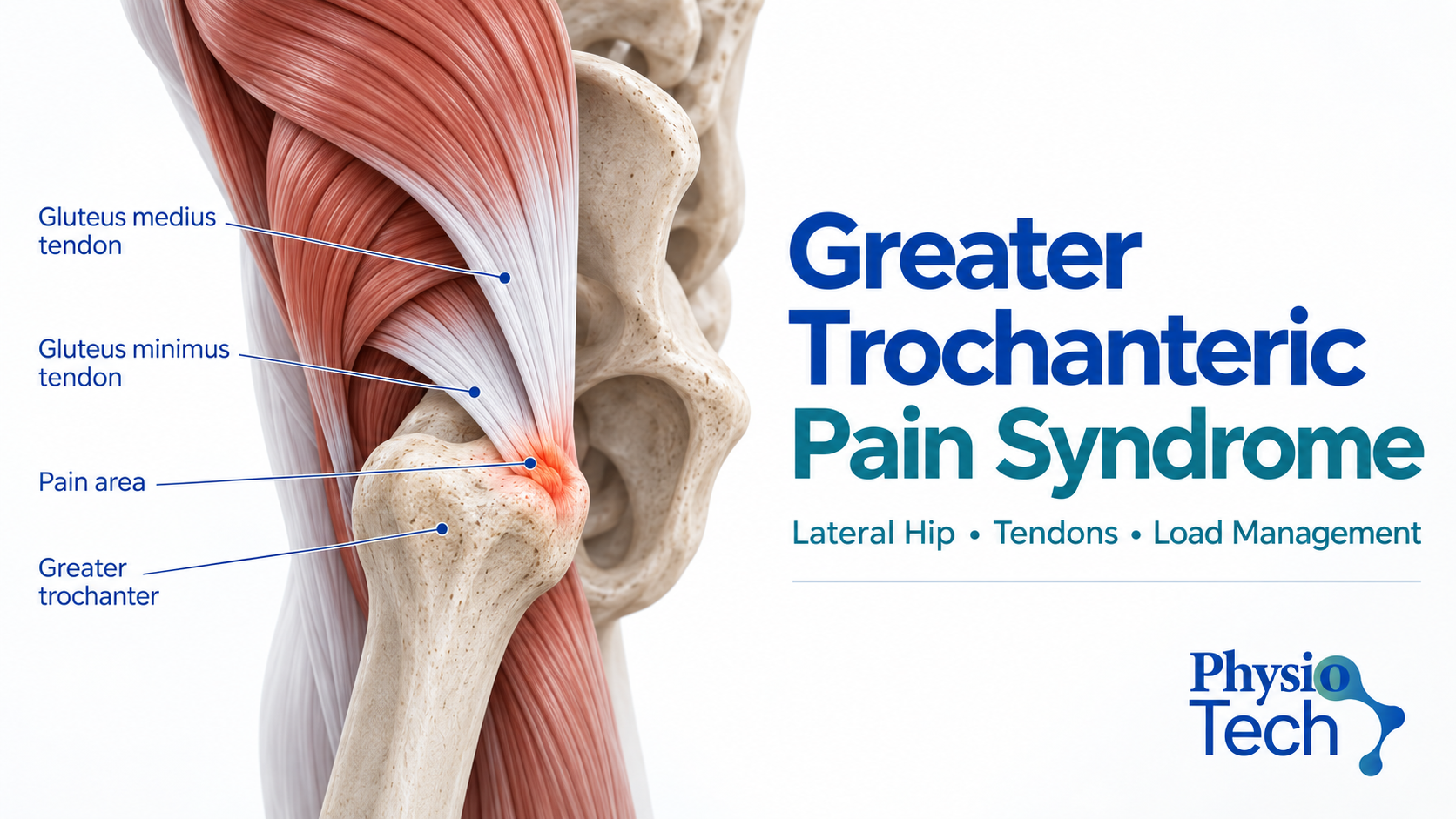
Greater trochanteric pain syndrome commonly involves the gluteus medius and minimus tendons and surrounding tissues. It is not simply “bursitis” and usually presents as lateral hip pain.
Common symptoms
1. Pain when lying on the affected side
2. Pain with prolonged walking or stairs
3. Tenderness over the greater trochanter
4. Pain during single-leg loading
Why accurate diagnosis matters
Hip arthritis, lumbar pain and labral pathology can overlap. Local tenderness alone does not identify the exact tissue.
PhysioTech assessment
We assess symptom behaviour, movement, strength, sensation and aggravating factors, while screening the spine, nearby joints and peripheral nerves. No single test or scan determines the plan.
Physiotherapy management
1. Reduce tendon compression such as direct side-lying
2. Modify walking and stairs according to irritability
3. Progress gluteal strengthening from tolerable loads
4. Build endurance, balance and return to activity
Adjuncts such as manual therapy, dry needling, kinesio taping, electrotherapy or therapeutic ultrasound are used only for a defined supporting goal. They do not replace assessment, exercise, graded loading or outcome review.
When medical review is needed
Severe pain after a fall, inability to bear weight, fever or systemic symptoms require medical assessment.
Book an assessment at PhysioTech
If symptoms affect sleep, work, walking or sport, book an individual assessment at PhysioTech in Zahraa El Maadi to identify the likely driver and build a measured plan.
FAQ
Is it only bursitis?
Often the gluteal tendons and surrounding tissues contribute, so rehabilitation matters.
Can side-lying aggravate it?
It can increase tendon compression; sleep position may be modified while graded loading continues.
Note: Educational content only; it does not replace diagnosis.


