Share:
85 views
#تغيير مفصل الفخذ #تأهيل بعد العملية #علاج طبيعي #المشي #hip replacement
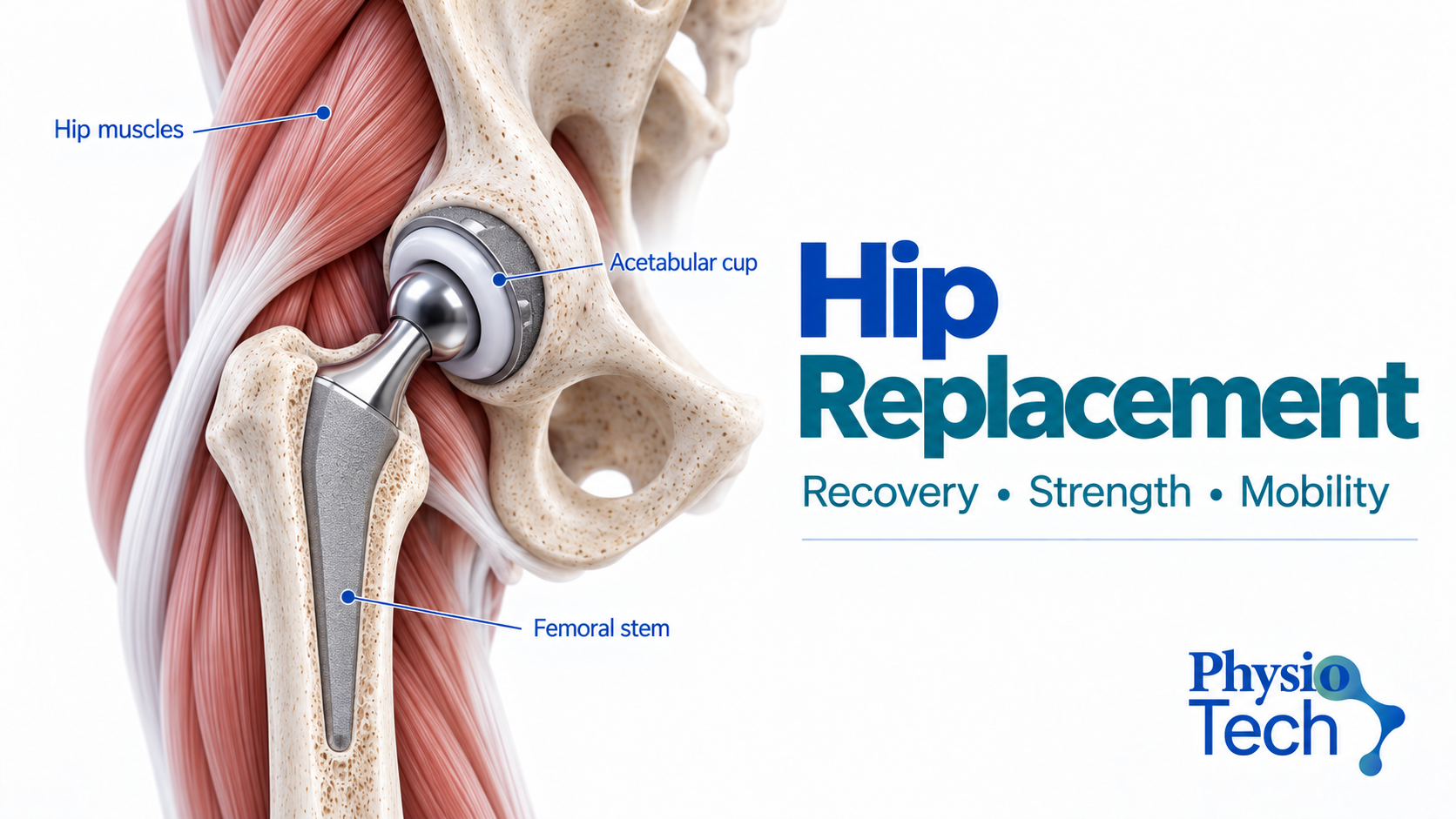
Rehabilitation After Hip Replacement
اقرأ المقال بالعربيةPhysiotherapy after total hip replacement helps restore walking, strength, balance and independence. Precautions differ with surgical approach, surgeon guidance and the individual patient, so one universal list should not be applied to everyone.
Early recovery
Training begins with safe transfers and walking using a walker or cane according to weight-bearing instructions. Early exercise may include ankle movement for circulation, activation of the thigh and gluteal muscles, and practice for safe home mobility and stairs.
The therapist explains approach-specific precautions. Some instructions may involve hip flexion, crossing the legs or rotation, but the surgeon determines the exact movements and duration. Sleeping, sitting, dressing and bathroom strategies are practiced safely.
Strength, gait and balance
As recovery progresses, exercises strengthen the hip, thigh and trunk and improve step length and weight transfer. Walking aids are reduced when strength, balance and gait quality allow, not simply after a fixed date. Functional exercise prepares the patient for work, outdoor walking and usual activities.
Red flags
Contact the medical team for fever, increasing wound redness or drainage, sudden severe hip pain, abnormal leg position or shortening, or calf pain and swelling. Chest pain or shortness of breath requires emergency care.
PhysioTech rehabilitation
At PhysioTech in Zahraa El Maadi, Cairo, we review the operative report and precautions and assess strength, gait, balance and daily function. Exercise therapy and functional retraining are central. Manual therapy, electrotherapy, therapeutic ultrasound or kinesio taping may be considered according to clinical need and healing stage. Dry needling is not used near the wound and is considered only when safe and appropriate.
Frequently asked questions
When can I walk without a cane?
When gait is safe and balanced without a marked limp, with clinician and surgeon agreement.
Do I need supervised therapy if I exercise at home?
Some patients do well with a structured home program; others benefit from supervision because of weakness, balance problems or limited mobility.
When can I drive?
After surgeon clearance, when sedating medication has stopped and leg control is adequate.
Book an assessment at PhysioTech for an individual plan to rebuild safe movement and independence.
This content is educational and does not replace surgeon instructions or medical assessment.


