Share:
87 views
#تغيير مفصل الركبة #تأهيل بعد العملية #علاج طبيعي #المشي #knee replacement
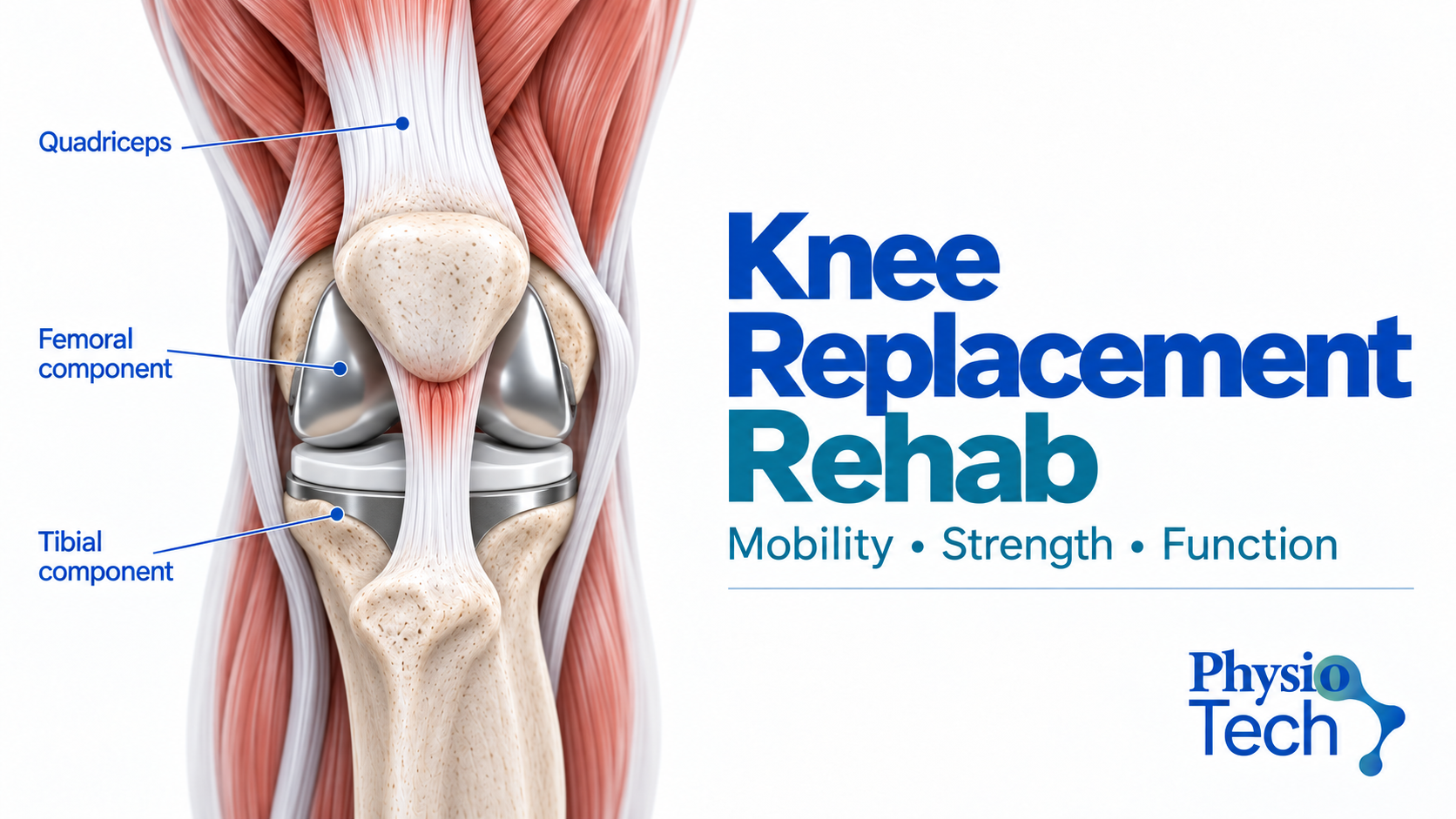
Rehabilitation After Knee Replacement
اقرأ المقال بالعربيةPhysiotherapy is a central part of recovery after total knee replacement. The goals extend beyond pain relief to restoring knee motion, leg strength, safe walking, stair ability and independence in daily life. Progress varies with preoperative health, other medical conditions, the surgical procedure and surgeon guidance.
Early days and weeks
Movement commonly begins early according to the surgical team. Therapy focuses on circulation exercises, quadriceps activation, knee extension, gradual flexion and safe transfers and walking with a walker or crutches when needed.
Some swelling is expected. Increasing redness or wound drainage, fever or severe worsening pain require review. Marked calf pain or swelling, chest pain or shortness of breath needs urgent medical attention.
Restoring motion and strength
Rehabilitation targets functional goals: enough knee extension for an efficient gait, flexion for sitting and stairs, and progressive strength in the thigh, hip and calf. Balance and gait training support safe reduction of walking aids.
Success is not one flexion number or a fixed number of weeks. The therapist reviews pain, swelling, motion, strength, walking quality and daily function.
PhysioTech postoperative rehabilitation
At PhysioTech in Zahraa El Maadi, Cairo, the plan follows individual assessment and surgeon instructions. Exercise therapy and functional training are the foundation. Manual therapy may support appropriate joint and soft-tissue mobility. Electrotherapy, therapeutic ultrasound or kinesio taping may be added when clinically appropriate. Dry needling is considered only when safe and appropriate, with careful attention to the wound and infection risk; it never replaces exercise.
Returning to daily life
Moving from a walker to a cane and then unaided walking depends on balance, strength and gait quality. Driving, work and travel should be cleared according to leg control, medication and activity demands. Home exercise remains important after pain improves.
Book an assessment
Bring the operative report, medication list and surgeon instructions to PhysioTech. We can measure motion, strength and walking and build a progressive program to restore confidence and independence.
This article is educational and does not replace your surgeon’s instructions or individual care.


