Share:
105 views
#التهاب وتر الصابونة #ركبة القافز #ألم أسفل الصابونة #تأهيل رياضي #PhysioTech
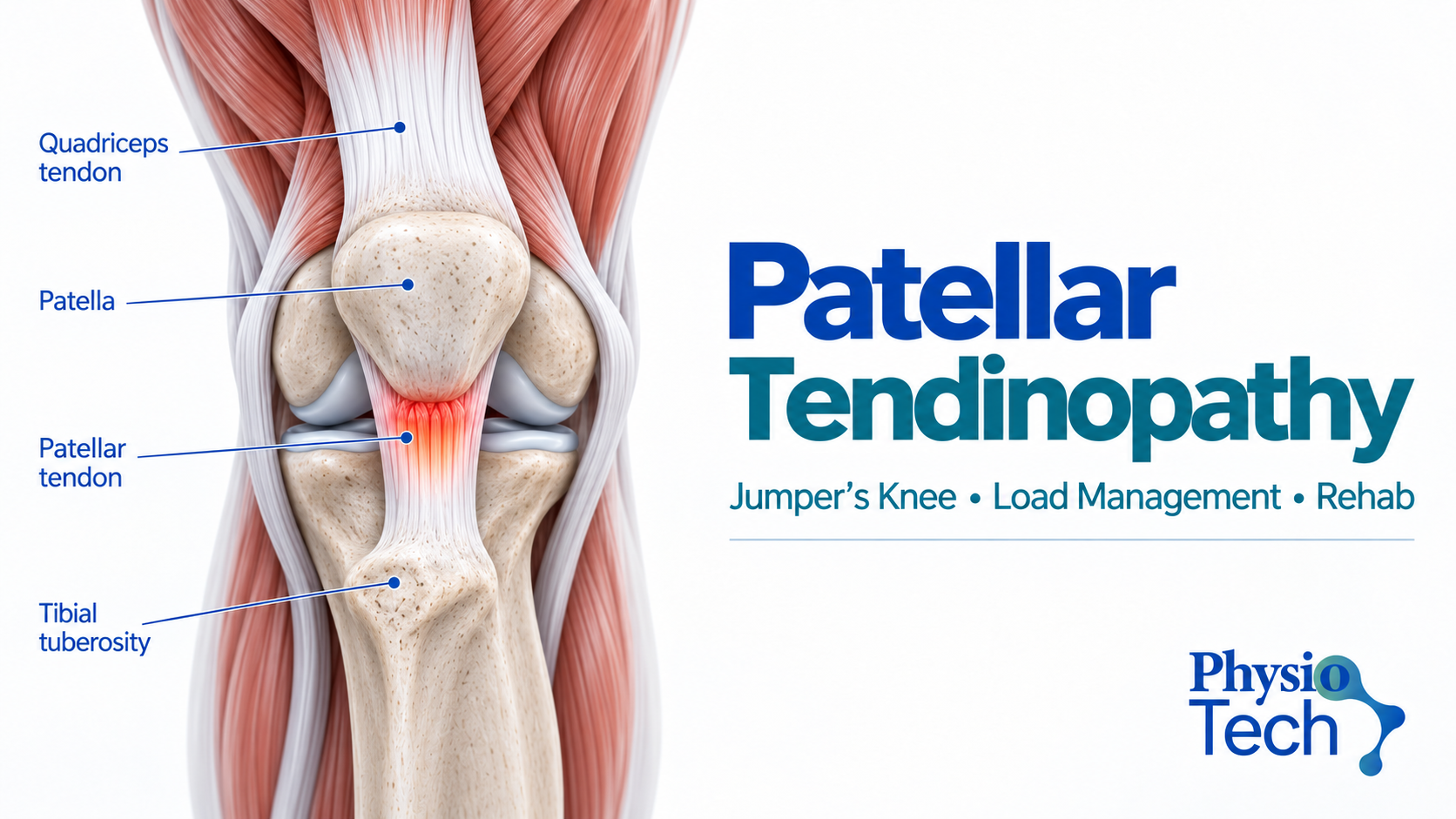
Patellar tendinopathy, often called jumper’s knee, is load-related pain most commonly felt at the upper patellar tendon just below the kneecap. It is frequent in jumping, running and change-of-direction sports, and may follow a sudden increase in leg training or competition load.
اقرأ المقال بالعربيةHow is it different from patellofemoral pain?
Patellar tendon pain is usually localized below the kneecap and aggravated by jumping, landing and fast squatting. Patellofemoral pain is often more diffuse around the kneecap and may be provoked by stairs, prolonged sitting or squats. The conditions can overlap, so examination should identify the most likely pain source and contributing factors.
Common features
- Focal pain just below the kneecap.
- Pain with jumping, landing, sprinting or cutting.
- Stiffness or pain at the start of activity that may warm up and return afterward.
- Reduced jump strength or confidence.
Assessment at PhysioTech
Assessment reviews training load and symptom location, observes squatting, jumping and landing, and tests quadriceps, hip and calf capacity plus ankle and hip mobility. MRI appearance alone does not define pain severity; tendon changes can exist without symptoms. Sudden injury with a pop, inability to straighten the knee, major swelling or suspected rupture requires medical review and possible imaging.
Rehabilitation stages
Settle irritability
Temporarily reduce high-intensity jumping or sprinting while maintaining tolerable exercise. Isometric quadriceps work may help pain in some patients.
Build strength
Progress from controlled resistance toward heavier knee loading according to tolerance. Hip and calf capacity are trained when relevant to the athlete’s demands.
Restore energy-storage capacity
Once strength improves, jumping, landing, acceleration and deceleration are reintroduced gradually. A reduction in pain alone is not enough to skip this stage.
Return to sport
Return is based on training tolerance, movement quality, strength and jump testing, and the knee’s response during the following 24 hours.
Kinesio taping or electrotherapy may help short-term symptoms in selected patients, but they do not restore tendon capacity and never replace assessment, exercise or graded loading.
FAQ
Must I stop jumping completely?
It may be reduced temporarily during a flare, then reintroduced in measured doses. The goal is load management, not permanent avoidance.
Is all pain during exercise harmful?
A limited, stable response may be acceptable for some patients if it does not escalate or remain worse the next day. The clinician sets individual limits.
Is surgery required?
Most cases begin with structured conservative rehabilitation. Other options are considered only after adequate rehabilitation and medical assessment when symptoms persist.
Local CTA
If pain below the kneecap limits running or jumping, book a sports-knee assessment at PhysioTech Clinic in Zahraa El Maadi, Cairo for a strength and return-to-sport plan matched to your level.
Suggested internal links: Patellofemoral Pain; Knee Osteoarthritis; ACL Prehabilitation; Return to Sport After ACL; Therapeutic Exercise.