Share:
88 views
#اضطراب حركة لوح الكتف #Scapular Dyskinesis
Understanding Scapular Dyskinesis
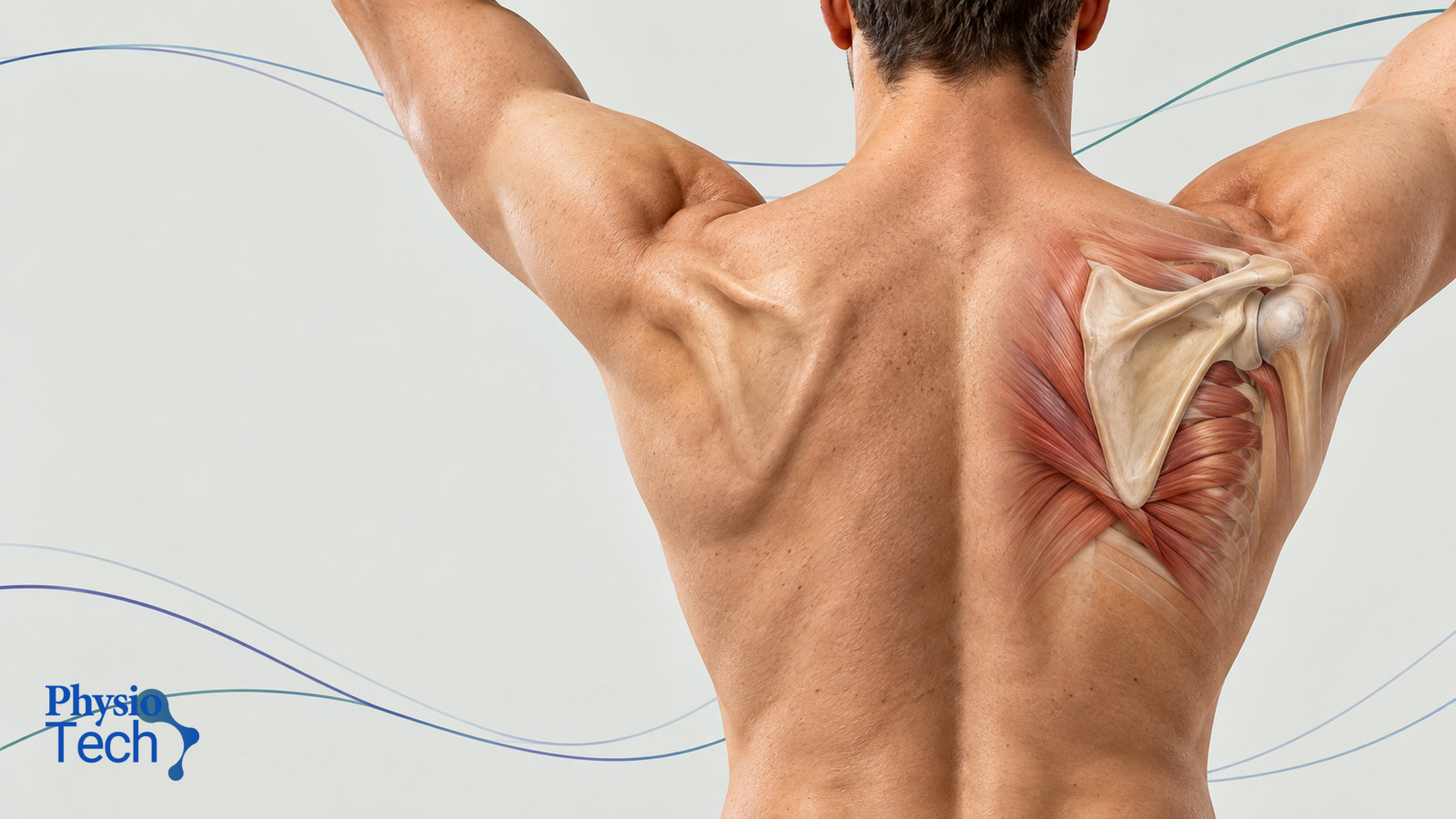
Scapular dyskinesis describes altered shoulder-blade position or motion during arm elevation. It may appear as medial-border prominence or a change in scapulohumeral rhythm. It is not always a standalone diagnosis and can occur without pain, so movement must be interpreted alongside symptoms and function.
Symptoms and Clinical Assessment
Assessment reviews symptom behaviour, neck and shoulder mobility, rotator-cuff and scapular-muscle capacity, and relevant pushing, pulling, lifting or sporting tasks. A useful question is whether a supported change in scapular movement reduces symptoms or improves force; this guides treatment better than appearance alone.
Physiotherapy and Rehabilitation
Progressive Exercise and Load Management
Rehabilitation may include comfortable mobility, serratus anterior and trapezius capacity, rotator-cuff strength, and progressive overhead, push, pull or throwing tasks. Manual therapy or kinesio taping may be used selectively to assist movement or short-term symptoms, but active task-specific training remains central. There is no single ideal shoulder-blade position for every person.
Return to Activity and When Medical Review Is Important
Medical review is appropriate for marked sudden weakness, new prominent winging after surgery or trauma, sensory loss, inability to raise the arm or rapidly progressive symptoms.
Frequently Asked Questions
Common Questions About Recovery and Treatment
FAQ: Visible winging does not always mean nerve damage, but new winging with weakness deserves assessment. Holding the shoulders back all day is not required; healthy shoulder function uses varied movement. Exercises should match the person’s symptoms, capacity and goal.
Book an Assessment at PhysioTech
Local CTA: If shoulder pain or scapular winging limits work or training, book an assessment at PhysioTech Clinic in Zahraa El Maadi for a progressive, task-specific plan.