Share:
106 views
#Tennis Elbow #Lateral Elbow Tendinopathy #Elbow Pain #Physiotherapy Cairo #Zahraa El Maadi #Exercise Therapy #Manual Therapy #Dry Needling
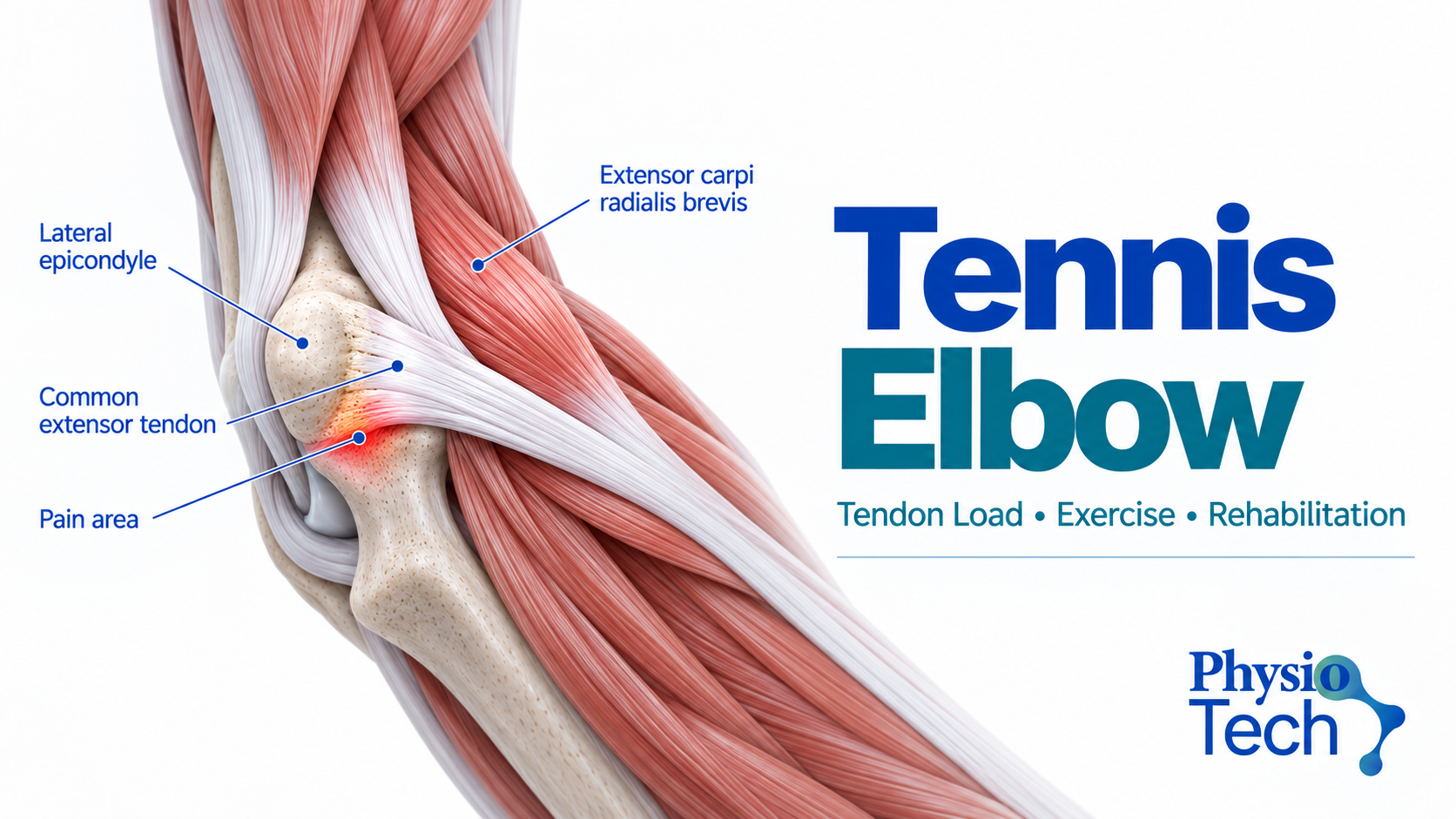
Pain on the outside of the elbow is commonly called tennis elbow, although most people who develop it do not play tennis. The more accurate clinical term is lateral elbow tendinopathy. It is usually associated with repeated or rapidly increased loading of the wrist and finger extensor tendons near the outer elbow.
Symptoms may develop with computer work, manual tools, carrying bags, gym training, racket sports or jobs that require repeated gripping and twisting. Accurate assessment matters because lateral elbow pain may also arise from the elbow joint, nerves or the cervical spine.
Common tennis elbow symptoms
Typical symptoms include pain or tenderness around the outer bony prominence of the elbow, pain when gripping or lifting a cup, opening a door or using a screwdriver, and a noticeable reduction in grip strength. Pain may extend into the forearm, but its location alone should not be used to make a diagnosis.
Why does lateral elbow tendinopathy occur?
Tendons adapt when loading increases gradually. They may become sensitive when training or work demands rise faster than their capacity. Common contributors include sudden changes in training volume, a new racket or technique, returning to the gym too quickly, repetitive manual work and reduced capacity of the forearm or shoulder muscles.
Tendinopathy does not mean that the tendon is permanently damaged. Pain and imaging findings do not determine recovery by themselves, and complete rest for a prolonged period may reduce the tendon’s ability to tolerate load.
How is tennis elbow assessed?
Assessment begins with the symptom history, work and sporting demands, and the loads that reproduce pain. A physiotherapist may examine elbow, wrist and neck movement, grip strength, forearm tendon capacity and neurological signs. Imaging is not always required in a typical presentation. Medical referral may be needed after major trauma or when there is severe swelling, joint locking, progressive weakness, persistent numbness or unusual symptoms.
Physiotherapy treatment for tennis elbow
Clinical guidelines support an individual programme based on education, load management and progressive resistance exercise. Treatment may include:
• Temporarily modifying activities that clearly aggravate pain rather than stopping all movement.
• Isometric or isotonic wrist-extensor exercises selected for the stage and irritability of the condition.
• Progressive grip and forearm-strength training.
• Shoulder and scapular training when reduced capacity affects upper-limb function.
• Manual therapy in selected presentations to assist pain and movement.
• Taping or a forearm brace as a temporary adjunct when appropriate.
• A graded return to work, gym training or racket sport.
Dry needling, electrotherapy or therapeutic ultrasound may sometimes be considered as adjuncts after assessment. They do not replace progressive exercise and load management.
Should I stop exercising?
Not necessarily. The goal is to identify a tolerable level of loading that does not produce a lasting flare-up. Weight, repetitions, speed or gripping demand may be reduced temporarily and progressed as pain and capacity improve. Progress is judged by function and load tolerance over time, not by whether pain disappears in a single day.
How long does recovery take?
Recovery varies with symptom duration, irritability, work demands, activity level and adherence to rehabilitation. Some presentations improve within weeks, while persistent cases may require several months of progressive loading. There is no fixed number of sessions for every patient.
When should you seek assessment?
Arrange an assessment if pain persists for several weeks, affects work, sleep or training, or repeatedly returns when load increases. Earlier assessment is appropriate after direct trauma or when pain is accompanied by progressive weakness or numbness.
Tennis elbow treatment at PhysioTech
At PhysioTech Clinic in Zahraa El Maadi, Cairo, treatment begins with an assessment of the likely pain source, grip strength, tendon capacity and movement of the elbow, wrist and neck. Our physiotherapists build an exercise- and load-based programme and may add manual therapy, dry needling, kinesio taping or other adjuncts when clinically relevant. The aim is to restore safe capacity for work, training and sport rather than provide temporary pain relief alone.
Frequently asked questions
Does tennis elbow require surgery?
Most cases begin with conservative management. A doctor may discuss other options when symptoms persist despite appropriate rehabilitation or when another diagnosis is suspected.
Is a steroid injection the solution?
It may reduce pain temporarily in some cases, but it is not an automatic first choice. Benefits and risks should be discussed with a doctor within a long-term management plan.
Can the pain come from the neck?
Sometimes cervical or neural conditions produce similar symptoms. The neck and upper limb should be examined when the clinical presentation suggests this possibility.
Scientific references
Lucado AM, et al. Lateral Elbow Pain and Muscle Function Impairments: Clinical Practice Guideline. JOSPT. 2022.
Coombes BK, et al. Management of Lateral Elbow Tendinopathy: One Size Does Not Fit All. JOSPT. 2015.


