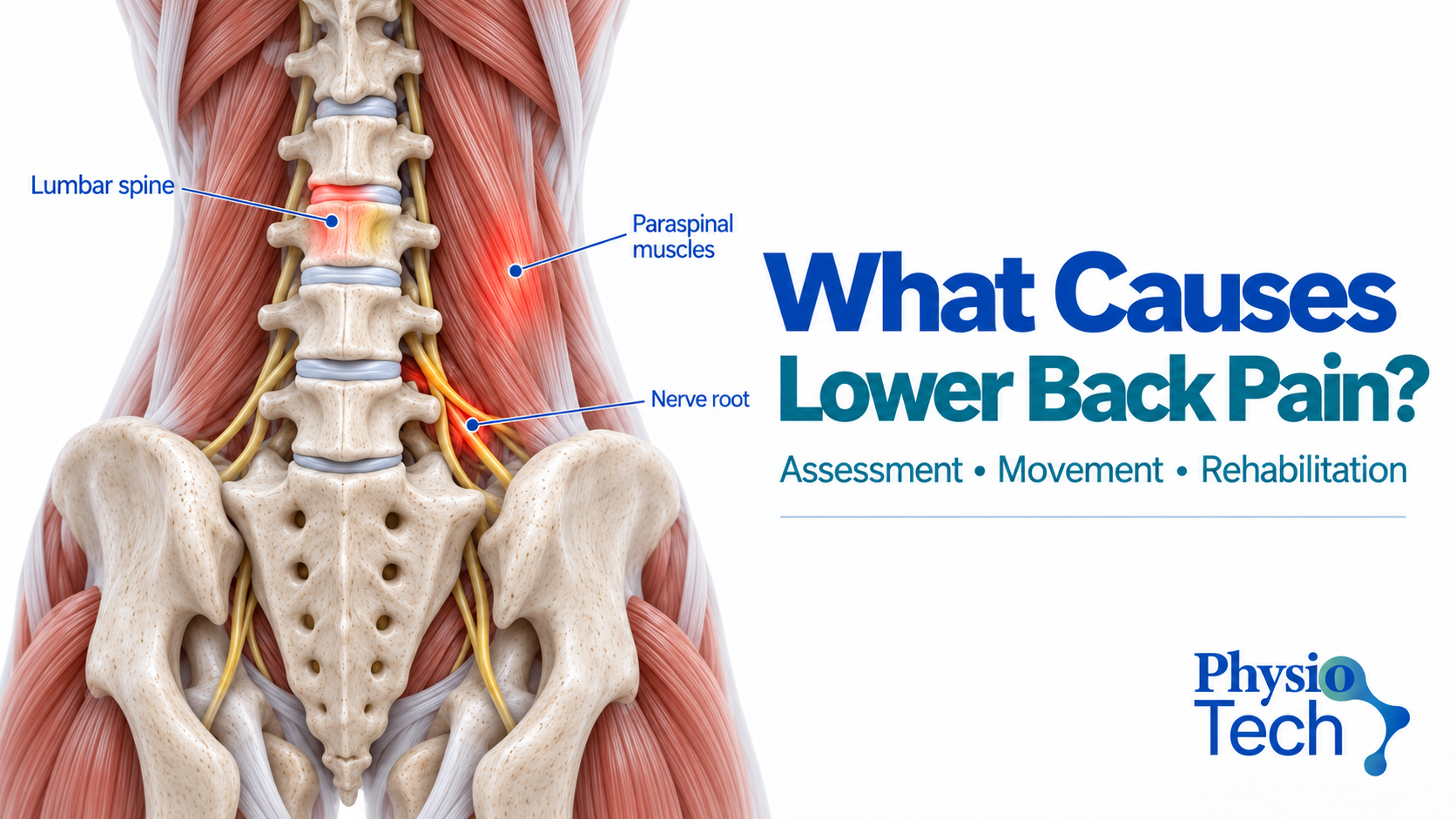
Lower back pain is one of the most common musculoskeletal problems people experience. It can affect your ability to sit, walk, exercise, work, sleep, or perform everyday activities.
But lower back pain does not always have one single cause.
Different factors can contribute to back pain, including movement patterns, physical activity, prolonged positions, previous injuries, reduced strength or mobility, and problems affecting the spine or surrounding tissues.
This is why understanding what causes lower back pain is an important first step toward choosing the right treatment.
At PhysioTech, our approach begins with a comprehensive clinical assessment rather than simply treating the area where you feel pain. Our treatment philosophy focuses on understanding the individual patient, identifying contributing factors, and developing a personalized rehabilitation plan.
Common Causes of Lower Back Pain
1. Muscle and Movement-Related Problems
Muscles and joints around the lower back, pelvis, and hips work together to support movement and everyday activities.
Changes in movement patterns, reduced physical capacity, muscle weakness, or poor control during certain movements may contribute to lower back pain.
This does not necessarily mean that one muscle or one movement is the “cause” of the pain.
A proper assessment helps determine which factors may be relevant to your individual condition.
2. Prolonged Sitting and Daily Activities
Spending long periods sitting, especially when combined with limited movement throughout the day, can contribute to back discomfort in some people.
Work, driving, studying, and other daily activities can place repeated demands on the lower back.
If your back pain regularly appears after sitting, standing, walking, or performing a particular activity, these patterns can provide useful information during your physiotherapy assessment.
3. Disc-Related Conditions
The discs between the vertebrae can become involved in some cases of lower back pain.
Conditions such as a herniated disc or other spinal disorders may cause back pain and, in some cases, symptoms that extend into the leg.
However, the presence of a disc problem on imaging does not automatically mean that it is the only source of your symptoms.
A clinical assessment is important to understand how the imaging findings relate to your symptoms and movement.
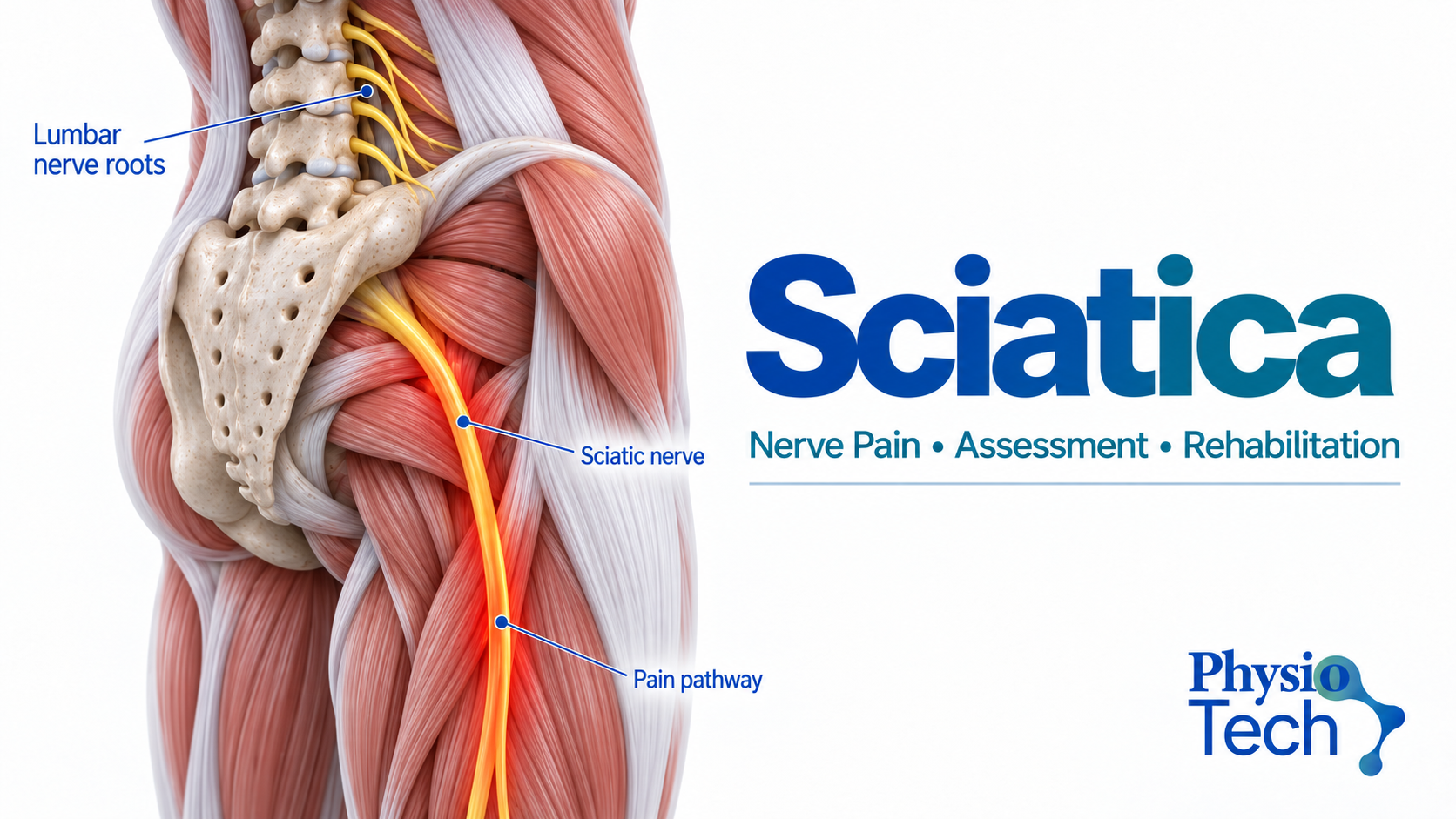
4. Sciatica and Nerve-Related Symptoms
Some people experience lower back pain together with pain, tingling, numbness, or other symptoms extending into the leg.
This may be associated with irritation or involvement of the sciatic nerve or other neural structures.
If you are searching for sciatica treatment or sciatica physiotherapy, the first step should be understanding the cause and presentation of your symptoms rather than choosing a treatment technique based on the diagnosis alone.
5. Reduced Mobility or Movement Control
The way your spine, pelvis, hips, and other body regions move together can influence how your body handles different physical demands.
At PhysioTech, our rehabilitation philosophy incorporates movement-based concepts, including Kinetic Control, which focuses on identifying and addressing uncontrolled movement that may contribute to pain or dysfunction.
The goal is not simply to reduce pain temporarily, but to improve movement and physical function.
Can Physiotherapy Help Lower Back Pain?
Physiotherapy can be an important part of managing many types of lower back pain.
However, there is no single physiotherapy treatment that is appropriate for every patient.
The most suitable approach depends on your symptoms, clinical findings, physical limitations, goals, and stage of recovery.
At PhysioTech, treatment may combine:
- Clinical assessment
- Therapeutic exercises
- Manual therapy
- Movement and motor-control rehabilitation
- Electrotherapy when clinically appropriate
- Other therapeutic techniques according to the patient’s needs
Our philosophy emphasizes integrating clinical assessment with modern therapeutic techniques and rehabilitation exercises rather than relying on a single treatment method.
Do You Need Physiotherapy for Lower Back Pain?
Not every episode of lower back pain requires physiotherapy.
However, a physiotherapy assessment may be useful if:
- Your back pain keeps returning.
- Pain is affecting your daily activities.
- You have difficulty exercising or returning to sport.
- Your symptoms are limiting your movement.
- You have persistent back pain despite trying to manage it yourself.
- You have been diagnosed with a spinal or disc condition and need rehabilitation.
A physiotherapist can assess your movement, physical function, symptoms, and contributing factors and determine whether physiotherapy is appropriate for your condition.
Lower Back Pain and Herniated Disc
A herniated disc is one of the spinal conditions that may be associated with back pain.
Some patients may also experience leg symptoms, depending on the structures involved.
Importantly, having a herniated disc does not automatically mean that surgery is required.
The appropriate management depends on the individual’s symptoms, clinical findings, severity, functional limitations, and medical assessment.
Physiotherapy may form part of a rehabilitation program when clinically appropriate.
When Should You See a Physiotherapist for Back Pain?
Consider a professional assessment when back pain is persistent, recurrent, or interfering with your normal activities.
You should also seek appropriate medical evaluation if your symptoms are severe, unusual, rapidly worsening, or accompanied by concerning neurological or systemic symptoms.
The purpose of assessment is not simply to identify where you feel pain.
It is to understand why your symptoms may be occurring and how they are affecting your movement and function.
How PhysioTech Approaches Lower Back Pain
At PhysioTech, every rehabilitation journey starts with a comprehensive assessment.
We focus on:
1. Understanding your symptoms
We look at your pain, functional limitations, and activities that aggravate or relieve your symptoms.
2. Identifying contributing factors
We assess movement, physical function, mobility, strength, and other factors that may be relevant to your condition.
3. Creating a personalized treatment plan
Your rehabilitation program is designed according to your individual needs and goals.
4. Restoring movement and function
Treatment focuses on helping you improve physical function and return to your daily activities, work, or sport.
5. Continuous follow-up
Your progress is monitored and the rehabilitation plan can be adapted according to your response to treatment.
This patient-specific approach is central to PhysioTech’s treatment philosophy.
Looking for Physiotherapy for Back Pain in Cairo?
If you are searching for physiotherapy for back pain, lower back physical therapy, back pain treatment, or a physiotherapy clinic in Cairo, the first step should be an appropriate clinical assessment.
At PhysioTech in Zahraa Maadi, our goal is to understand your condition, develop a personalized rehabilitation plan, and help you restore movement and physical function.
Your back pain treatment should be based on your condition — not a one-size-fits-all routine.
Book Your Physiotherapy Assessment
If lower back pain is affecting your movement, work, exercise, or daily life, contact PhysioTech to schedule an assessment and start your rehabilitation journey.
PhysioTech — Physiotherapy & Rehabilitation in Zahraa Maadi, Cairo.