Share:
36 views
#ألم العضلات الضامة #Adductor-related groin pain #اعتلال وتر العضلة الضامة #ألم المغبن #تأهيل لاعبين
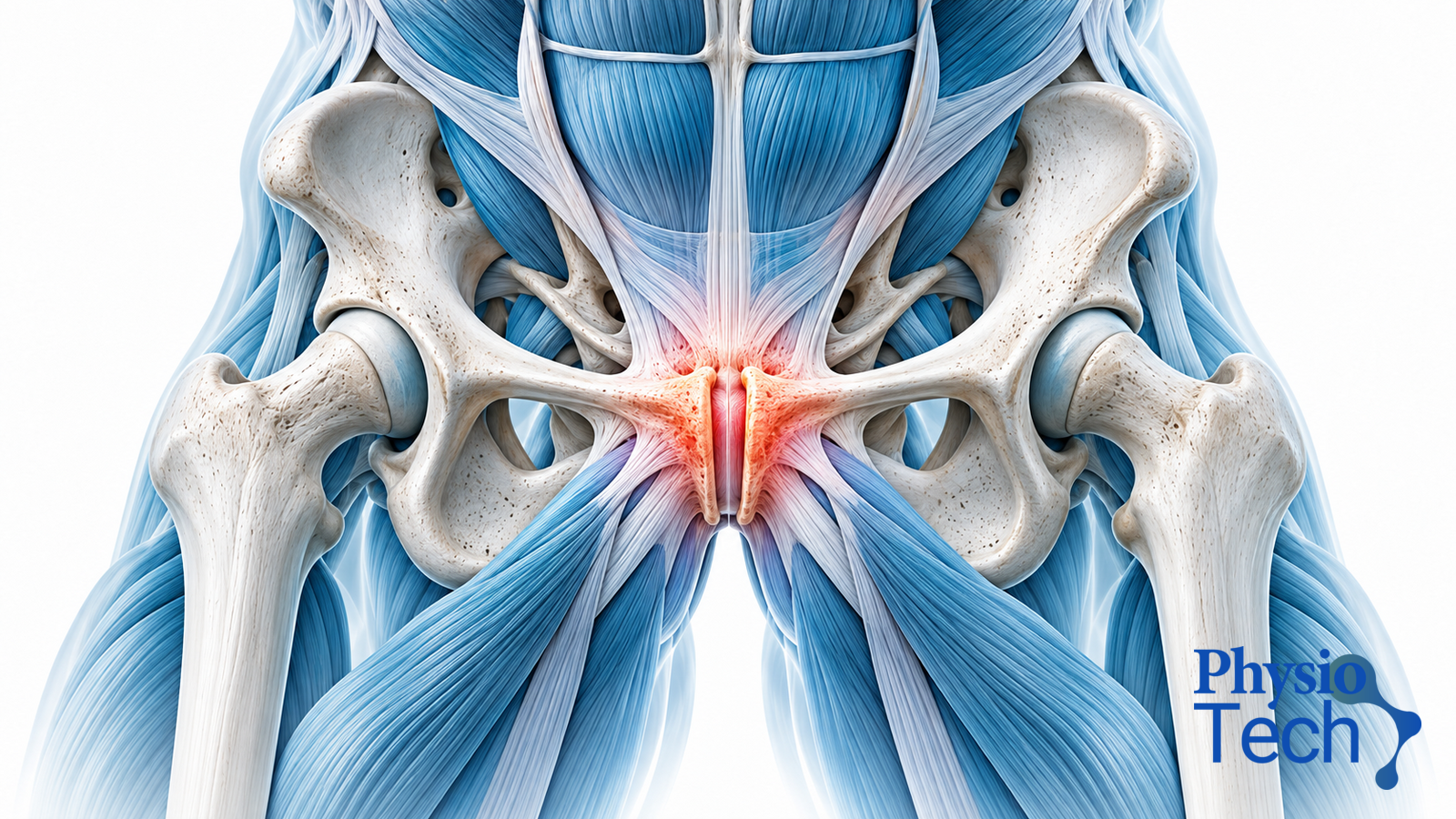
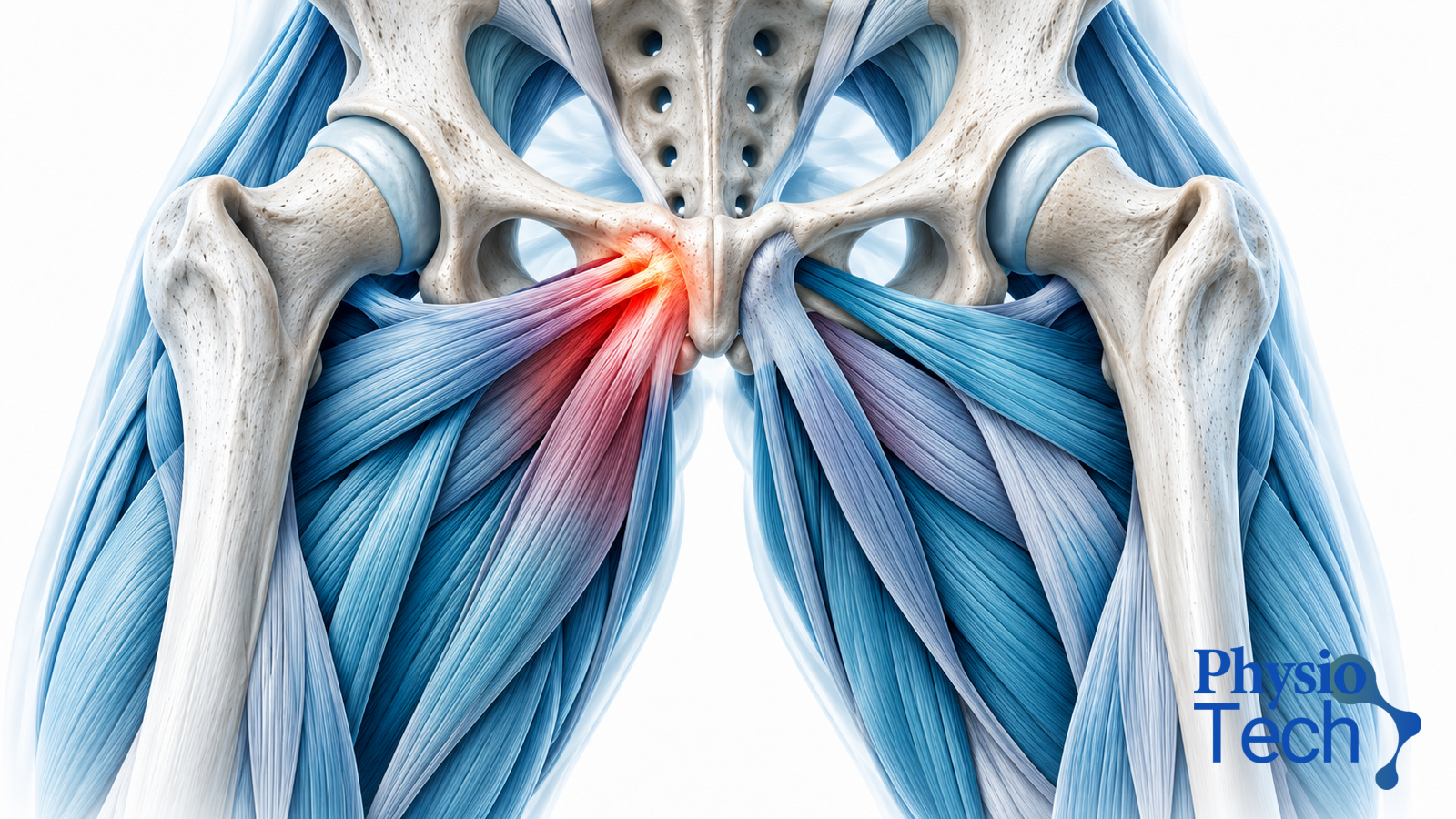
Inner upper-thigh pain during running and kicking is not always an acute muscle tear. Gradual, local pain near the proximal adductors that is reproduced by resistance can fit an adductor-related groin pain presentation.
اقرأ المقال بالعربيةThe following information is educational and does not replace an individual examination, especially after major trauma or when warning signs are present.
What Is the Condition?
The adductors stabilise the hip and pelvis and produce force during kicking and cutting. Their proximal tendon near the pubic bone carries high loads and can become painful when repeated demand exceeds current capacity.
Symptoms You May Notice
• Inner upper-thigh or pubic-border pain.
• Pain with squeezing the legs or kicking.
• Symptoms during cutting or sprinting.
• Warm-up stiffness that returns after training.
• Reduced confidence during lateral push-off.
Causes and Contributing Factors
Rapid training or match increases, insufficient adductor strength for sport, limited recovery, previous injury or rushed return may contribute. A chronic tendon presentation differs from a sudden pop, bruising and acute strain.
Conditions That Can Look Similar
Pubic-related pain, abdominal-wall injury, hip joint or labral disorder, iliopsoas-related pain, true hernia and bone stress injury.
How Is It Assessed at PhysioTech?
We establish whether pain is localised to the adductor origin and reproduced by resistance and palpation, then examine the hip, abdomen and other groin entities. Running, kicking and cutting are assessed at the appropriate stage.
What Do We Measure?
Side-to-side adductor strength, squeeze testing, loading tolerance, running speeds, acceleration, deceleration, kicking and next-day response.
We record a meaningful task such as walking, running, stairs or reaching, the response during it and what happens later and the next day. Movement, strength, capacity and task quality are compared over time rather than judging progress only by short-term relief in the session.
When May Imaging or Medical Referral Be Needed?
Sudden severe pain with extensive bruising, inability to walk, testicular pain, a groin lump, fever, urinary symptoms or suspected bone stress injury needs medical review.
Imaging is not required for every patient. It becomes important after major trauma, with warning signs, when progress is unexpectedly poor, or when the result would change loading, referral or surgical decisions. Imaging decisions are coordinated with the appropriate physician.
Adductor-Related Groin Pain Treatment at PhysioTech
1. Protect the Area and Manage Load
Temporarily reduce the most provocative load while maintaining suitable conditioning, and use tolerable adductor isometrics rather than relying on rest alone.
2. Restore Movement and Control
Restore required hip movement and trunk-pelvic control, progressing adductors from shorter to longer muscle positions.
3. Build Strength and Capacity
Increase resistance with varied adduction exercises and use Copenhagen progressions only when appropriate, alongside hip, trunk and single-leg strength.
4. Return to Activity or Sport
Reintroduce fast running, kicking and cutting gradually; completing a full training dose without an excessive delayed response helps guide return.
A central part of care is understanding why each exercise was chosen and how to adjust the dose. We agree on an acceptable symptom response, then progress repetitions, resistance, speed or task complexity. We do not promise a fixed recovery date because injury severity, general health and activity demands vary.
The PhysioTech Treatment Philosophy in Cairo
At PhysioTech Clinic in Zahraa El Maadi, Cairo, care starts with assessment rather than an imaging label alone. We connect symptom behaviour with movement, strength, capacity and work or sport demands, record clear baseline measures and retest them. Manual therapy, dry needling, kinesio taping, electrotherapy or therapeutic ultrasound may be used for a defined purpose, but they do not replace education, therapeutic exercise and graded loading.
The goal is not merely to remove tenderness on squeeze. It is to restore adductor strength and the ability to tolerate speed, kicking and position-specific demands.
Red Flags That Need Prompt Medical Review
Inability to bear weight, a pop with rapidly developing bruising, a painful groin lump, testicular pain or swelling, fever or escalating night pain.
Frequently Asked Questions
Is this the same as an adductor strain?
An acute strain usually starts suddenly, while tendon-related pain can develop gradually; overlap is possible.
Are Copenhagen exercises for everyone?
No. They are relatively demanding and require stage-appropriate progression.
Do I need an MRI?
Not always. Imaging is used when warning signs exist or when it would change management.
When Should You Book an Assessment?
If inner-groin pain returns with kicking or sprinting, book a sports assessment at PhysioTech in Zahraa El Maadi, Cairo.
Trusted References
• bjsm.bmj.com
• pubmed.ncbi.nlm.nih.gov