Share:
38 views
#ألم العانة عند الرياضيين #Athletic pubalgia #Sports hernia #ألم العضلة الضامة #علاج ألم الحوض
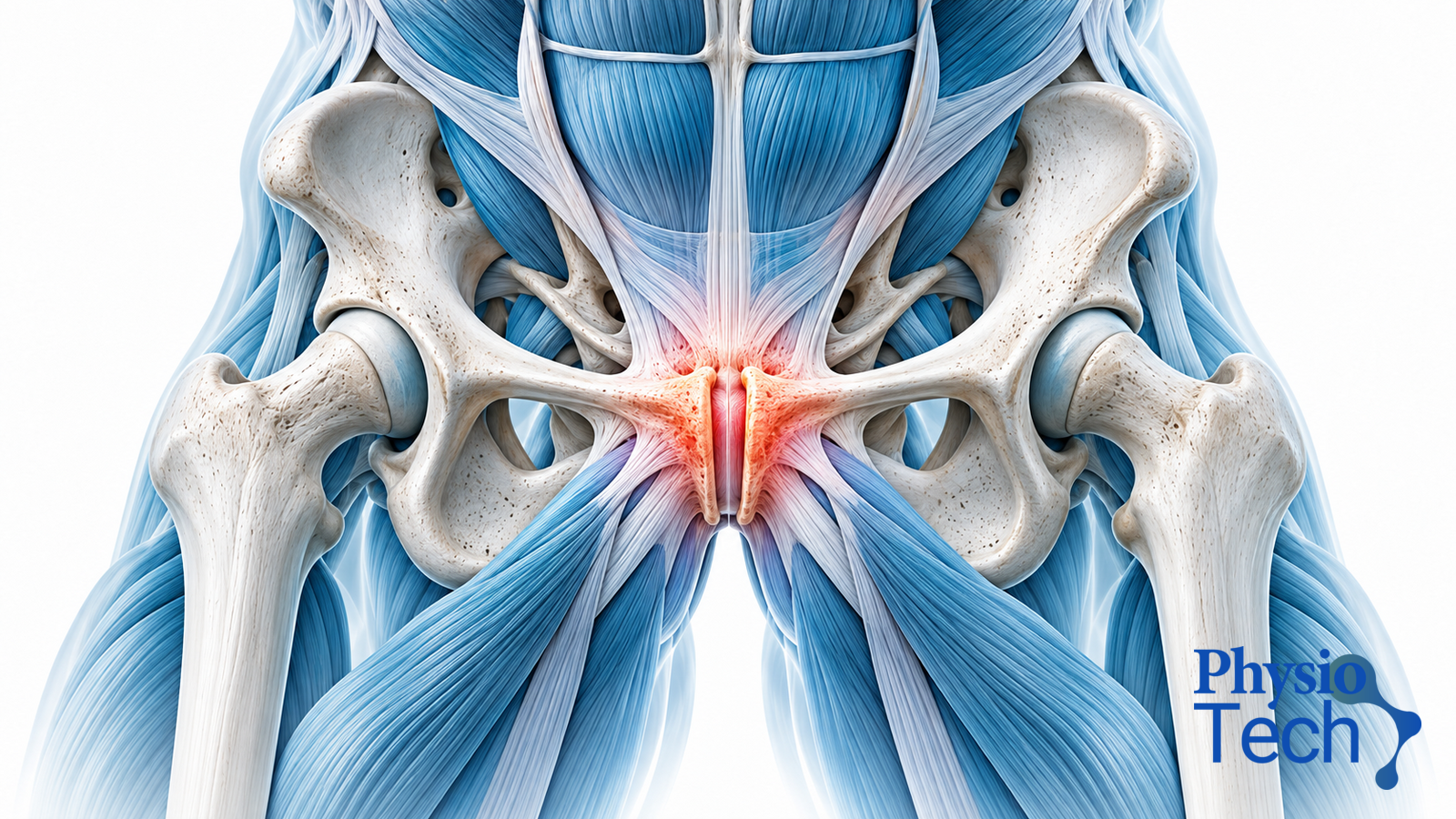
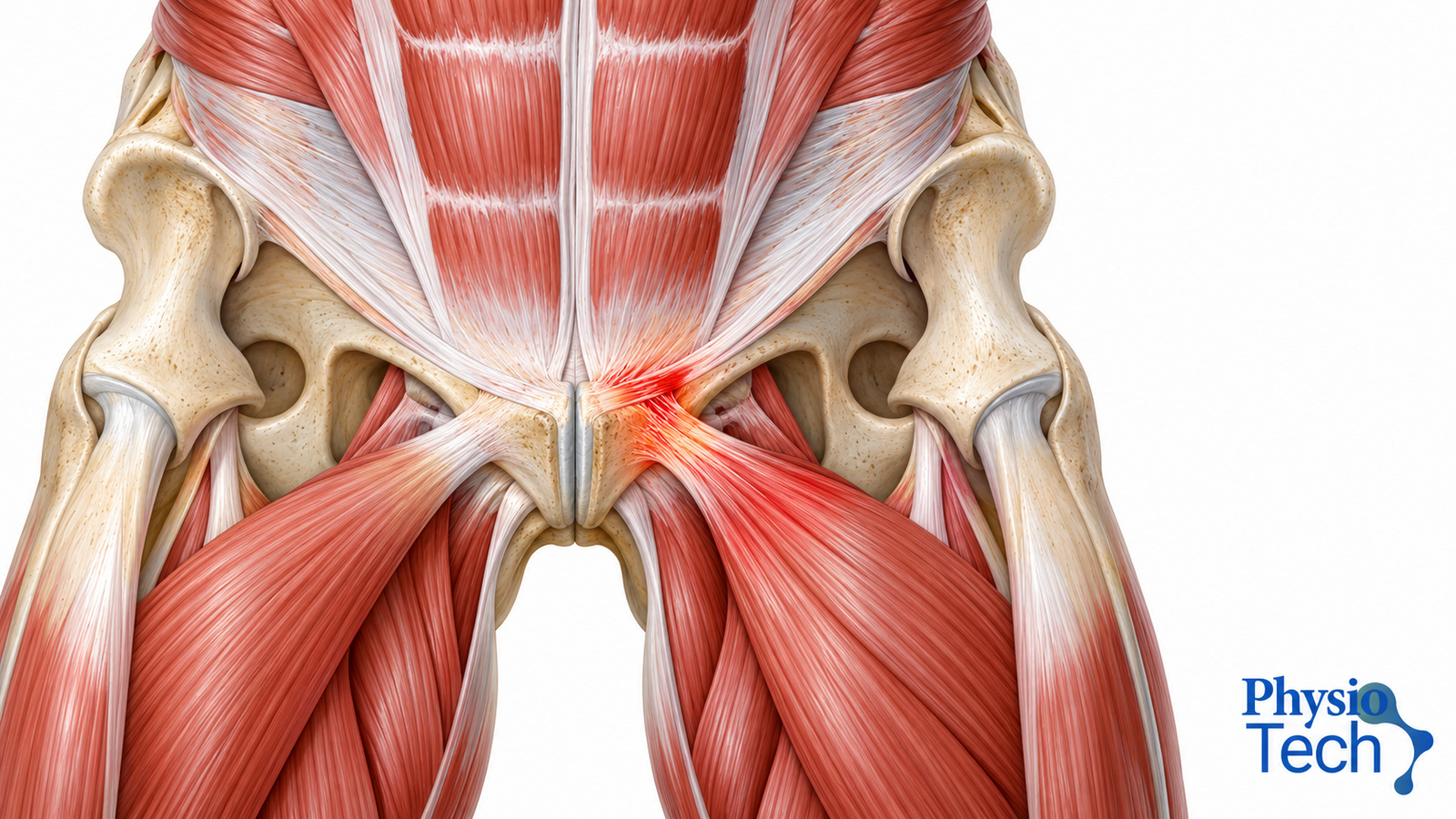
Groin pain in footballers and runners is not always a simple adductor strain. Athletic pubalgia, sometimes called a sports hernia, describes injury or overload involving the lower abdominal, pubic and proximal adductor tissues, often without the visible bulge of a traditional inguinal hernia.
اقرأ المقال بالعربيةWhat Is the Condition?
The pubic region links the abdominal wall, pelvis and adductor muscles. Sprinting, kicking and cutting transfer high forces across these attachments, and symptoms may develop when sporting load exceeds current tissue capacity.
The label is not enough because groin pain can come from the hip joint, muscles, a true hernia, nerves or other body systems. Careful differential diagnosis must come before a loading programme.
Common Symptoms
• Deep pubic or groin pain during sprinting and kicking.
• Pain with cutting, getting up or sometimes coughing.
• Pain during adductor squeeze or abdominal work.
• Relative improvement with rest followed by recurrence on return to sport.
Causes and Contributing Factors
A sudden rise in training intensity, repeated kicking and sprinting, reduced adductor and trunk capacity or a rushed return after injury may contribute. It is a whole-system load-capacity problem, not simply one weak muscle.
Conditions That Can Look Similar
Adductor strain, hip impingement or labral injury, true inguinal hernia, osteitis pubis, stress fracture and urological or reproductive disorders.
How PhysioTech Assesses the Problem
We review pain location, onset and response to running, kicking and coughing, then assess the hip, adductor and trunk strength, local tenderness and sport tasks. No single test confirms every case.
Baseline and Follow-up Measures
Pain during squeeze testing, adductor strength, trunk capacity, straight running, acceleration and deceleration, kicking and change of direction.
When Imaging or Medical Referral May Be Needed
A visible lump with severe pain or vomiting, testicular pain, fever, urinary symptoms, worsening night pain, unexplained weight loss or suspected stress fracture needs medical review.
Athletic Pubalgia and Sports Groin Pain Treatment
1. Understand the Problem and Manage Load
Temporarily reduce kicking, sprinting and cutting to a tolerable dose while maintaining suitable conditioning such as cycling when comfortable. Rest alone may settle symptoms but does not rebuild sports capacity.
2. Restore Movement and Control
Restore useful hip movement and lumbopelvic control without chasing excessive range. Adductor isometrics can be an early entry point before progressing movement and load.
3. Build Strength and Capacity
Build adductor, hip and abdominal strength from controlled loading toward Copenhagen variations, running and kicking. Exercise choice and dose depend on stage rather than one fashionable exercise.
4. Return to Activity and Reduce Recurrence
Return begins with straight running, then acceleration, deceleration, cutting and graded kicking. Performance and the next-day response are checked before full contact and matches.
The PhysioTech Treatment Philosophy in Cairo
At PhysioTech Clinic in Zahraa El Maadi, Cairo, treatment starts with assessment rather than an imaging label alone. We connect symptoms with movement, strength, capacity and the demands of work or sport, record clear baseline measures and retest them. Manual therapy or other adjuncts may be used for a defined purpose, but education, therapeutic exercise, graded loading and safe return to activity remain central.
The aim is to tolerate the real demands of the athlete’s sport, not only to complete table exercises. Strength and sport-task measures guide progression and return.
Red Flags That Need Prompt Medical Review
Severe acute pain with a groin lump, vomiting, testicular pain or swelling, fever, urinary symptoms, inability to walk, unusual night pain or rapid deterioration.
Frequently Asked Questions
Is a sports hernia a true hernia?
The name can be confusing. Many cases do not have a visible inguinal hernia but involve the lower abdominal and pubic soft tissues.
Must I stop all sport?
Provocative load is modified while appropriate alternative conditioning is maintained, followed by a graded running and kicking progression.
When is surgery considered?
It may be discussed after accurate diagnosis when major functional symptoms persist despite good conservative care, or when a true hernia or another surgical disorder exists.
When Should You Book an Assessment?
If groin pain returns every time you sprint or kick, book a sports assessment at PhysioTech Clinic in Zahraa El Maadi, Cairo, to identify the main driver and plan your return.