Share:
34 views
#إصابة العصب الإبطي #Axillary nerve injury #خلع الكتف #ضعف العضلة الدالية #تنميل الكتف
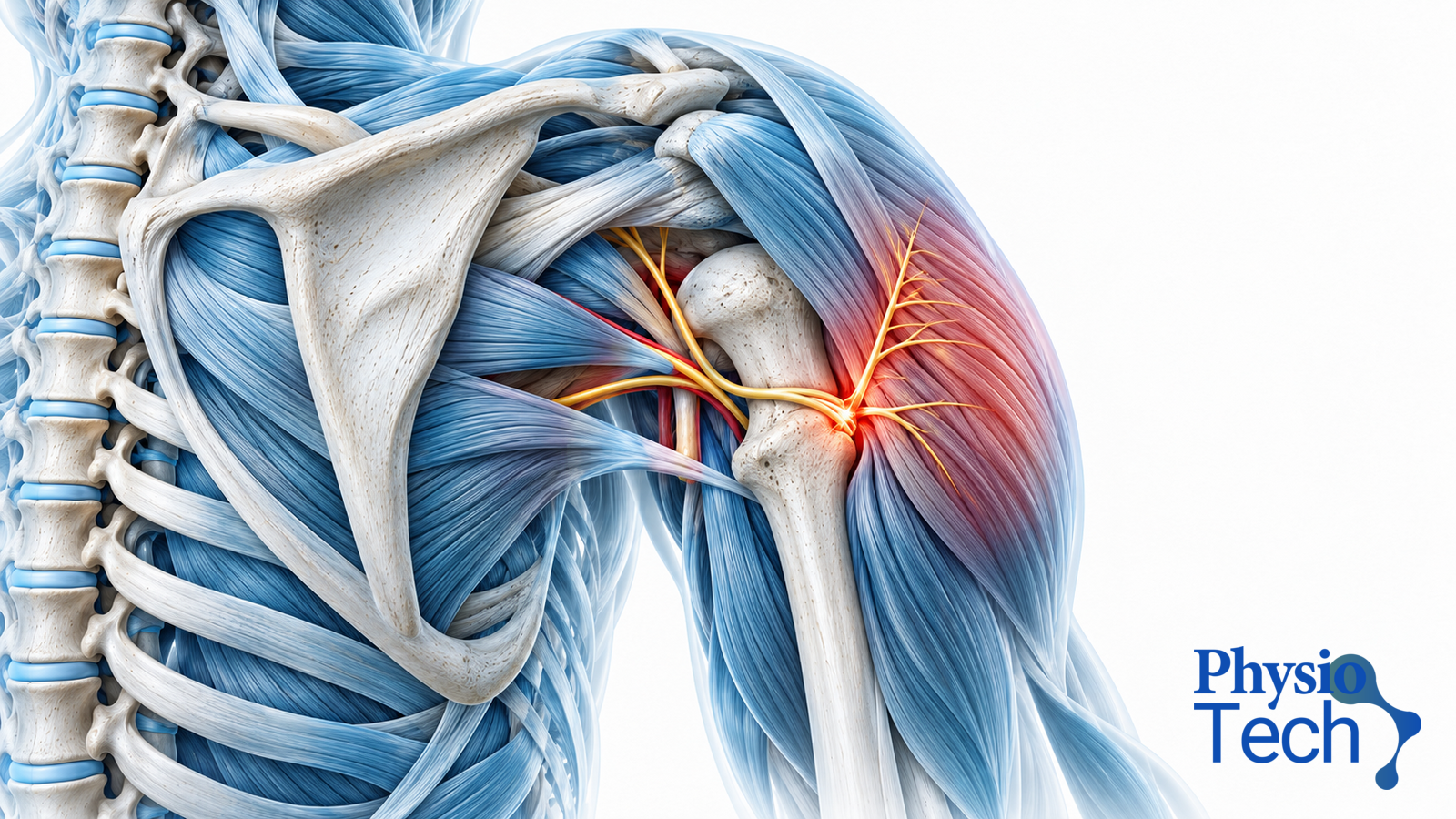
After shoulder dislocation or proximal humeral fracture, weakness lifting the arm or numbness over a small lateral shoulder patch can indicate axillary nerve involvement. The nerve supplies the deltoid and passes close to the humeral neck.
اقرأ المقال بالعربيةThe following information is educational and does not replace an individual examination, especially after major trauma or when warning signs are present.
What Is the Condition?
The axillary nerve arises from the brachial plexus and travels through the quadrilateral space. It supplies deltoid and teres minor and sensation over a small lateral region. Dislocation can stretch it.
Symptoms You May Notice
• Weak shoulder abduction.
• Loss of deltoid contour or atrophy.
• Numbness over the lateral shoulder patch.
• Deep ache with disproportionate weakness.
• Slow functional recovery after reduction.
Causes and Contributing Factors
Anterior dislocation, surgical-neck fracture or traction can injure the nerve. Post-dislocation weakness may also come from pain or cuff tear, making examination essential.
Conditions That Can Look Similar
Rotator-cuff tear, suprascapular neuropathy, brachial-plexus injury, pain inhibition and cervical nerve-root disorder.
How Is It Assessed at PhysioTech?
Deltoid and external-rotation strength and sensation are checked with cuff, neck, wider nerve and circulation screening. Persistent weakness may need nerve conduction and EMG at medically selected timing.
What Do We Measure?
Elevation range, deltoid strength, sensation, movement quality, reaching and carrying ability, and the direction of neurological recovery over time.
We record a meaningful task such as walking, running, stairs or reaching, the response during it and what happens later and the next day. Movement, strength, capacity and task quality are compared over time rather than judging progress only by short-term relief in the session.
When May Imaging or Medical Referral Be Needed?
Pulse, sensation and movement require assessment after dislocation. Increasing weakness, widespread sensory loss, a cold hand or severe pain needs urgent review. A dislocation is not reduced outside medical care.
Imaging is not required for every patient. It becomes important after major trauma, with warning signs, when progress is unexpectedly poor, or when the result would change loading, referral or surgical decisions. Imaging decisions are coordinated with the appropriate physician.
Axillary Nerve Injury Treatment at PhysioTech
1. Protect the Area and Manage Load
Protect the shoulder according to medical instructions and maintain hand and elbow movement, avoiding aggressive traction or pressure on the nerve.
2. Restore Movement and Control
Restore shoulder motion gradually and use supported positions to limit compensation as deltoid activation returns.
3. Build Strength and Capacity
Strengthen the cuff, scapular muscles and deltoid when activation is available, progressing resistance without excessive neural fatigue.
4. Return to Activity or Sport
Increase reaching, carrying and sport tasks according to control and strength, with neurological reassessment if recovery stalls.
A central part of care is understanding why each exercise was chosen and how to adjust the dose. We agree on an acceptable symptom response, then progress repetitions, resistance, speed or task complexity. We do not promise a fixed recovery date because injury severity, general health and activity demands vary.
The PhysioTech Treatment Philosophy in Cairo
At PhysioTech Clinic in Zahraa El Maadi, Cairo, care starts with assessment rather than an imaging label alone. We connect symptom behaviour with movement, strength, capacity and work or sport demands, record clear baseline measures and retest them. Manual therapy, dry needling, kinesio taping, electrotherapy or therapeutic ultrasound may be used for a defined purpose, but they do not replace education, therapeutic exercise and graded loading.
The joint and nerve are rehabilitated together: movement and available strength are preserved without assuming weakness is only pain or rushing resistance beyond neural capacity.
Red Flags That Need Prompt Medical Review
A cold or pale hand, absent pulse, increasing weakness or numbness, unreduced dislocation, severe pain or rapid swelling needs emergency care.
Frequently Asked Questions
Is numbness normal after dislocation?
It can occur but requires examination, documentation and follow-up, especially with weakness.
How long does nerve recovery take?
It depends on injury severity; serial examination and sometimes EMG help establish direction.
Is physiotherapy always enough?
Many traction injuries recover, while absent recovery may need shoulder or nerve-surgery review.
When Should You Book an Assessment?
If deltoid weakness or numbness persists after dislocation, book an assessment at PhysioTech in Cairo coordinated with orthopaedic care.
Trusted References
• pmc.ncbi.nlm.nih.gov
• medlineplus.gov