Share:
44 views
#ضغط العصب الشظوي عند الركبة #Common Peroneal Nerve Entrapment #علاج طبيعي #physiotherapy #Cairo
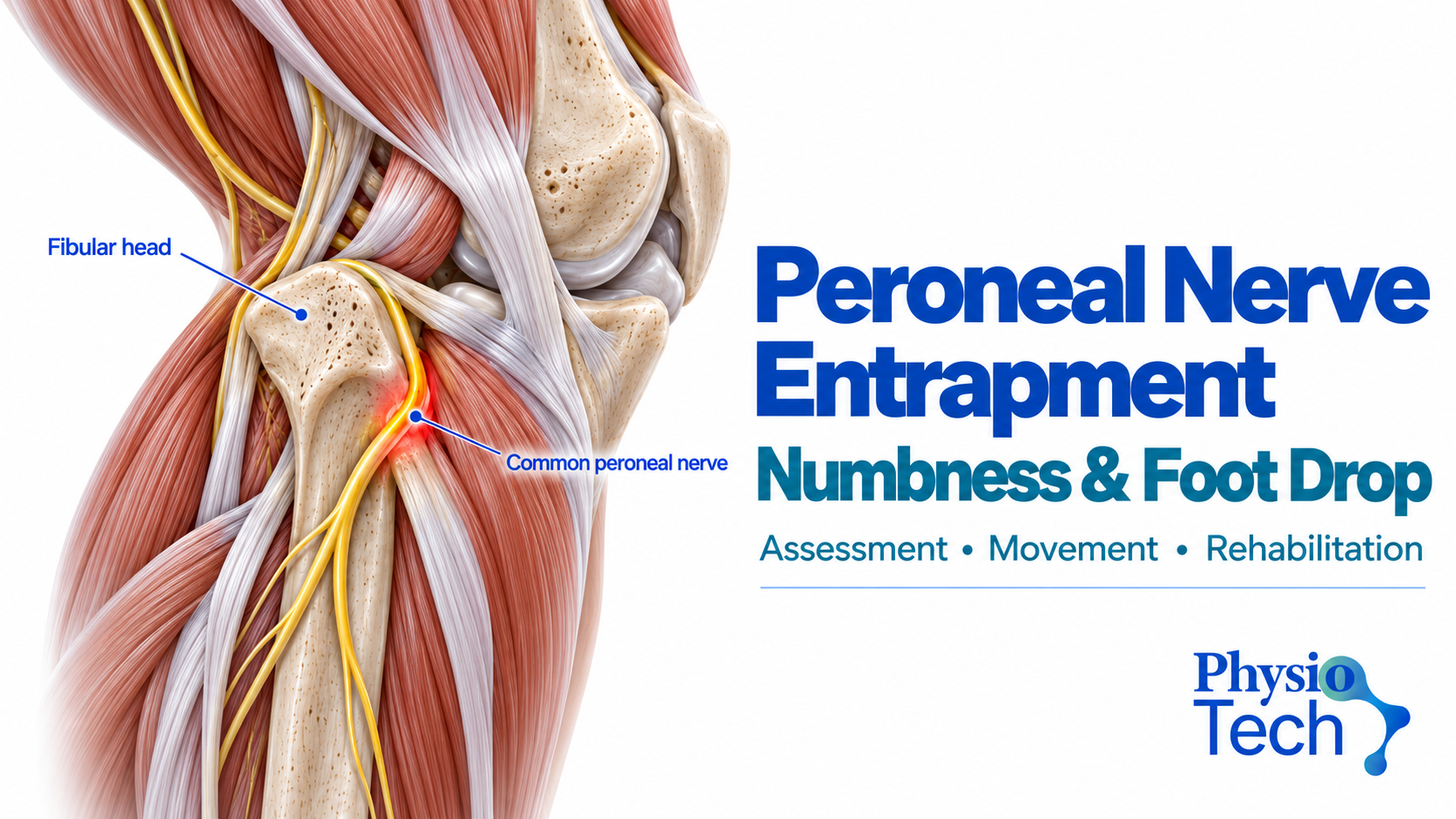
Numbness along the outer leg or top of the foot with difficulty lifting the foot may occur when the common peroneal nerve is affected near the fibular head. Similar symptoms can also arise from the lumbar spine, so localisation is essential.
اقرأ المقال بالعربيةAt PhysioTech Clinic in Zahraa El Maadi, Cairo, treatment begins with the person’s symptoms, examination and goals rather than a technique selected from a label alone. This article explains the condition but cannot replace an individual assessment or urgent care when warning signs are present.
What Is Happening Anatomically?
The nerve winds around the fibular neck on the outer knee, close to the skin, before dividing into motor and sensory branches. Prolonged compression, knee trauma, a tight cast or rapid weight loss can increase vulnerability.
Symptoms You May Notice
Tingling over the outer leg and dorsum of the foot, weakness of ankle or toe lifting and catching the toes while walking are possible. Pain alone without sensory or strength change does not establish neuropathy.
How Is It Assessed?
We ask about onset, compression positions, knee injury and recent surgery, then test ankle dorsiflexion and eversion, sensation, gait and reflexes. The lumbar spine, hip and nerve pathway are screened. Medical referral may be needed for nerve studies or imaging.
PhysioTech does not base a diagnosis on one scan or one provocative test. We connect the history with symptom distribution, daily behaviour, movement, strength and the tasks that matter to the patient. The working explanation is tested by changing a relevant load or treatment variable and measuring the response. If the findings do not fit, the diagnosis is reconsidered and the examination or referral pathway is expanded. This keeps care focused on measurable function rather than a label alone.
What Else Could It Be?
Lumbar radiculopathy, sciatic nerve injury, local muscle disorders and systemic neuropathy can resemble this presentation. The pattern of weakness and neurological examination help distinguish them.
Physiotherapy at PhysioTech
First Phase: Settle Provocative Load
Management removes repeated compression and protects safe walking. Mobility and strengthening are matched to available nerve function, with gait and balance training. A foot-lifting orthosis may be recommended after assessment. Aggressive stretching or pressure that increases tingling is avoided.
Next Phase: Build Capacity
As symptoms settle, therapeutic exercise and graded loading are matched to your response and goals. Manual or symptom-relief techniques may be adjuncts when useful, but they do not replace exercise and repeated assessment. Recovery timelines vary with severity, health and activity demands.
A key part of the plan is understanding why each exercise was chosen and how to adjust its dose. We agree on an acceptable symptom response during activity, review what happens later and the next day, and then progress repetitions, resistance, speed or task complexity. The aim is not to make a session feel hard; it is to improve capacity for work, walking and sport without an escalating flare. Sleep, workload distribution, general health and confidence in movement are considered alongside local tissue loading.
Progression and Return to Activity
How Do We Measure Progress?
Strength, sensation and gait are retested. Static or progressive weakness needs medical follow-up because the timing of investigation and treatment can matter.
What Can You Do at Home?
Avoid prolonged pressure on the outer knee or leg crossing if it provokes symptoms. Protect areas with reduced sensation and use fall-prevention strategies if the toes catch.
When Is Medical Review Needed?
New or worsening foot drop, rapidly progressing weakness, widespread sensory loss, or neurological symptoms with bladder or bowel change needs urgent medical assessment.
Frequently Asked Questions
Does numbness on the foot always mean peroneal entrapment?
No. Lumbar and other nerve causes can mimic it.
Can exercise alone treat it?
That depends on the cause and severity; some cases need bracing or neurological and surgical review.
Should I massage the fibular head?
Strong pressure over this superficial nerve may aggravate symptoms.
Book an Assessment in Cairo
If Common Peroneal Nerve Entrapment affects work, walking or sport, book an individual assessment at PhysioTech in Zahraa El Maadi, Cairo. We explain the findings clearly, decide whether physiotherapy is appropriate or medical referral is needed, and agree on measurable rehabilitation goals.