Share:
33 views
#جناحية لوح الكتف #Scapular winging #العصب الصدري الطويل #ضعف serratus anterior #علاج طبيعي الكتف
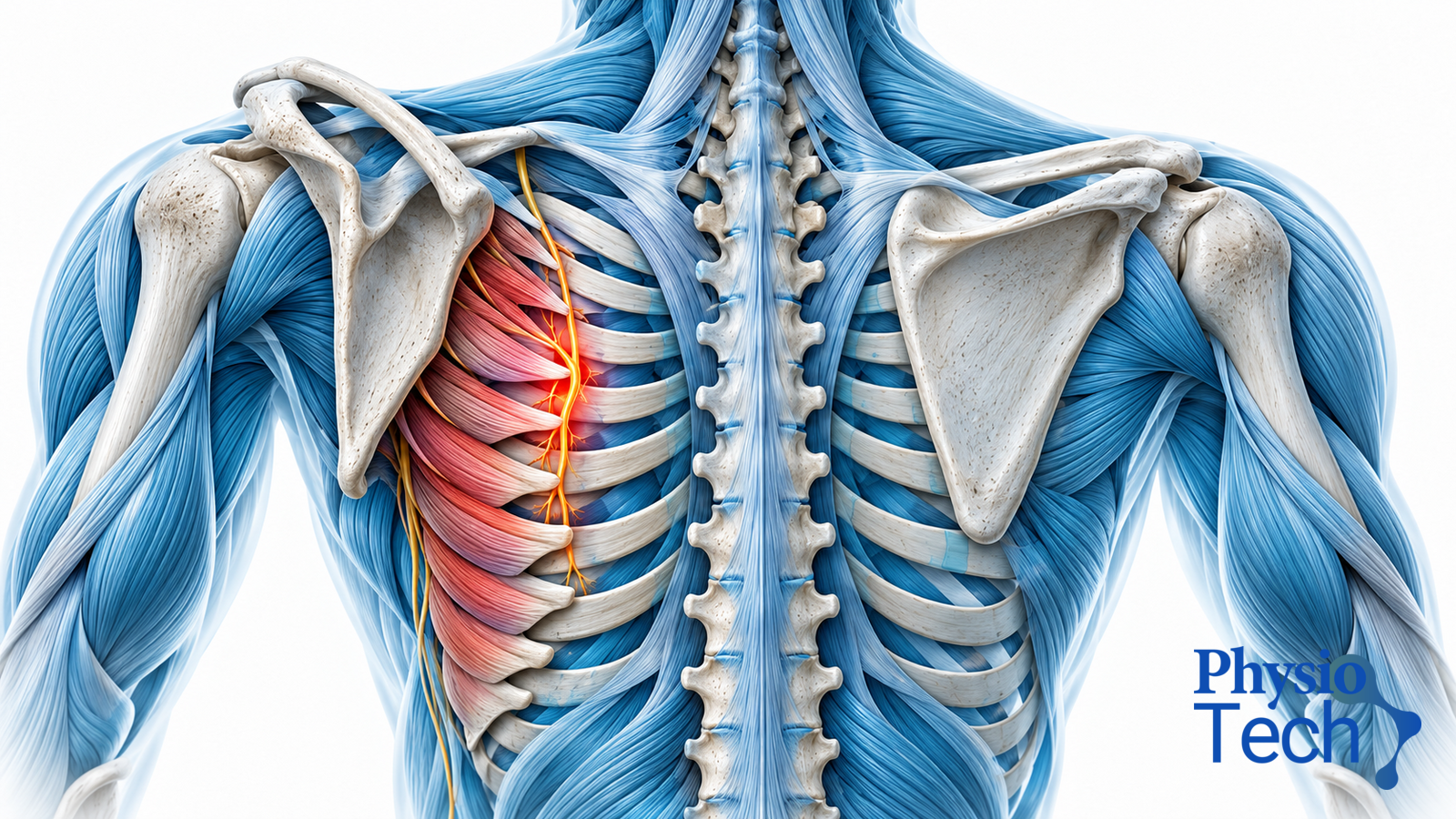
A medial shoulder-blade border that lifts away from the rib cage is described as scapular winging. It may reflect serratus anterior weakness after long thoracic nerve injury, but other nerves, muscles and painful shoulder conditions can alter the scapular position.
اقرأ المقال بالعربيةThe following information is educational and does not replace an individual examination, especially after major trauma or when warning signs are present.
What Is the Condition?
Serratus anterior holds the scapula against the ribs and assists upward rotation during arm elevation. The long thoracic nerve travels superficially along the chest wall and can be vulnerable to traction, compression or some procedures.
Symptoms You May Notice
• A visible medial border during a wall push.
• Weakness or fatigue overhead.
• Pain around the scapula or shoulder.
• Difficulty carrying or playing sport.
• A marked side-to-side difference.
Causes and Contributing Factors
Winging may follow trauma, surgery, repetitive load or compression, and can also appear without a clear trigger. Not every case is the same nerve; accessory or dorsal scapular nerve injury and cuff problems can change scapular control.
Conditions That Can Look Similar
Scapular dyskinesis without palsy, accessory-nerve injury, trapezius weakness, rotator-cuff tear, shoulder instability and structural deformity.
How Is It Assessed at PhysioTech?
The scapula is observed at rest, during pushing and arm elevation. Serratus, trapezius and cuff strength and cervical and shoulder motion and sensation are examined. Severe or persistent weakness may need electrodiagnostic and medical review.
What Do We Measure?
Winging during defined tasks, elevation range, push and reach strength, serratus and cuff capacity, pain and work or sport function.
We record a meaningful task such as walking, running, stairs or reaching, the response during it and what happens later and the next day. Movement, strength, capacity and task quality are compared over time rather than judging progress only by short-term relief in the session.
When May Imaging or Medical Referral Be Needed?
Increasing weakness, marked atrophy, recent injury with movement loss, extensive sensory change or failure to progress needs neurological review. Chest pain or breathlessness is not assumed to be shoulder pain.
Imaging is not required for every patient. It becomes important after major trauma, with warning signs, when progress is unexpectedly poor, or when the result would change loading, referral or surgical decisions. Imaging decisions are coordinated with the appropriate physician.
Scapular Winging Treatment at PhysioTech
1. Protect the Area and Manage Load
Modify tasks that cause marked fatigue or pain and maintain shoulder motion within available scapular control.
2. Restore Movement and Control
Use supported exercises to retrain scapular rotation and contact with the rib cage, adding cervical and thoracic movement when relevant.
3. Build Strength and Capacity
Progress serratus, trapezius and cuff strength from stable positions to pushing, reaching and carrying.
4. Return to Activity or Sport
Return to work or sport by increasing elevation, resistance and speed, reviewing the nerve if weakness remains fixed or progresses.
A central part of care is understanding why each exercise was chosen and how to adjust the dose. We agree on an acceptable symptom response, then progress repetitions, resistance, speed or task complexity. We do not promise a fixed recovery date because injury severity, general health and activity demands vary.
The PhysioTech Treatment Philosophy in Cairo
At PhysioTech Clinic in Zahraa El Maadi, Cairo, care starts with assessment rather than an imaging label alone. We connect symptom behaviour with movement, strength, capacity and work or sport demands, record clear baseline measures and retest them. Manual therapy, dry needling, kinesio taping, electrotherapy or therapeutic ultrasound may be used for a defined purpose, but they do not replace education, therapeutic exercise and graded loading.
We do not chase a cosmetically perfect scapula. Control, strength and function matter, while nerve recovery may be slower than muscle conditioning.
Red Flags That Need Prompt Medical Review
Rapid weakness or increasing atrophy, breathlessness or chest pain, widespread sensory loss, major trauma or sudden inability to lift the arm.
Frequently Asked Questions
Is winging the same as scapular dyskinesis?
No. Winging can reflect clear nerve weakness, while dyskinesis is a broader movement description.
Can exercise repair a nerve?
Exercise maintains movement and trains available muscle; nerve recovery depends on cause, severity and time.
Is surgery required?
Most cases start conservatively, while severe persistent palsy may need specialist opinion.
When Should You Book an Assessment?
If you notice obvious winging or overhead weakness, book a shoulder and nerve assessment at PhysioTech in Zahraa El Maadi, Cairo.
Trusted References
• pmc.ncbi.nlm.nih.gov