Share:
130 views
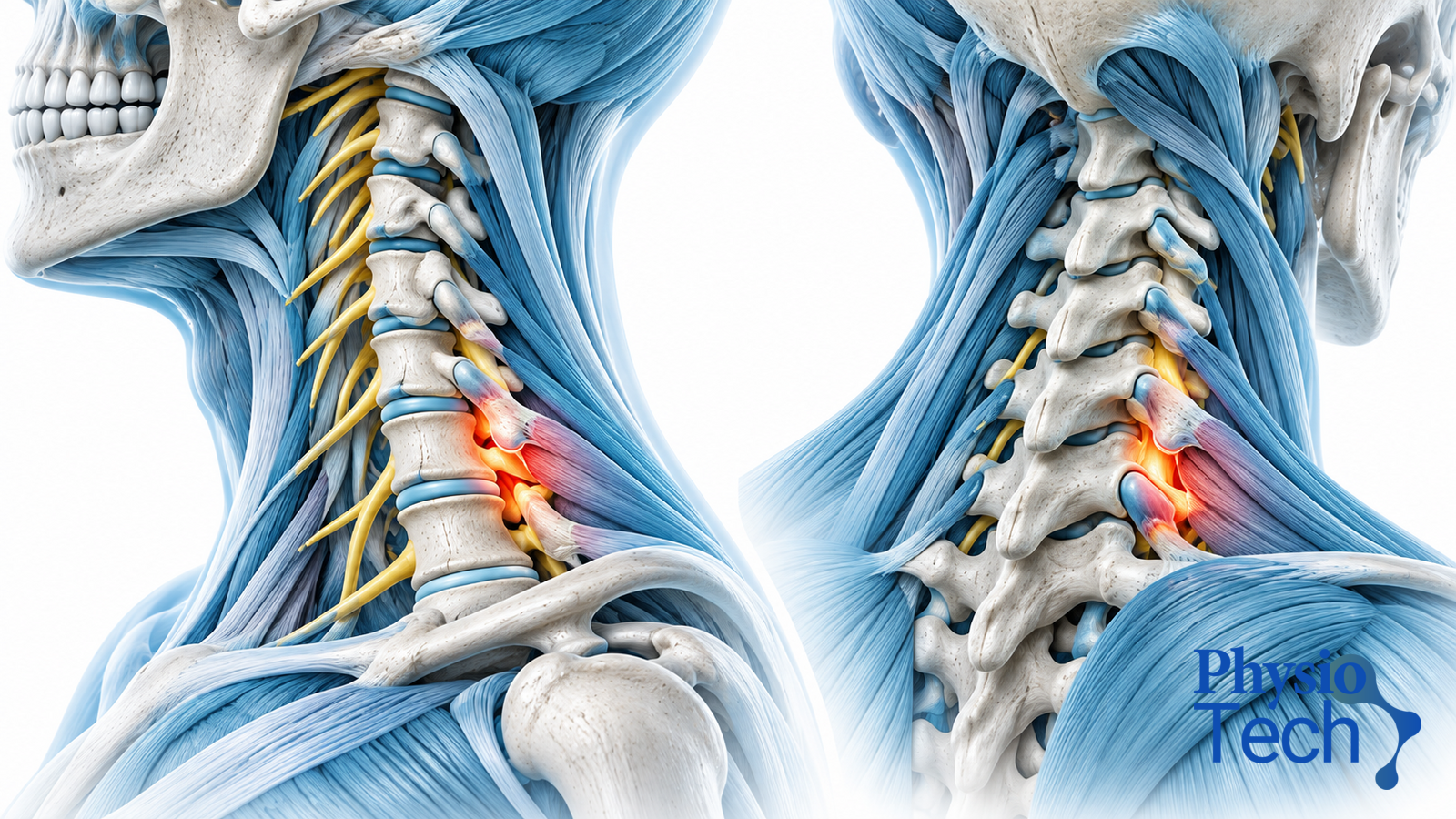
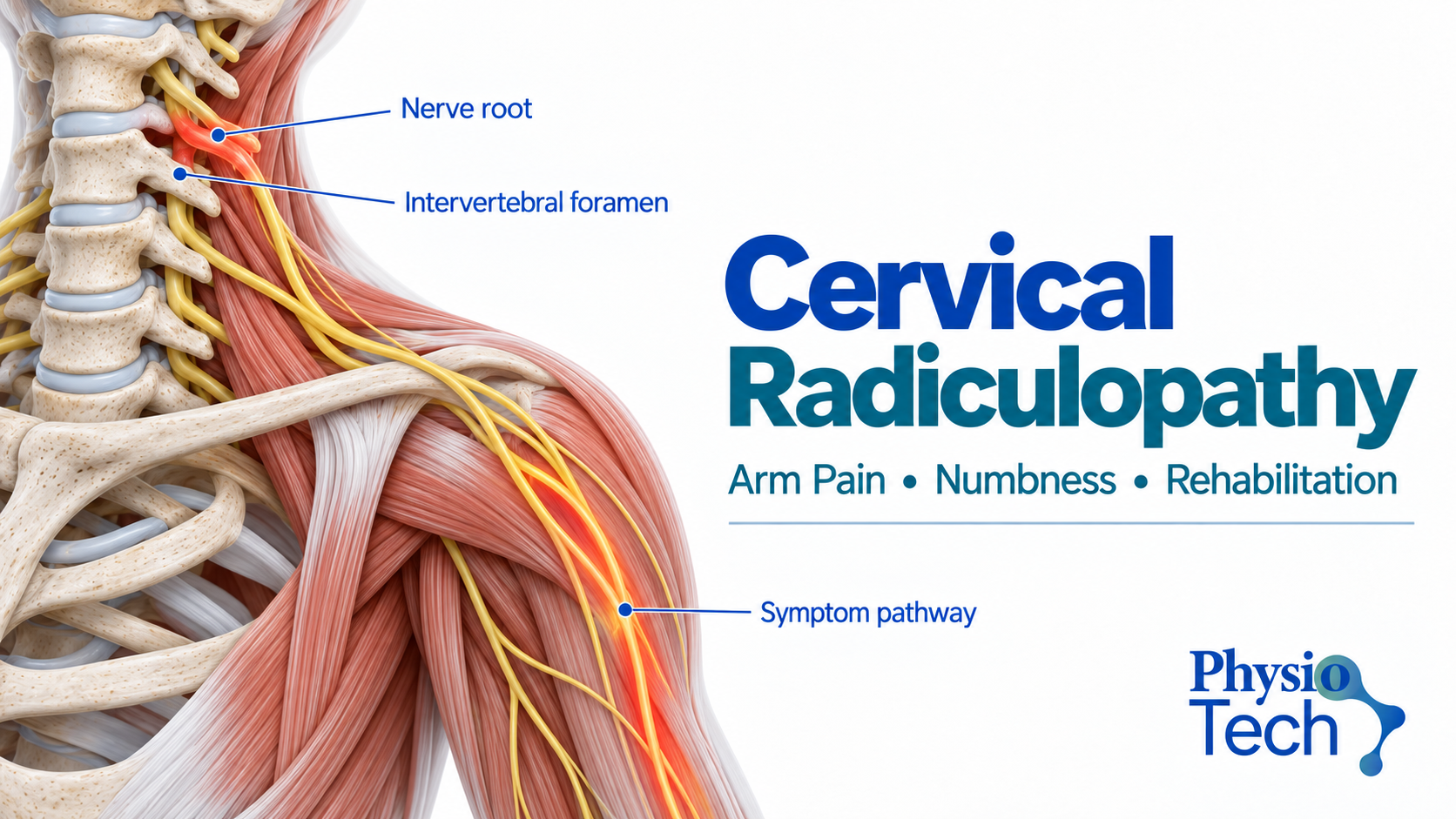
Cervical radiculopathy occurs when a nerve root leaving the neck becomes irritated or compressed. It may cause pain into the shoulder blade or arm, pins and needles, altered sensation and sometimes weakness. Not every arm symptom is caused by a disc, and imaging alone cannot establish the clinical cause.
اقرأ المقال بالعربيةPossible causes
Common mechanisms include cervical disc change, narrowing around a nerve root or local inflammation. Shoulder tendon disorders and nerve entrapment at the elbow or wrist can produce similar symptoms, so differential diagnosis matters.
Typical symptoms
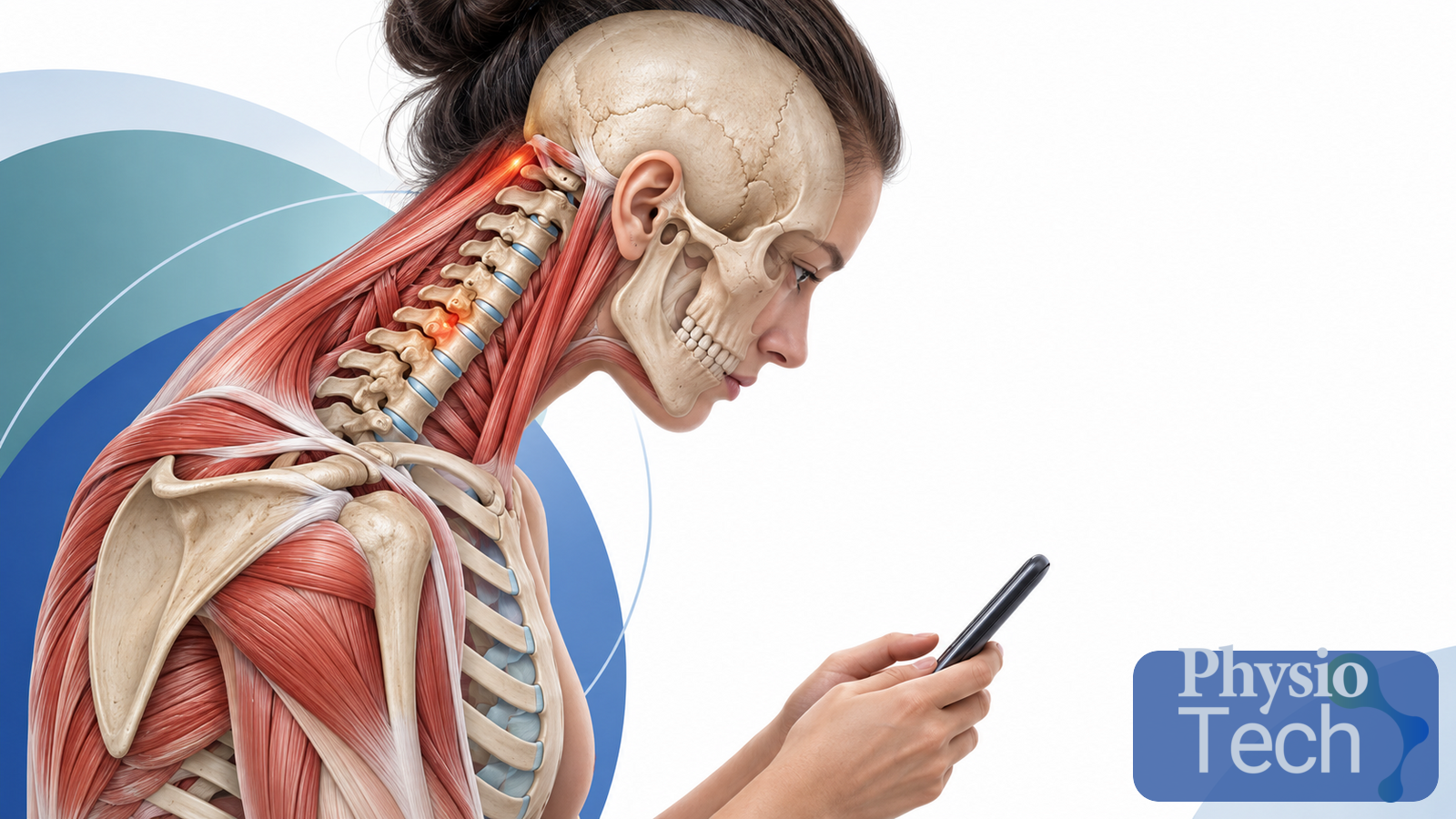
Pain may feel sharp, burning or electric. Numbness can affect part of the hand, while weakness may involve grip, wrist, elbow or shoulder movement. Neck position and prolonged sitting may alter symptoms. Presentations do not always follow a perfect textbook dermatome.
Assessment at PhysioTech
Assessment may include symptom history, neck and shoulder movement, key muscle strength, sensation and reflexes, tests that provoke or relieve neural symptoms, and screening for shoulder and peripheral-nerve disorders. Imaging or medical review may be indicated after major trauma, with progressive weakness, unusual findings or a lack of expected progress.
Physiotherapy programme
Care is individual rather than device-led. It may include education and workplace changes, selected mobility exercises, strengthening for the neck and shoulder blade, graded neural mobility, and manual therapy for the cervical or thoracic region. A monitored trial of cervical traction may help selected patients; it is not universal.
Electrotherapy or therapeutic ultrasound may support short-term symptom control. Dry needling or kinesiology taping may be considered for a related muscular component, but none independently puts a disc back or guarantees removal of nerve compression.
Measuring progress
We monitor symptom intensity and distribution, sensation, strength, movement, sleep and work tolerance. Reduction in distal arm symptoms may be encouraging, but progress is judged using several objective and functional measures.
Red flags
Seek urgent medical assessment for rapidly increasing weakness, new gait or balance problems, loss of hand dexterity, symptoms affecting arms and legs together, bladder or bowel disturbance, fever, or unusual unrelenting night pain.
Recovery time
Recovery varies with cause, severity, duration and general health. Many cases improve with conservative care, but a fixed number of sessions cannot be prescribed before assessment. At PhysioTech, the plan is reviewed and adjusted according to measurable outcomes.
Educational content only; it does not replace an individual examination.
The PhysioTech Approach to Neck and Arm Symptoms
At PhysioTech in Zahraa El Maadi, Cairo, symptom distribution is linked to neck and shoulder motion, strength, sensation, reflexes and neural response. Shoulder disorders and nerve entrapment at the elbow or wrist are screened.
Prompt Referral Signs
Rapidly progressive weakness, gait or balance change, loss of hand dexterity, or symptoms affecting arms and legs need prompt medical assessment for possible spinal-cord involvement.
A Measurable Exercise Plan
Symptom distribution, strength, sensation, sleep and work tolerance are retested. Exercise therapy may include neck motion, shoulder and scapular strength and graded neural mobility when appropriate.
Manual Therapy and Return to Function
Manual therapy may support movement and exercise. Electrotherapy or dry needling may be considered for an associated muscular component after assessment; they do not remove nerve compression or replace assessment, exercise therapy and graded loading. Sitting, driving and lifting progress with monitoring of strength and next-day response.
Book an individual assessment at PhysioTech Clinic in Zahraa El Maadi, Cairo, to agree measurable goals based on examination.