Share:
136 views
#الكتف_المتجمد #تيبس_الكتف #التهاب_محفظة_الكتف #آلام_الكتف #علاج_آلام_الكتف #علاج_الكتف_المتجمد #علاج_طبيعي #تأهيل_حركي
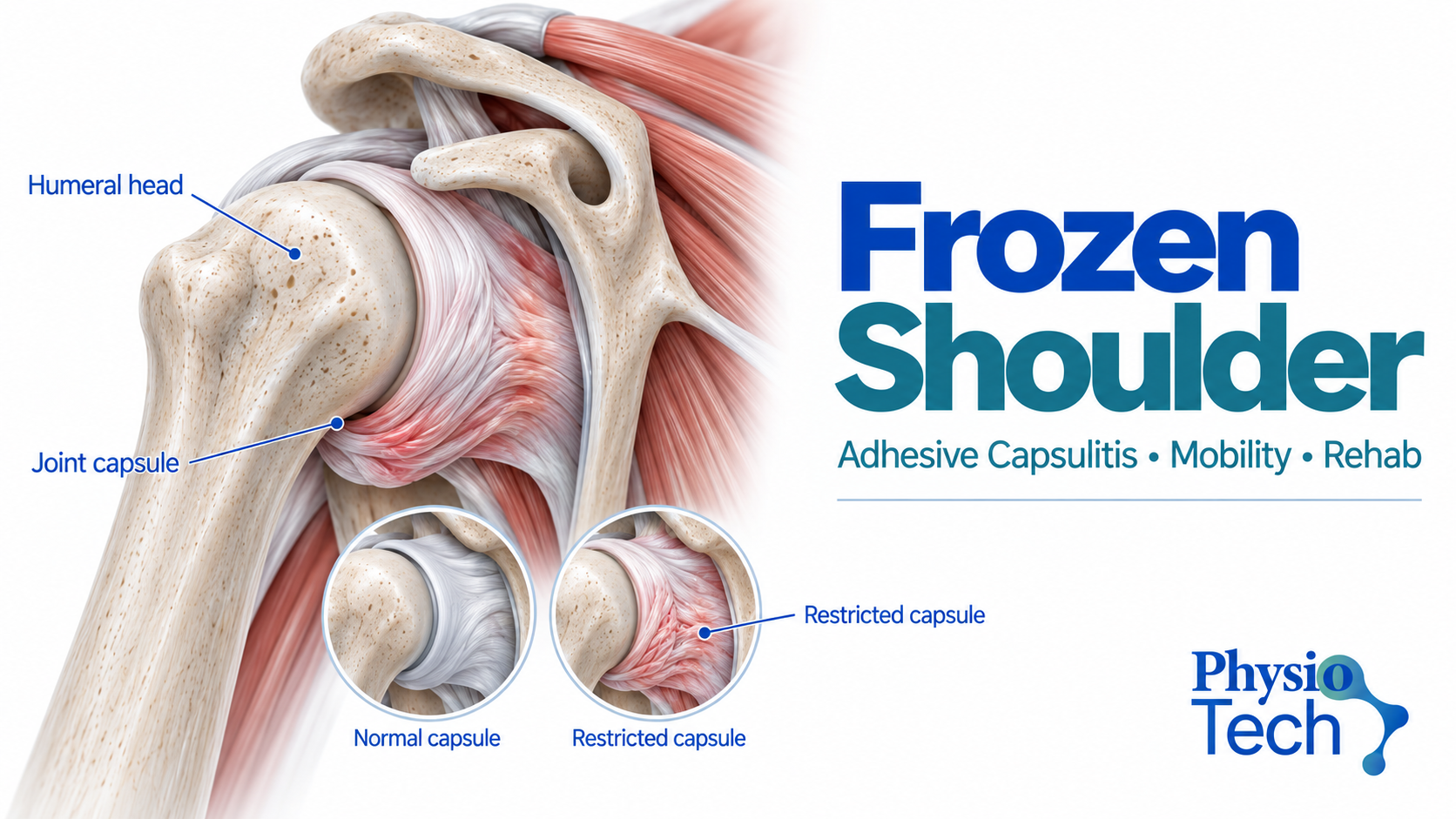
What Is Frozen Shoulder?
Frozen shoulder, or adhesive capsulitis, causes progressive shoulder pain and a marked loss of both active and passive movement. It can affect dressing, sleeping, reaching overhead and routine work. A structured assessment is important because rotator cuff pain, arthritis and cervical nerve symptoms can produce a different pattern. The shoulder capsule becomes painful and stiff, limiting the movement of the ball-and-socket joint. External rotation is often particularly restricted. The diagnosis is mainly clinical; imaging may be used when the history or examination suggests another problem.
Who Is More Likely to Develop It?
Frozen shoulder is most common between 40 and 60 years of age. Risk is higher with diabetes or thyroid disorders and after a period of shoulder immobilization, injury or surgery. Some cases develop without a clear trigger.
Stages and Expected Course
1. Painful or freezing stage
Pain often increases and movement gradually decreases. Sleep and reaching may become difficult.
2. Stiff or frozen stage
Pain may become less intense, but stiffness and functional restriction remain prominent.
3. Recovery or thawing stage
Movement gradually improves. Recovery time varies considerably, so fixed promises are not appropriate.
Symptoms That Need Assessment
1. Progressive restriction in reaching overhead, behind the back or to the side.
2. Pain at night or when lying on the affected shoulder.
3. Loss of both active and passive movement.
4. Difficulty dressing, washing hair or fastening a seat belt.
5. Persistent symptoms after injury or surgery.
Seek urgent medical care after major trauma, visible deformity, a hot swollen joint, fever, rapidly worsening weakness, chest pain or unexplained severe symptoms.
How Is Frozen Shoulder Diagnosed?
Assessment includes symptom history, comparison of active and passive range, strength and screening of the neck and neurological system. An X-ray may help exclude arthritis or fracture. MRI is not routinely required for a typical presentation, but may be requested when another condition is suspected.
Physiotherapy Treatment
Exercise Therapy
Exercises are selected according to irritability and stage. Early treatment may emphasize comfortable range of motion and maintaining function. As symptoms settle, mobility, strength and task-specific loading can progress. Aggressive stretching that causes a prolonged flare-up is not automatically better.
Manual Therapy
Manual therapy may help selected patients improve short-term comfort and movement. It should support active rehabilitation rather than replace exercise.
Adjunct Treatments
Electrotherapy, therapeutic ultrasound, dry needling or kinesio taping may be considered when clinically relevant. These are supportive options and do not replace assessment, education, exercise therapy or graded loading.
Medical Options
A physician may discuss pain relief, an image-guided corticosteroid injection or other interventions depending on the stage, severity and medical history. Persistent severe limitation may require orthopedic review. Physiotherapy remains important before and after any procedure when appropriate.
What Can You Do at Home?
1. Keep the shoulder moving within a tolerable range.
2. Use short, regular exercise sessions instead of forcing long painful stretches.
3. Modify sleep and daily tasks temporarily.
4. Monitor symptoms later the same day and the next morning.
5. Progress resistance only when the shoulder tolerates the current level.
Frozen Shoulder Care at PhysioTech
At PhysioTech Clinic in Zahraa El Maadi, Cairo, care starts with an individual assessment to confirm the movement pattern, exclude warning signs and understand your goals. The plan may combine exercise therapy and manual therapy with selected adjuncts when appropriate. Progress is reviewed using movement, pain, sleep and functional goals rather than a one-size-fits-all timetable.
Frequently Asked Questions
Can frozen shoulder recover without surgery?
Many people improve with time and non-surgical care, but the course varies. Assessment helps guide exercise, symptom management and referral when needed.
Should exercises hurt?
Mild short-lived discomfort may occur, but severe pain or a flare lasting into the next day may mean the dosage needs adjustment.
How long does recovery take?
Recovery may take months and sometimes longer. Diabetes, symptom severity, stage and individual response can affect the course.
Book an Assessment in Maadi
If shoulder pain and stiffness are limiting sleep, work or daily activities, book an assessment at PhysioTech Clinic in Zahraa El Maadi to receive an individualized rehabilitation plan.