Share:
191 views
#الفقري #الفقرات_العنقية #آلام_الرقبة #العمود_الفقري #صحة_العمود_الفقري #تأهيل_الرقبة #علاج_طبيعي #علاج_يدوي
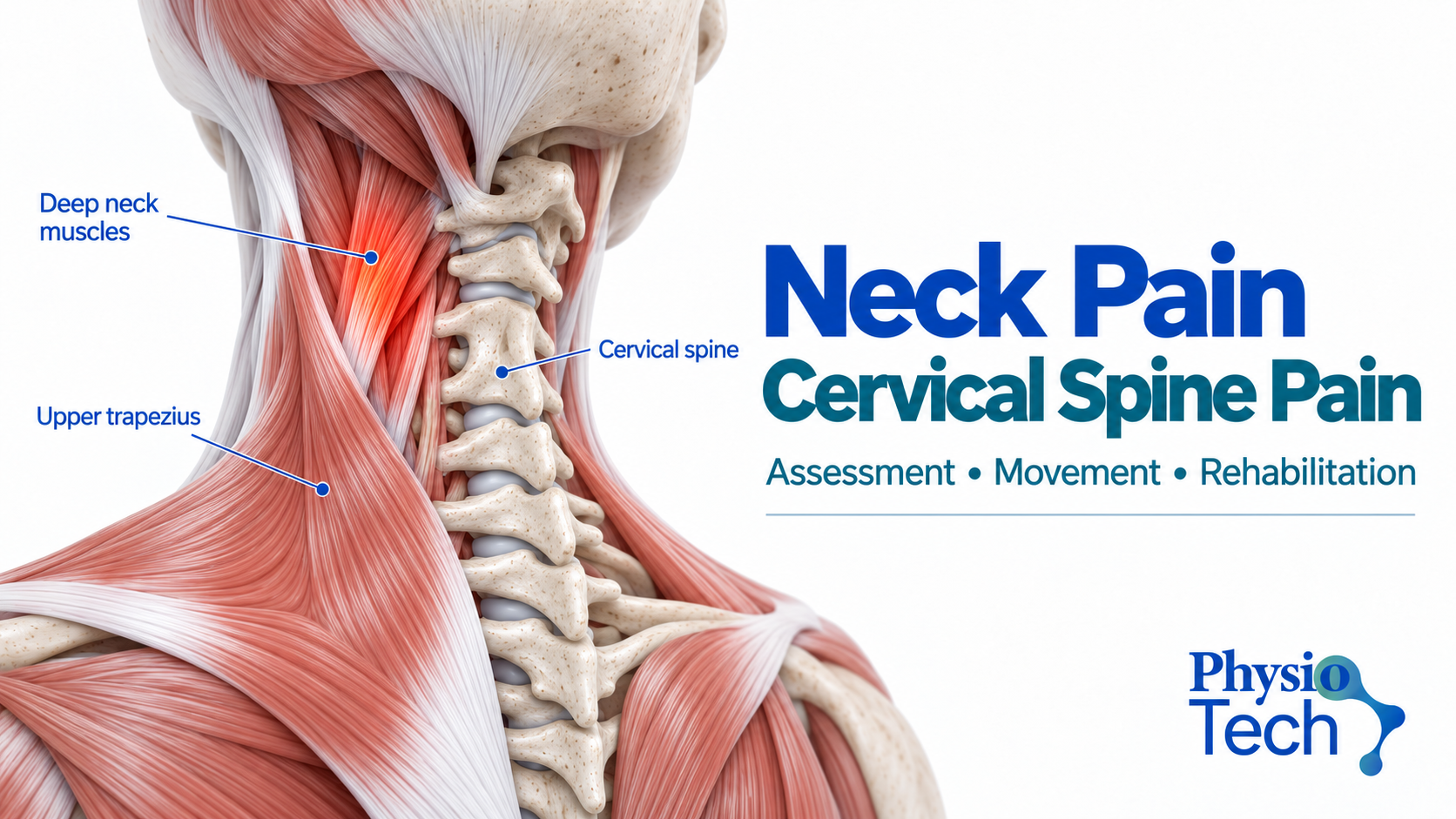
Neck pain can result from joints, muscles, discs, or irritated nerves. The pattern of symptoms, neurological examination, daily activities, and medical history are more useful than assuming every case is caused by a “disc.”
What Is Neck Pain?
The cervical spine contains seven vertebrae from C1 to C7. It supports the head, protects the spinal cord, and allows flexion, extension, rotation, and side bending. Pain may remain in the neck or spread toward the shoulder blade, head, arm, or hand.
Common Causes and Symptom Patterns
1. Mechanical Neck Pain
Pain and stiffness may be linked to sustained positions, a sudden increase in activity, reduced movement variety, or sensitivity of the cervical joints and muscles. Posture can influence symptoms, but there is no single “perfect posture” for everyone.
2. Cervical Radiculopathy
Irritation of a cervical nerve root can produce arm pain, tingling, numbness, or weakness. Assessment should include strength, sensation, reflexes, neck movement, and tests that reproduce or ease symptoms.
3. Cervical Spondylosis and Stenosis
Age-related changes on scans are common and do not always explain pain. When narrowing affects the spinal cord, symptoms may include hand clumsiness, balance difficulty, or changes in walking and require prompt medical assessment.
4. Cervicogenic Headache
Some headaches are associated with neck movement, sustained positions, or restricted upper-cervical motion. Other headache causes must be considered before starting treatment.
When to Seek Urgent Medical Assessment
Seek urgent care if neck pain follows major trauma or is accompanied by:
1. New or rapidly worsening weakness in an arm or leg.
2. Loss of balance, difficulty walking, or marked hand clumsiness.
3. New bladder or bowel dysfunction.
4. Fever, unexplained weight loss, severe night pain, or feeling systemically unwell.
5. Sudden severe headache, facial weakness, speech difficulty, or other stroke-like symptoms.
How Neck Pain Is Assessed
A physiotherapy assessment reviews symptom behavior, work and sleep demands, range of motion, strength, neurological signs, and functional goals. Imaging is not automatically required for uncomplicated neck pain; referral may be appropriate when trauma, progressive neurological findings, or another serious cause is suspected.
Physiotherapy Treatment for Neck Pain
Exercise Therapy and Graded Activity
Treatment may include mobility work, progressive strengthening of the neck and shoulder region, endurance exercises, and gradual return to work, driving, or sport. The program should match the patient’s symptoms and response rather than follow one fixed routine.
Manual Therapy
Manual therapy can be used in selected cases to reduce pain and improve short-term movement so the patient can participate more comfortably in active rehabilitation. It should be combined with education and exercise.
Adjunct Treatments
Electrotherapy, therapeutic ultrasound, dry needling, or kinesio taping may be considered for selected patients after assessment. These options do not replace exercise therapy, activity modification, or graded loading.
Daily Habits That May Help
1. Change position regularly instead of trying to hold one posture all day.
2. Adjust the screen and chair to reduce prolonged strain.
3. Keep moving within a tolerable range and avoid unnecessary bed rest.
4. Use a pillow that keeps the neck comfortable rather than chasing one universal height.
5. Build exercise volume gradually and monitor symptoms over the following day.
Book a Neck Pain Assessment in Maadi
At PhysioTech Clinic in Zahraa El Maadi, the plan begins with an individual assessment to distinguish mechanical neck pain from nerve-related symptoms and warning signs. The goal is to improve movement, strength, confidence, and function without promising a fixed recovery time.