Share:
48 views
#شد عضلات بين الضلوع #Intercostal muscle strain #ألم الضلوع مع التنفس #ألم جانب الصدر #علاج طبيعي الصدر
Sharp pain between the ribs after forceful coughing, twisting or exercise can be an intercostal strain. Because chest pain may also arise from the heart, lungs, ribs or nerves, a muscular diagnosis cannot be assumed from description alone.
اقرأ المقال بالعربيةThe following information is educational and does not replace an individual examination, especially after major trauma or when warning signs are present.
What Is the Condition?
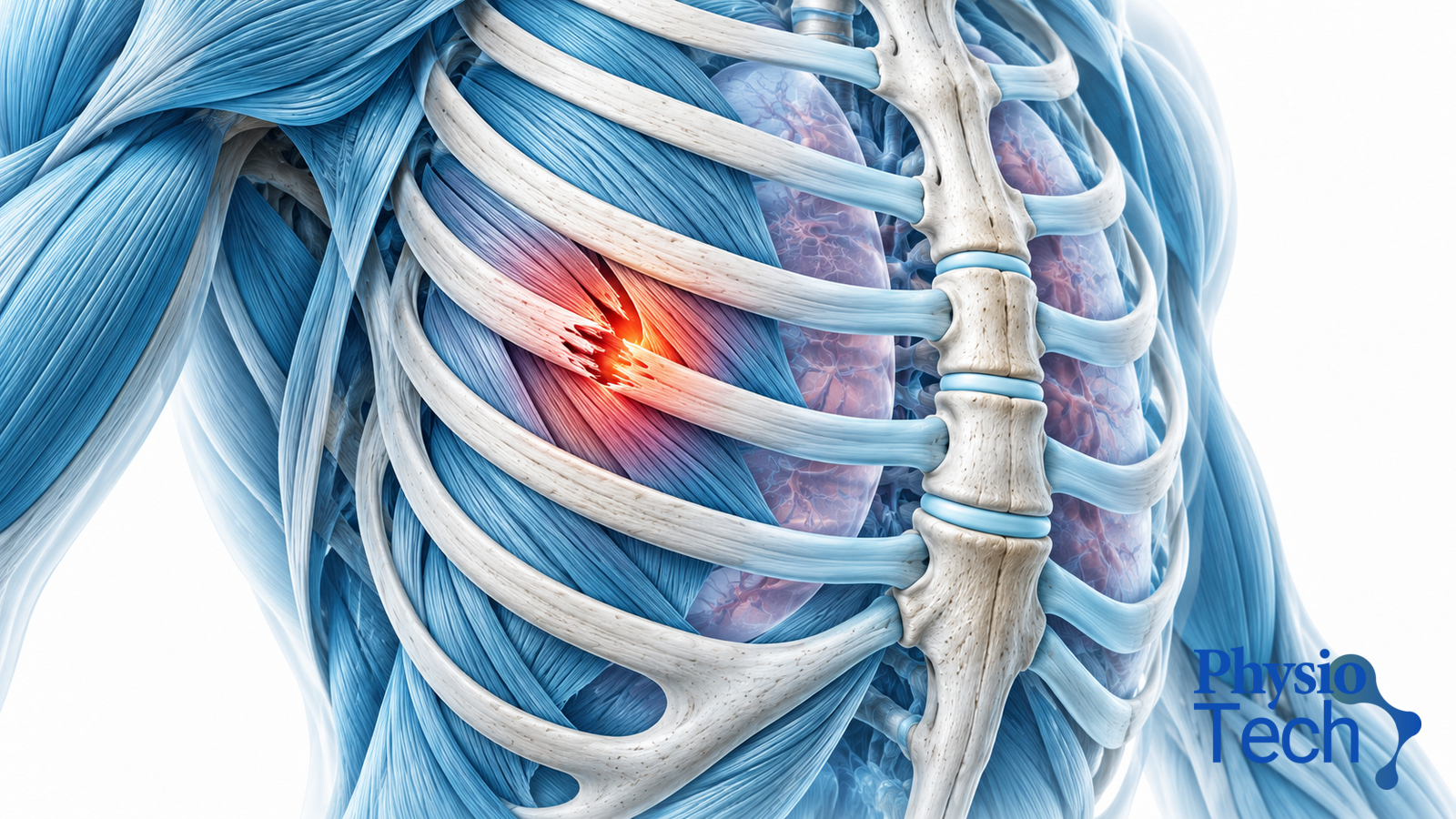
Intercostal muscles span adjacent ribs and help stabilise the chest wall and breathing. Sudden movement, repeated cough or rotational and throwing sport can overload them.
Symptoms You May Notice
• Local pain between ribs that can be pointed to.
• Pain with twisting, bending or coughing.
• Pain during a deep breath or laugh.
• Tenderness in an intercostal space.
• Muscle guarding after exertion.
Causes and Contributing Factors
Repeated coughing, throwing, rowing, trunk rotation or sudden lifting can strain the muscles. Rib contusion or costovertebral injury may coexist, so mechanism matters.
Conditions That Can Look Similar
Rib fracture, costochondritis, intercostal neuralgia, pulmonary embolism, pneumonia, pneumothorax and cardiac disease.
How Is It Assessed at PhysioTech?
Breathlessness, dizziness, fever, cardiac and clot risk and trauma are screened first. Breathing, chest and trunk movement and local tenderness are examined only when the presentation is appropriate for musculoskeletal care.
What Do We Measure?
Pain with deep breathing, rotation and cough, trunk-rotation range, sleep and work tolerance, sport demand and ability to breathe without excessive guarding.
We record a meaningful task such as walking, running, stairs or reaching, the response during it and what happens later and the next day. Movement, strength, capacity and task quality are compared over time rather than judging progress only by short-term relief in the session.
When May Imaging or Medical Referral Be Needed?
Pressure-like pain, radiation to the arm or jaw, breathlessness, cold sweat, dizziness, coughing blood, fever, major trauma or unexplained pain needs urgent medical care.
Imaging is not required for every patient. It becomes important after major trauma, with warning signs, when progress is unexpectedly poor, or when the result would change loading, referral or surgical decisions. Imaging decisions are coordinated with the appropriate physician.
Intercostal Muscle Strain Treatment at PhysioTech
1. Protect the Area and Manage Load
Stop the provoking exercise and maintain normal comfortable breathing; tightly binding the chest is avoided because shallow breathing can create complications.
2. Restore Movement and Control
Use diaphragmatic breathing and gentle shoulder, thoracic and trunk movement, increasing rotation gradually.
3. Build Strength and Capacity
Build trunk and shoulder strength and add throwing or pulling resistance when breathing and movement are tolerated.
4. Return to Activity or Sport
Return by progressing speed, force and volume; repeat medical screening if the pain pattern changes or breathlessness appears.
A central part of care is understanding why each exercise was chosen and how to adjust the dose. We agree on an acceptable symptom response, then progress repetitions, resistance, speed or task complexity. We do not promise a fixed recovery date because injury severity, general health and activity demands vary.
The PhysioTech Treatment Philosophy in Cairo
At PhysioTech Clinic in Zahraa El Maadi, Cairo, care starts with assessment rather than an imaging label alone. We connect symptom behaviour with movement, strength, capacity and work or sport demands, record clear baseline measures and retest them. Manual therapy, dry needling, kinesio taping, electrotherapy or therapeutic ultrasound may be used for a defined purpose, but they do not replace education, therapeutic exercise and graded loading.
The first step is not an exercise but confirming that chest pain is appropriate for rehabilitation. Then breathing, movement and confidence are restored without excessive guarding.
Red Flags That Need Prompt Medical Review
Pressure-like chest pain, arm or jaw radiation, breathlessness, cold sweat or fainting, coughing blood, high fever, major trauma or rapid deterioration.
Frequently Asked Questions
How do I know it is muscular?
Local movement- and pressure-sensitive pain supports it, but does not exclude dangerous causes without screening.
Should I avoid deep breathing?
Comfortable breathing is encouraged; severe pain with breathlessness needs assessment.
When can exercise resume?
When breathing, movement and load improve, followed by gradual rotation, speed and force.
When Should You Book an Assessment?
If rib pain is local after exertion and serious causes have been excluded, book an assessment at PhysioTech in Zahraa El Maadi, Cairo.
Trusted References
• medlineplus.gov
• nhs.uk