Share:
48 views
#كسر إجهادي بالفقرات القطنية #Spondylolysis #pars interarticularis #ألم ظهر المراهقين #تأهيل لاعبين
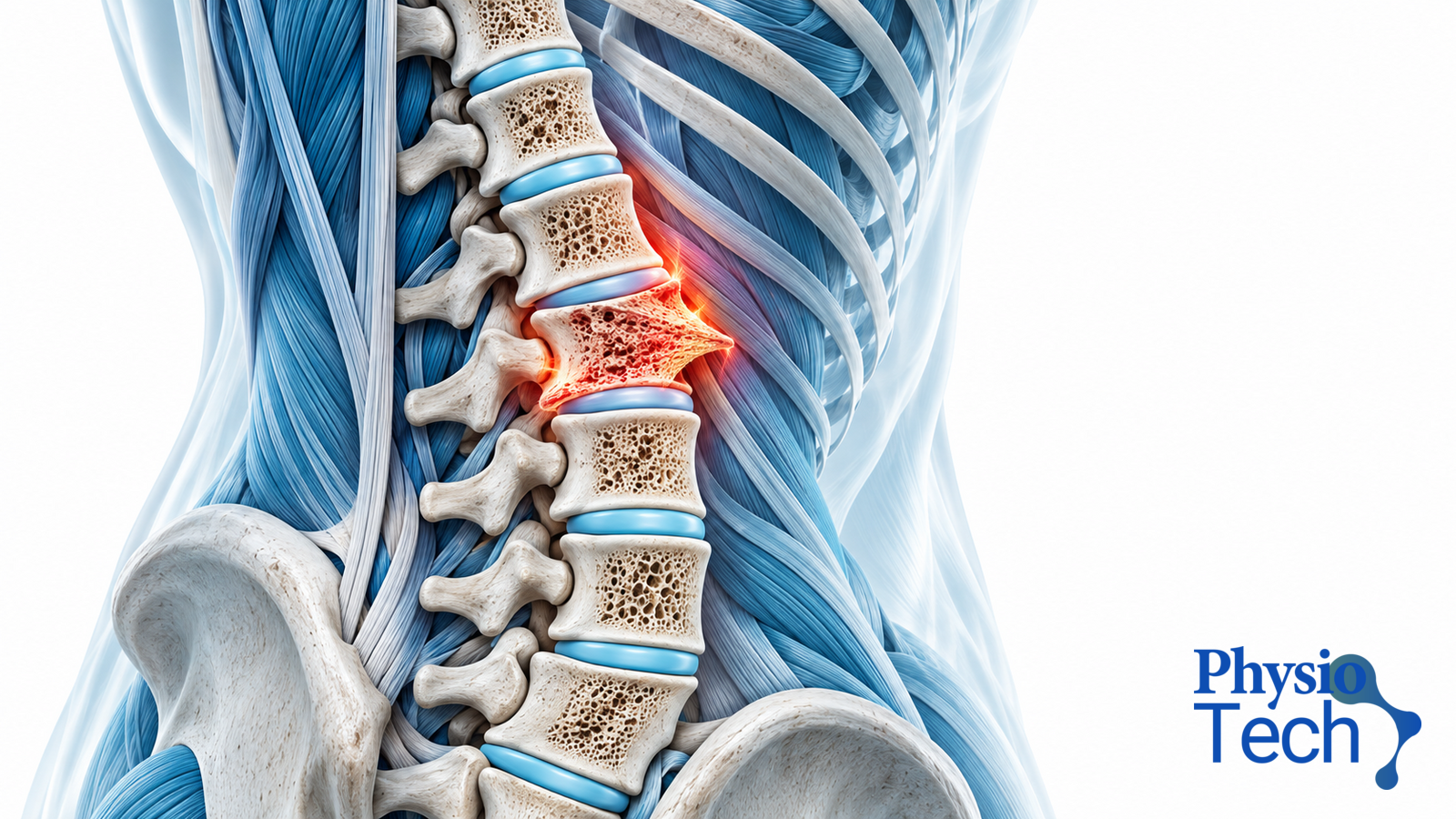
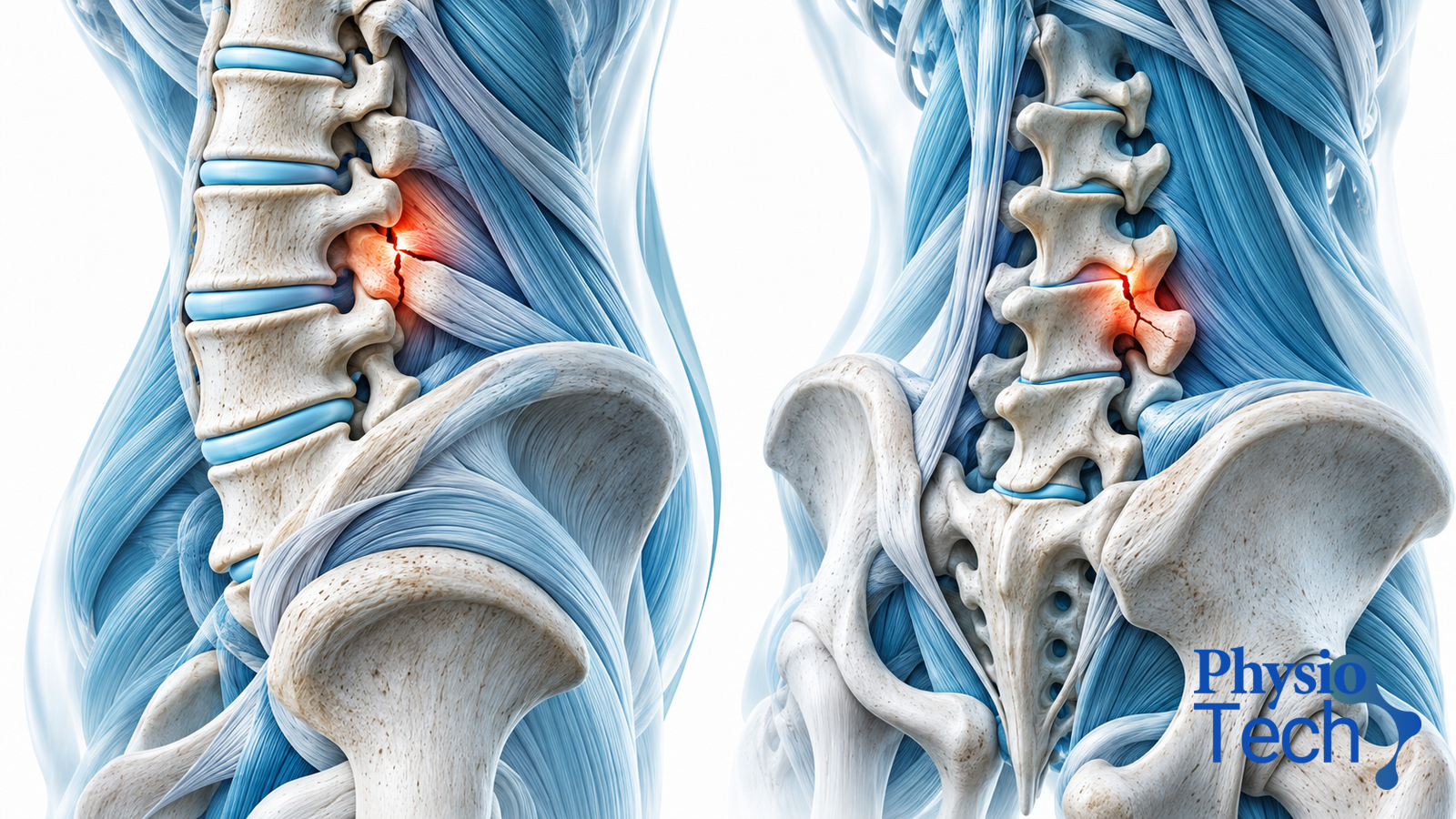
Low-back pain repeatedly provoked by extension and rotation in a gymnast, footballer or weightlifter can reflect a pars interarticularis bone stress injury called spondylolysis. It differs from spondylolisthesis: a pars defect can occur without vertebral slip.
اقرأ المقال بالعربيةThe following information is educational and does not replace an individual examination, especially after major trauma or when warning signs are present.
What Is the Condition?
The pars is a small bony bridge in the posterior vertebral arch. Repeated extension and rotation during growth can outpace bone repair, beginning as stress reaction and progressing to a bony crack.
Symptoms You May Notice
• Local low-back pain during sport.
• Pain with extension, rotation or jumping.
• Relative improvement with rest and recurrence in training.
• Possible hip or thigh tightness.
• Usually no leg weakness or numbness.
Causes and Contributing Factors
Rapid growth, repeated extension and rotation, training spikes, limited recovery and bone-health factors may contribute. Early recognition helps modify load before progression.
Conditions That Can Look Similar
Muscle pain, lumbar facet pain, disc disorder, hip or sacroiliac pain, spondylolisthesis and inflammatory causes.
How Is It Assessed at PhysioTech?
Age, growth, sport, workload and bone health are reviewed, followed by movement, trunk, hip and neurological examination. Suspicion needs medical assessment and suitable imaging rather than repeated painful extension testing.
What Do We Measure?
Daily-activity pain, hip and trunk motion, neutral-control endurance, squat and landing, then running, jumping and sport skills.
We record a meaningful task such as walking, running, stairs or reaching, the response during it and what happens later and the next day. Movement, strength, capacity and task quality are compared over time rather than judging progress only by short-term relief in the session.
When May Imaging or Medical Referral Be Needed?
Pain lasting weeks in a young athlete, night pain, weakness or numbness, weight loss, fever, or bladder or bowel change needs medical assessment.
Imaging is not required for every patient. It becomes important after major trauma, with warning signs, when progress is unexpectedly poor, or when the result would change loading, referral or surgical decisions. Imaging decisions are coordinated with the appropriate physician.
Lumbar Spondylolysis Treatment at PhysioTech
1. Protect the Area and Manage Load
Temporarily stop or reduce painful high-extension and rotation skills and follow relative rest or brace instructions when prescribed.
2. Restore Movement and Control
Restore hip and thoracic movement and build trunk control in comfortable positions without creating permanent fear of spinal motion.
3. Build Strength and Capacity
Progress trunk, hip and limb strength before reintroducing extension and rotation gradually.
4. Return to Activity or Sport
Return through running, jumping and sport-specific skills, using pain, strength and confidence criteria rather than date alone.
A central part of care is understanding why each exercise was chosen and how to adjust the dose. We agree on an acceptable symptom response, then progress repetitions, resistance, speed or task complexity. We do not promise a fixed recovery date because injury severity, general health and activity demands vary.
The PhysioTech Treatment Philosophy in Cairo
At PhysioTech Clinic in Zahraa El Maadi, Cairo, care starts with assessment rather than an imaging label alone. We connect symptom behaviour with movement, strength, capacity and work or sport demands, record clear baseline measures and retest them. Manual therapy, dry needling, kinesio taping, electrotherapy or therapeutic ultrasound may be used for a defined purpose, but they do not replace education, therapeutic exercise and graded loading.
Bone is protected during the sensitive phase, then movement and loading return. Permanent avoidance of extension is not the aim; controlled sport-required motion is.
Red Flags That Need Prompt Medical Review
Severe night pain, fever or weight loss, increasing weakness or numbness, bladder or bowel change, or pain after major trauma.
Frequently Asked Questions
Is this the same as spondylolisthesis?
No. Spondylolysis is a pars defect and can occur without vertebral slip.
Does every athlete need a brace?
No. The physician selects it based on stage, symptoms and imaging.
When can sport restart?
After pain-free daily activity, adequate strength and control, and completion of graded skills.
When Should You Book an Assessment?
If a young athlete has persistent low-back pain, book an assessment at PhysioTech in Cairo and coordinate medical imaging when indicated.
Trusted References
• pmc.ncbi.nlm.nih.gov
• sanfordhealth.org