Share:
57 views
#كسر انضغاطي بالفقرات #Vertebral compression fracture #هشاشة العظام #تأهيل الظهر #علاج طبيعي كبار السن
Sudden mid- or low-back pain after minor effort or a fall in a person with osteoporosis can be a vertebral compression fracture. Medical diagnosis comes first to establish stability and exclude neurological compromise or another cause.
اقرأ المقال بالعربيةThe following information is educational and does not replace an individual examination, especially after major trauma or when warning signs are present.
What Is the Condition?
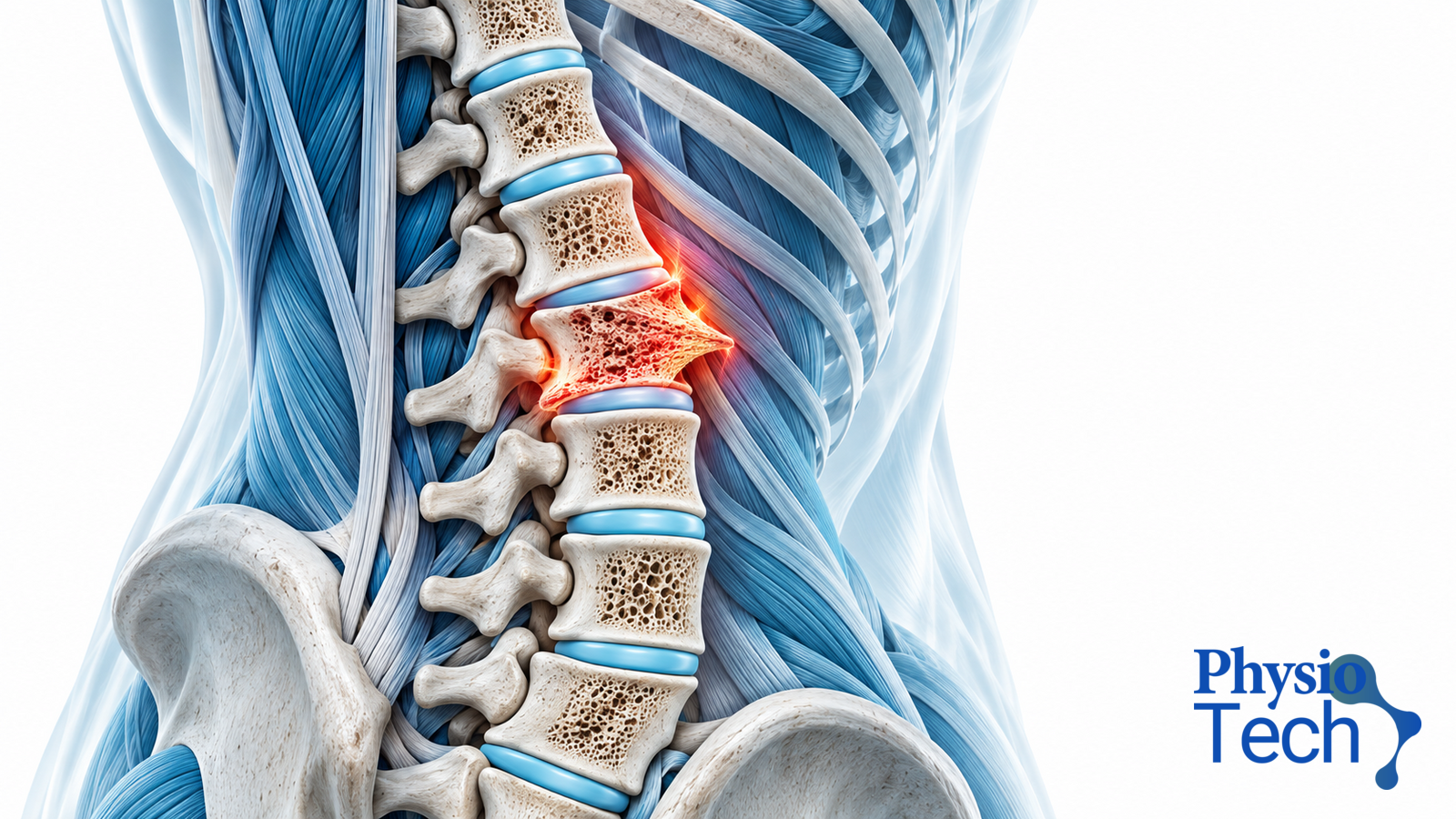
A compression fracture reduces vertebral-body height, often anteriorly, creating a wedge shape. Osteoporosis is common, while tumour and major trauma are other causes that must not be overlooked.
Symptoms You May Notice
• Sudden back pain worse with standing and movement.
• Local vertebral tenderness.
• Height loss or increasing kyphosis with multiple fractures.
• Difficulty rising, walking and completing tasks.
• Possible radiating or neurological symptoms if nerves are involved.
Causes and Contributing Factors
Osteoporosis, a fall, sudden load or major trauma can cause fracture. One fragility fracture raises future risk and should trigger bone-health, medication and nutrition review.
Conditions That Can Look Similar
Muscle strain, facet pain, infection, tumour, rib fracture and referred thoracic or abdominal pain.
How Is It Assessed at PhysioTech?
Mechanism, bone health and medicines are reviewed and neurology, breathing and movement are examined cautiously. Imaging and physician review establish diagnosis and stability before broader loading.
What Do We Measure?
Pain during transfers and walking, standing tolerance, back and leg strength, balance, gait speed and independence with daily activity.
We record a meaningful task such as walking, running, stairs or reaching, the response during it and what happens later and the next day. Movement, strength, capacity and task quality are compared over time rather than judging progress only by short-term relief in the session.
When May Imaging or Medical Referral Be Needed?
New weakness or numbness, bladder or bowel change, fever, weight loss, severe night pain or major trauma needs urgent review.
Imaging is not required for every patient. It becomes important after major trauma, with warning signs, when progress is unexpectedly poor, or when the result would change loading, referral or surgical decisions. Imaging decisions are coordinated with the appropriate physician.
Vertebral Compression Fracture Treatment at PhysioTech
1. Protect the Area and Manage Load
Follow physician instructions on protection, brace and medicines, and learn less painful transfer strategies without prolonged bed rest.
2. Restore Movement and Control
Use breathing, comfortable mobility and thoracic and hip-extension work as appropriate, avoiding loaded spinal flexion and forceful twisting early.
3. Build Strength and Capacity
Progress back, hip and leg strength and balance, connecting exercise to transfers, stairs and safer lifting.
4. Return to Activity or Sport
Increase walking and daily tasks while coordinating osteoporosis treatment and fall prevention to reduce future fracture risk.
A central part of care is understanding why each exercise was chosen and how to adjust the dose. We agree on an acceptable symptom response, then progress repetitions, resistance, speed or task complexity. We do not promise a fixed recovery date because injury severity, general health and activity demands vary.
The PhysioTech Treatment Philosophy in Cairo
At PhysioTech Clinic in Zahraa El Maadi, Cairo, care starts with assessment rather than an imaging label alone. We connect symptom behaviour with movement, strength, capacity and work or sport demands, record clear baseline measures and retest them. Manual therapy, dry needling, kinesio taping, electrotherapy or therapeutic ultrasound may be used for a defined purpose, but they do not replace education, therapeutic exercise and graded loading.
The vertebra is not treated in isolation. Bone health, strength, balance, confidence and daily life are all part of preventing the next fracture.
Red Flags That Need Prompt Medical Review
Increasing weakness or numbness, bladder or bowel change, severe pain after a fall, fever, unexplained weight loss or escalating night pain.
Frequently Asked Questions
Is bed rest required?
Short rest may be needed for pain, but prolonged bed rest increases weakness and complications; movement returns gradually under medical guidance.
Can exercise worsen the fracture?
Appropriate exercise after stability assessment builds strength and balance; unsuitable loaded movements are avoided in the sensitive phase.
Does it heal without surgery?
Many stable fractures are managed conservatively, while selected cases need physician-directed intervention.
When Should You Book an Assessment?
After a diagnosed compression fracture, book safe rehabilitation at PhysioTech in Zahraa El Maadi, Cairo, within a bone-health plan.
Trusted References
• pmc.ncbi.nlm.nih.gov
• nof.org