Share:
98 views
#وتر البايسبس #ألم الكتف #علاج طبيعي للكتف #biceps tendinopathy #shoulder rehabilitation
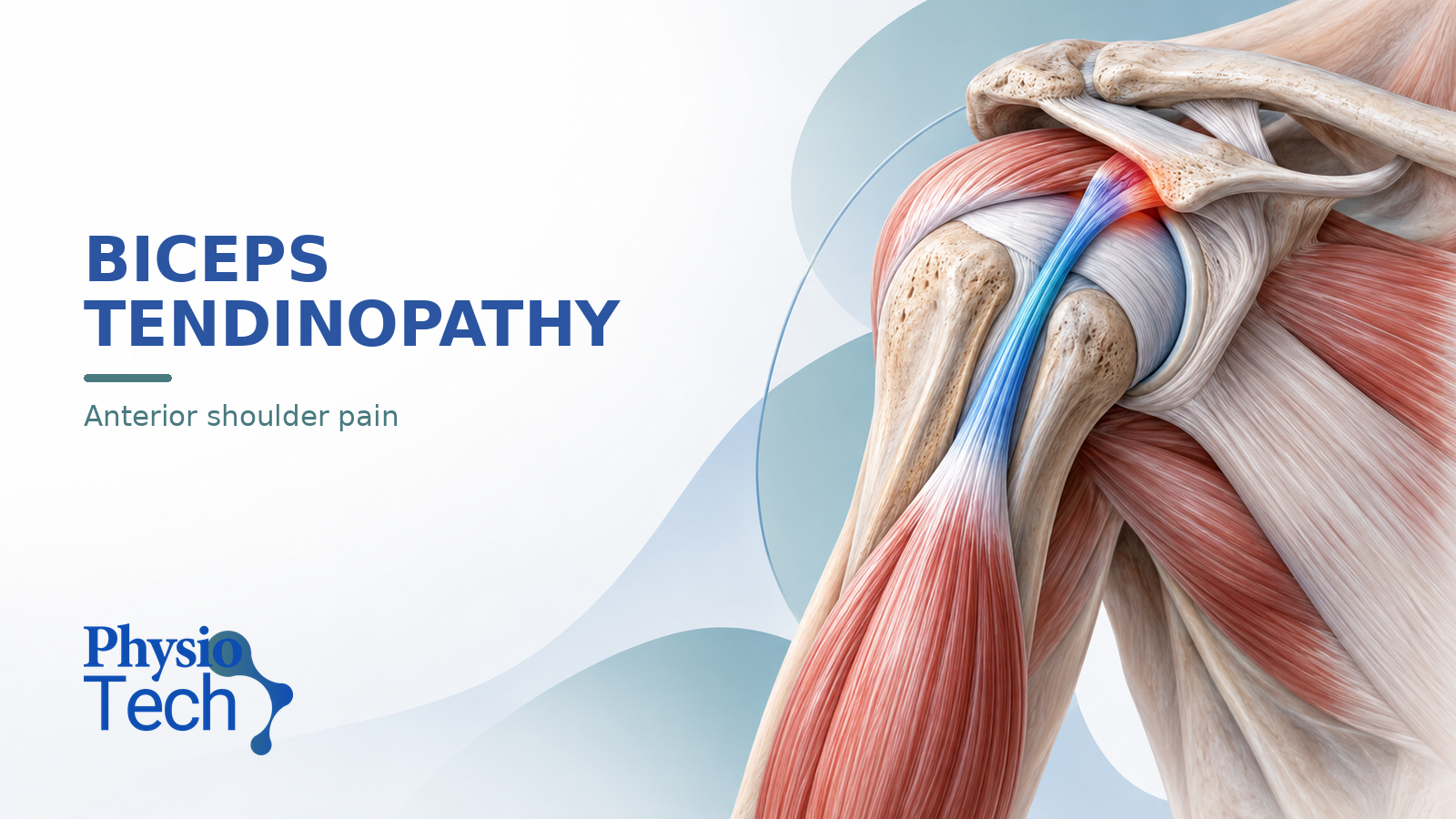
The long head of the biceps tendon travels through a groove at the front of the humerus before attaching near the top of the shoulder joint. It may become painful after a sudden increase in lifting, pulling, pressing or throwing. However, it is rarely the only relevant structure; rotator cuff, labral and scapular control problems may coexist.
اقرأ المقال بالعربيةCommon Symptoms
Typical features include pain at the front of the shoulder during arm elevation or lifting away from the body; pain with resisted elbow flexion or forearm supination; tenderness near the bicipital groove; and reduced tolerance for gym training, throwing or repetitive overhead work. These findings are not diagnostic by themselves because other shoulder and neck conditions can produce similar pain.
What Else Should Be Considered?
Assessment should distinguish biceps tendon pain from rotator cuff disorders, cervical referred pain, SLAP or other labral injuries, and shoulder instability. A sudden pop followed by bruising or a visible change in muscle shape may indicate a rupture and requires medical assessment.
How PhysioTech Assesses Anterior Shoulder Pain
Linking Pain to Movement and Load
At PhysioTech Clinic in Zahraa El Maadi, Cairo, the assessment reviews symptom onset and the exercises, work tasks or sports that aggravate the shoulder. The physiotherapist then examines shoulder and neck movement, rotator cuff and scapular muscle capacity, and the tendon’s response to load. Diagnosis is not based on one special test or the pain location alone.
Setting Measurable Goals
Goals may include lifting a defined weight with less pain, restoring elevation, improving external rotation strength, or returning to a specific gym or sports task. These measures guide reassessment and progression.
Physiotherapy Treatment
Load Management Instead of Complete Rest
Highly provocative movements may be reduced or modified temporarily while tolerated activity continues. Tendon capacity is then rebuilt progressively because rest alone does not restore the ability to lift, train or play sport.
Exercise Therapy
Rehabilitation may include graded biceps loading, rotator cuff and scapular strengthening, thoracic and shoulder mobility, and retraining of pressing, pulling or throwing patterns. The starting load should be tolerable and progress according to the response during and after exercise.
Manual Therapy and Adjunct Treatments
Manual therapy may be used to improve shoulder or thoracic mobility and provide short-term symptom relief. In selected cases, dry needling, kinesio taping, electrotherapy or therapeutic ultrasound may support symptom management. They are adjuncts and do not replace assessment, exercise therapy or graded loading.
Returning to the Gym or Sport
Return is based on performing the required movement with acceptable symptoms, adequate strength and control, and no significant flare-up the following day. Load, volume, speed and frequency are progressed step by step rather than returning immediately to the previous level.
When Is Medical Assessment Needed?
Seek assessment for sudden weakness, bruising or visible deformity, dislocation or significant trauma, severe unremitting pain, or marked loss of movement. Medical review is also appropriate when symptoms persist despite suitable load modification and rehabilitation.
Frequently Asked Questions
Does a positive Speed’s test confirm the diagnosis?
No. Special tests should be interpreted together with the history, neck and shoulder examination, and symptom response to loading.
Should I completely stop biceps exercises?
They may be reduced temporarily if highly provocative, then reintroduced with an appropriate range and dosage. The objective is to restore tendon capacity, not avoid movement permanently.
Is manual therapy enough?
It may help symptoms and movement in the short term, but it does not replace progressive strengthening and load management.
Book a Shoulder Assessment in Maadi
PhysioTech Clinic in Zahraa El Maadi assesses anterior shoulder pain to identify the factors linked to symptoms and create an individual plan for a safe return to work, gym training or sport, with medical referral when needed.