Share:
51 views
#الثنية الزلالية بالركبة #Medial Knee Plica #علاج طبيعي #physiotherapy #Cairo
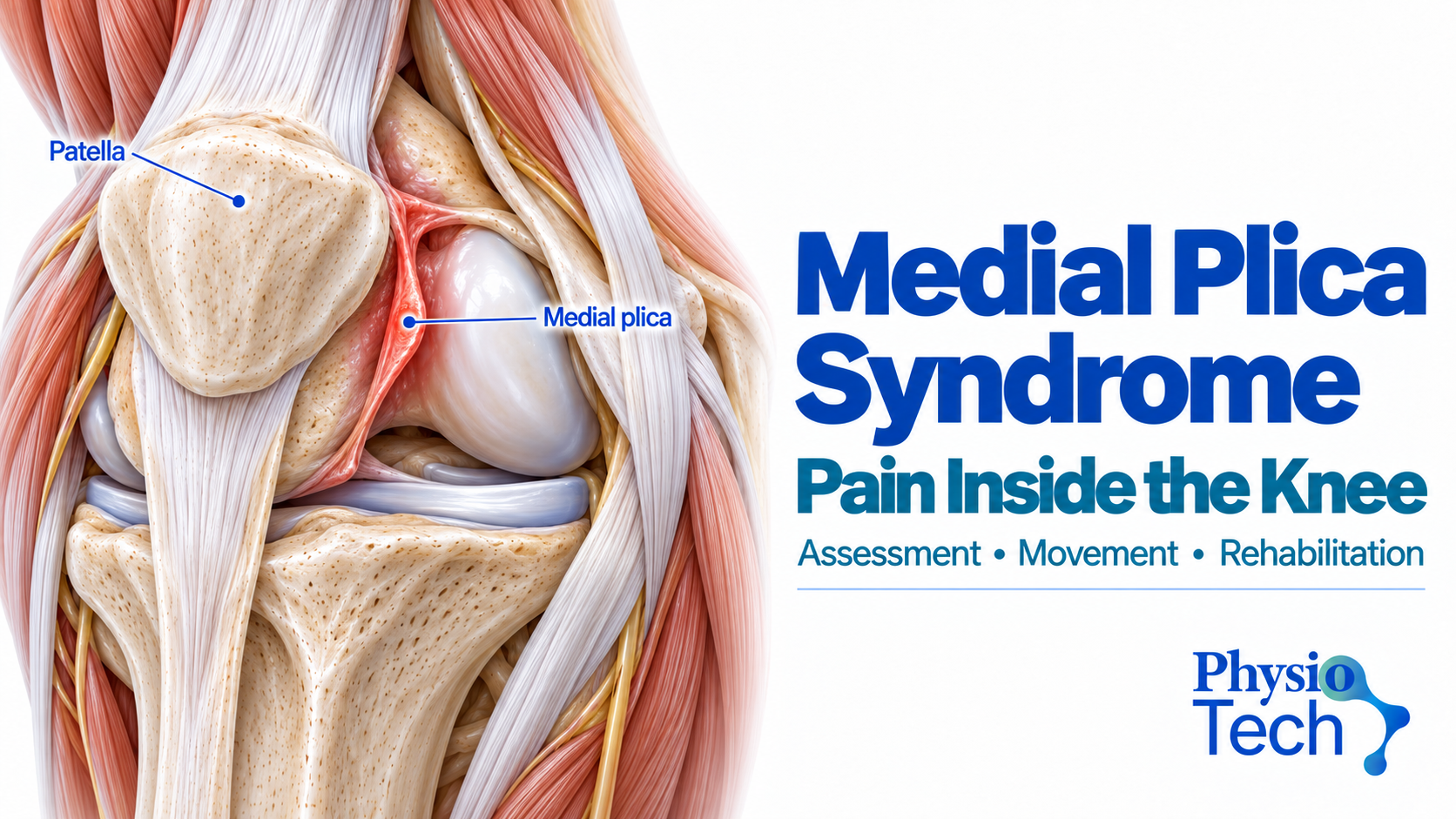
Anteromedial knee pain with a click during bending may raise the question of medial plica syndrome. A plica is a normal fold in the joint lining for many people, but it can become irritated after a change in load or injury.
اقرأ المقال بالعربيةAt PhysioTech Clinic in Zahraa El Maadi, Cairo, treatment begins with the person’s symptoms, examination and goals rather than a technique selected from a label alone. This article explains the condition but cannot replace an individual assessment or urgent care when warning signs are present.
What Is Happening Anatomically?
The fold lies near the medial edge of the patella and femoral condyle. Seeing a plica on imaging is common and not proof it is the painful structure. Symptoms and the exclusion of other causes matter.
Symptoms You May Notice
Pain may increase on stairs, squats or after prolonged sitting, sometimes with a catching sensation. True locking or substantial swelling after a twist should not be attributed to a plica without assessment.
How Is It Assessed?
We review injury mechanism and training changes, inspect swelling and range, and examine patellar function and lower-limb strength. Functional tasks are compared with symptoms associated with meniscal and patellofemoral conditions.
PhysioTech does not base a diagnosis on one scan or one provocative test. We connect the history with symptom distribution, daily behaviour, movement, strength and the tasks that matter to the patient. The working explanation is tested by changing a relevant load or treatment variable and measuring the response. If the findings do not fit, the diagnosis is reconsidered and the examination or referral pathway is expanded. This keeps care focused on measurable function rather than a label alone.
What Else Could It Be?
Meniscal injury, patellofemoral pain, fat pad irritation and osteoarthritis overlap. No single manoeuvre alone establishes a symptomatic plica.
Physiotherapy at PhysioTech
First Phase: Settle Provocative Load
Conservative care may initially limit repeated painful flexion before graded quadriceps and hip strengthening. Stair and squat tolerance is rebuilt progressively, followed by the demands of work or sport. We reassess pain and swelling after load increases.
Next Phase: Build Capacity
As symptoms settle, therapeutic exercise and graded loading are matched to your response and goals. Manual or symptom-relief techniques may be adjuncts when useful, but they do not replace exercise and repeated assessment. Recovery timelines vary with severity, health and activity demands.
A key part of the plan is understanding why each exercise was chosen and how to adjust its dose. We agree on an acceptable symptom response during activity, review what happens later and the next day, and then progress repetitions, resistance, speed or task complexity. The aim is not to make a session feel hard; it is to improve capacity for work, walking and sport without an escalating flare. Sleep, workload distribution, general health and confidence in movement are considered alongside local tissue loading.
Progression and Return to Activity
How Do We Measure Progress?
Persistent pain after a consistent rehabilitation trial or clear mechanical symptoms may warrant medical review to reconsider intra-articular causes.
What Can You Do at Home?
Do not interpret every click as a meniscus tear or repeatedly force the painful motion. Note the circumstances of pain and the response after exercise.
When Is Medical Review Needed?
Major swelling after injury, true locked extension, hot joint with fever or inability to walk needs medical evaluation.
Frequently Asked Questions
Is a plica on MRI always disease?
No. It is often present without symptoms.
How is it distinguished from meniscal pain?
The history and examination help; further evaluation may be needed.
Is surgery first-line?
Conservative treatment is commonly tried first; a specialist discusses other options if necessary.
Book an Assessment in Cairo
If Medial Knee Plica affects work, walking or sport, book an individual assessment at PhysioTech in Zahraa El Maadi, Cairo. We explain the findings clearly, decide whether physiotherapy is appropriate or medical referral is needed, and agree on measurable rehabilitation goals.