Share:
73 views
#تمزق جذر الغضروف الهلالي #Meniscus Root Tear
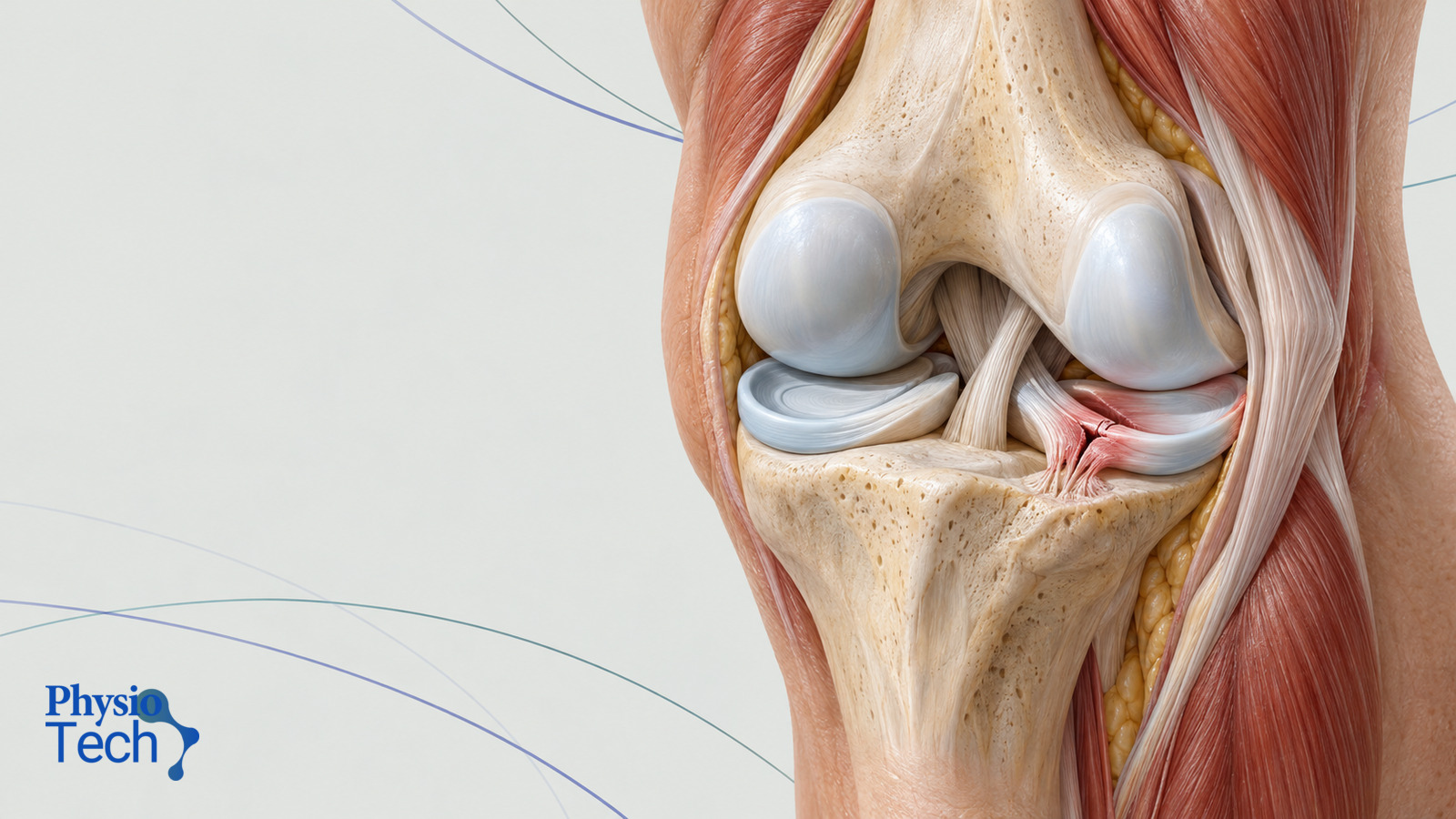
Understanding Meniscus Root Tear
A meniscus root anchors the meniscus to the tibia. A tear may follow twisting or deep flexion, or develop with joint degeneration. A pop, posterior or medial pain, swelling and difficulty loading the knee can occur, but symptoms overlap with osteoarthritis, other meniscus tears and ligament injuries.
Symptoms and Clinical Assessment
Assessment combines symptoms, swelling, motion, strength and load tolerance; MRI helps define tear pattern and location. Age alone does not determine care. Cartilage condition, alignment, tissue quality, symptoms and goals matter.
Physiotherapy and Rehabilitation
Progressive Exercise and Load Management
Nonoperative rehabilitation may suit selected degenerative tears or people who are not surgical candidates, focusing on load management, motion, quadriceps and hip capacity, and function. Repair requires protection of healing tissue. Weight-bearing and flexion restrictions depend on the surgeon and repair, so a generic meniscus protocol is unsafe. Progression moves from swelling control and permitted motion to strength, gait, squat, running and sport-specific tests.
Return to Activity and When Medical Review Is Important
Prompt review is required for true locking, major swelling after trauma, inability to bear weight, loss of extension or worsening symptoms after surgery.
Frequently Asked Questions
Common Questions About Recovery and Treatment
CTA: If MRI reports a meniscus root tear, book an assessment at PhysioTech Clinic in Zahraa El Maadi to coordinate a safe, criteria-based plan with your surgeon when needed.