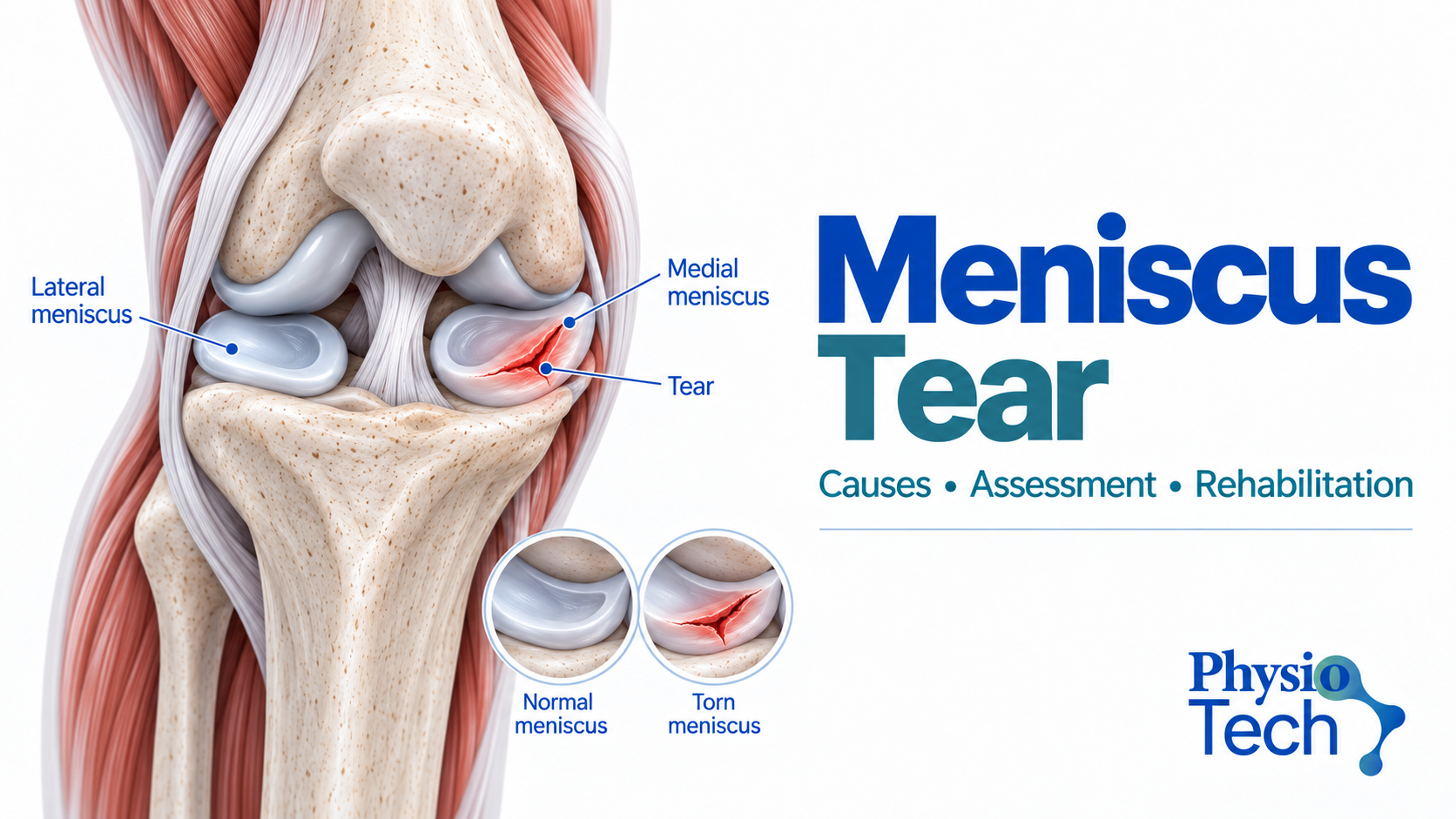
The meniscus distributes load and absorbs shock inside the knee. A tear may follow a sudden twist during sport or develop gradually as the tissue changes with age. An MRI finding alone does not prove that the tear is the pain source or that surgery is required; symptoms, examination and function guide decisions.
What are the symptoms of a meniscus tear?
Symptoms may include pain along the inner or outer joint line, swelling, stiffness, difficulty squatting or changing direction, and catching or clicking. True locking—being unable to fully straighten the knee because of a mechanical block—is different from movement hesitation caused by pain and needs prompt assessment.
How is a meniscus tear diagnosed?
Assessment starts with the injury history, pain location, swelling, range of motion, walking, strength and relevant functional tests. Meniscus tests can support the clinical picture but should not be interpreted alone.
When is MRI useful?
MRI may help when symptoms persist, true locking is present, or surgery is being considered. X-rays do not show the meniscus but may help assess bone or osteoarthritis. Imaging findings should always be matched with symptoms and examination.
Does a meniscus tear need surgery?
Many people improve with conservative care, especially without true locking or marked instability. Rehabilitation may include load management, restoring motion, strengthening the quadriceps, hamstrings, hip and calf muscles, and improving balance and control during squatting, stairs, running and sport-specific tasks.
Meniscus repair versus partial meniscectomy
Repair preserves meniscal tissue when the tear pattern and location have healing potential, but usually requires a more protective rehabilitation period. Partial meniscectomy removes only unstable tissue and may allow faster early progression, but it reduces tissue that helps distribute joint load. The surgeon's decision depends on tear pattern, location, tissue quality and the patient's goals.
Physiotherapy at PhysioTech
At PhysioTech in Zahraa El Maadi, assessment is individualised to movement, strength, capacity, work and sport demands. Symptom-relieving modalities may be used when appropriate, but progressive loading, targeted exercise and confidence in movement are the core of rehabilitation.
Rehabilitation stages
• Settle irritability and restore knee extension and flexion.
• Rebuild quadriceps, hamstring, hip and calf strength.
• Improve balance and control of knee alignment.
• Progress to running, direction changes and sport tasks when criteria are met.
After surgery, restrictions depend on the procedure and surgeon's instructions. Return to activity is not based on a fixed number of weeks; it considers tissue healing, motion, strength, swelling response and functional test quality.
When should you seek urgent assessment?
Seek prompt medical assessment for a truly locked knee, major swelling after injury, inability to bear weight, redness and heat with fever, or calf pain and swelling.
Book an assessment
If knee pain or swelling limits walking or sport, a PhysioTech assessment can identify treatable factors and build a plan around your condition and goals.