Share:
6 views
#ألم مشط القدم #Metatarsalgia #ألم باطن القدم #علاج القدم
What Is Metatarsalgia?
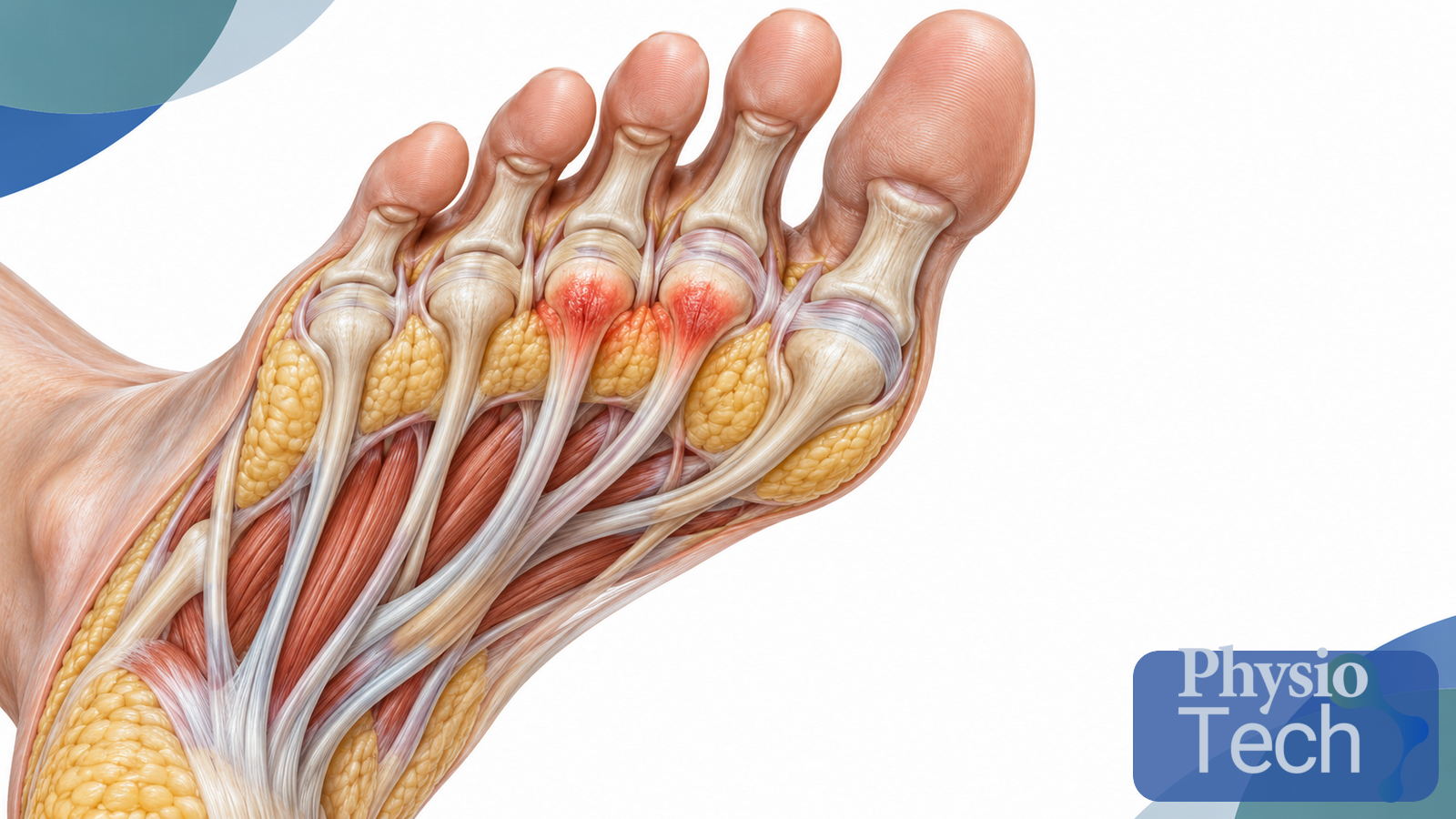
Pain beneath the metatarsal heads can make walking or running difficult. Metatarsalgia describes a symptom region rather than a final diagnosis, so the reason for increased forefoot pressure must be identified.
The metatarsal heads transfer load during push-off. Excess pressure or altered distribution can irritate the surrounding soft tissues and plantar plates.
Treatment is not only an insole. Footwear, ankle motion, foot and hip strength, and recent walking or training volume all matter.
Common Symptoms
• Pain or burning beneath the forefoot.
• Symptoms with standing, walking or running.
• A pebble-in-the-shoe sensation.
• Tenderness beneath one or more metatarsal heads.
Causes and Aggravating Factors
A sudden rise in running, narrow or thin shoes, limited ankle motion, foot-shape changes, reduced intrinsic strength or prolonged standing may contribute.
Conditions That Can Look Similar
Morton’s neuroma, stress fracture, plantar-plate injury, callus and toe-joint inflammation.
How PhysioTech Assesses the Condition
We map tenderness and assess skin, nerves, toe and ankle motion and foot strength, then observe walking, footwear and load distribution.
Baseline Measures
Walking time before pain, post-activity response, ankle motion, toe and calf strength, and single-leg standing tolerance.
When Imaging or Medical Referral May Be Needed
Marked focal swelling, night pain, inability to bear weight, suspected stress fracture, a wound in a person with diabetes or colour and temperature change requires medical review.
Metatarsalgia Treatment and Physiotherapy
1. Settle Symptoms and Manage Load
Temporarily reduce walking or running volume and choose adequate toe-box space and cushioning. A correctly positioned metatarsal pad may help selected cases.
2. Restore Movement and Control
Restore useful ankle and toe motion and foot control without repeatedly increasing sharp forefoot pressure.
3. Build Strength and Capacity
Progress intrinsic foot, calf and hip strength from standing toward push-off, brisk walking and running.
4. Return to Work or Sport
Increase distance, speed and surfaces gradually while monitoring the next-day foot response.
The PhysioTech Treatment Philosophy in Cairo
At PhysioTech Clinic in Zahraa El Maadi, Cairo, the plan is not built on an imaging label alone. We connect symptoms with movement, strength, capacity and the activities the patient wants to regain. Clear baseline measures are recorded and retested. Manual therapy or other adjuncts may be used for a defined purpose, but they never replace therapeutic exercise, graded loading and reassessment.
We do not reduce forefoot pain to arch shape or an X-ray. Symptoms are connected with load, footwear, movement and capacity.
Red Flags That Need Prompt Medical Review
Major swelling or redness, a wound or sensory loss, marked heat, worsening night pain or inability to bear weight.
Frequently Asked Questions
Is metatarsalgia the same as Morton’s neuroma?
No. Metatarsalgia is a forefoot-pain description; Morton’s neuroma is a nerve disorder with a different pattern.
Is an insole enough?
It may reduce pressure, but care often also addresses load, footwear, motion and strength.
Should I stop walking?
Volume, speed and surface are usually modified rather than stopped completely unless fracture or another red flag is suspected.
When Should You Book an Assessment?
Persistent forefoot pain that limits walking deserves assessment to identify the irritated tissue and pressure pattern. You can book an individual assessment at PhysioTech Clinic in Zahraa El Maadi, Cairo, to build a plan around your presentation and goals.