Share:
81 views
#تمزقات العضلات #Muscle tears #إصابات الملاعب #التأهيل الرياضي #علاج طبيعي المعادي
A muscle tear can occur when tissue is exposed to more force than its current capacity. These injuries are common in muscles that work rapidly or transfer force across joints. A small fiber injury, a complete tendon avulsion and a direct-impact contusion are not the same problem and should not follow one generic protocol.
اقرأ المقال بالعربيةCommon injury regions
Thigh and groin
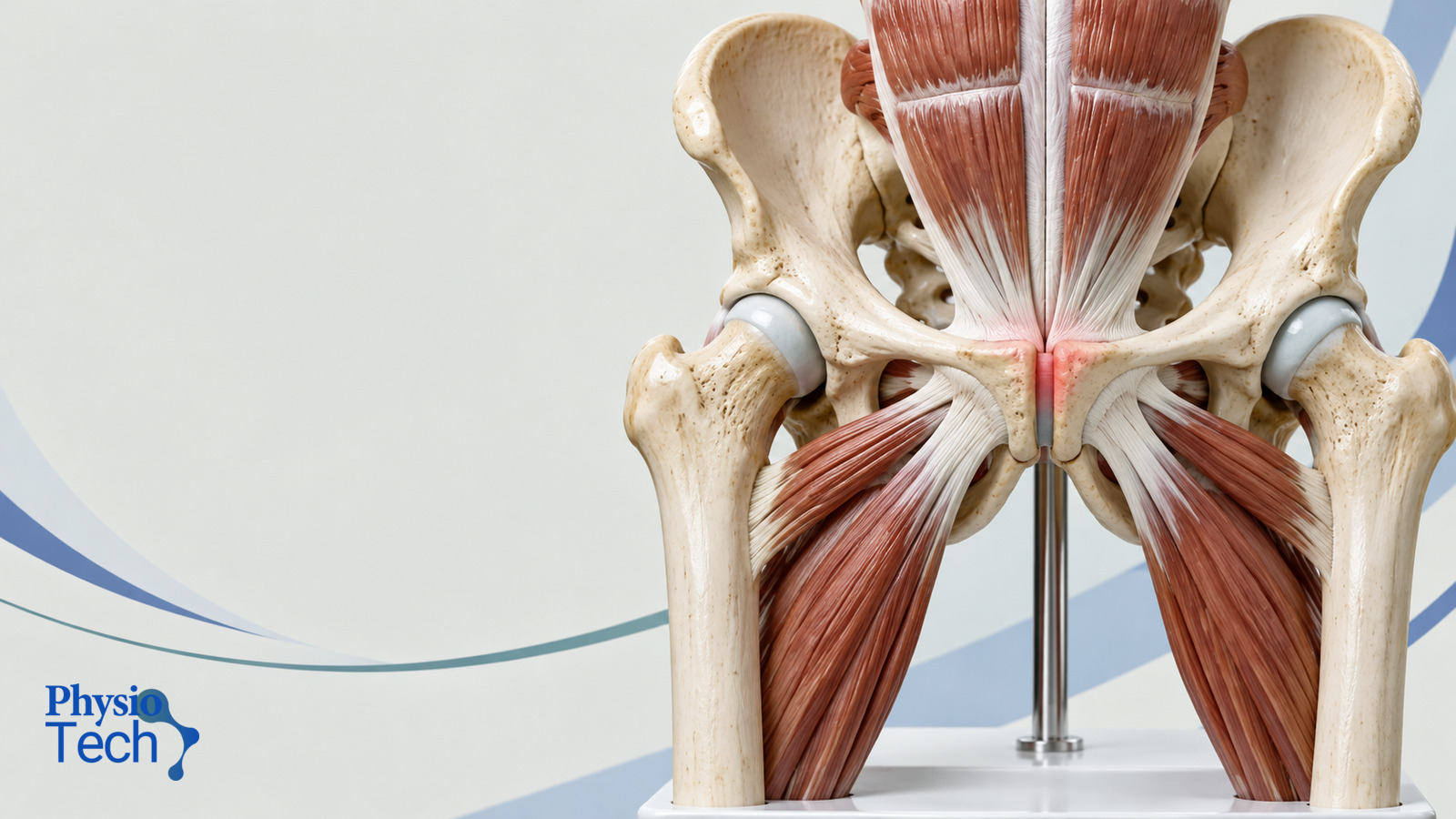
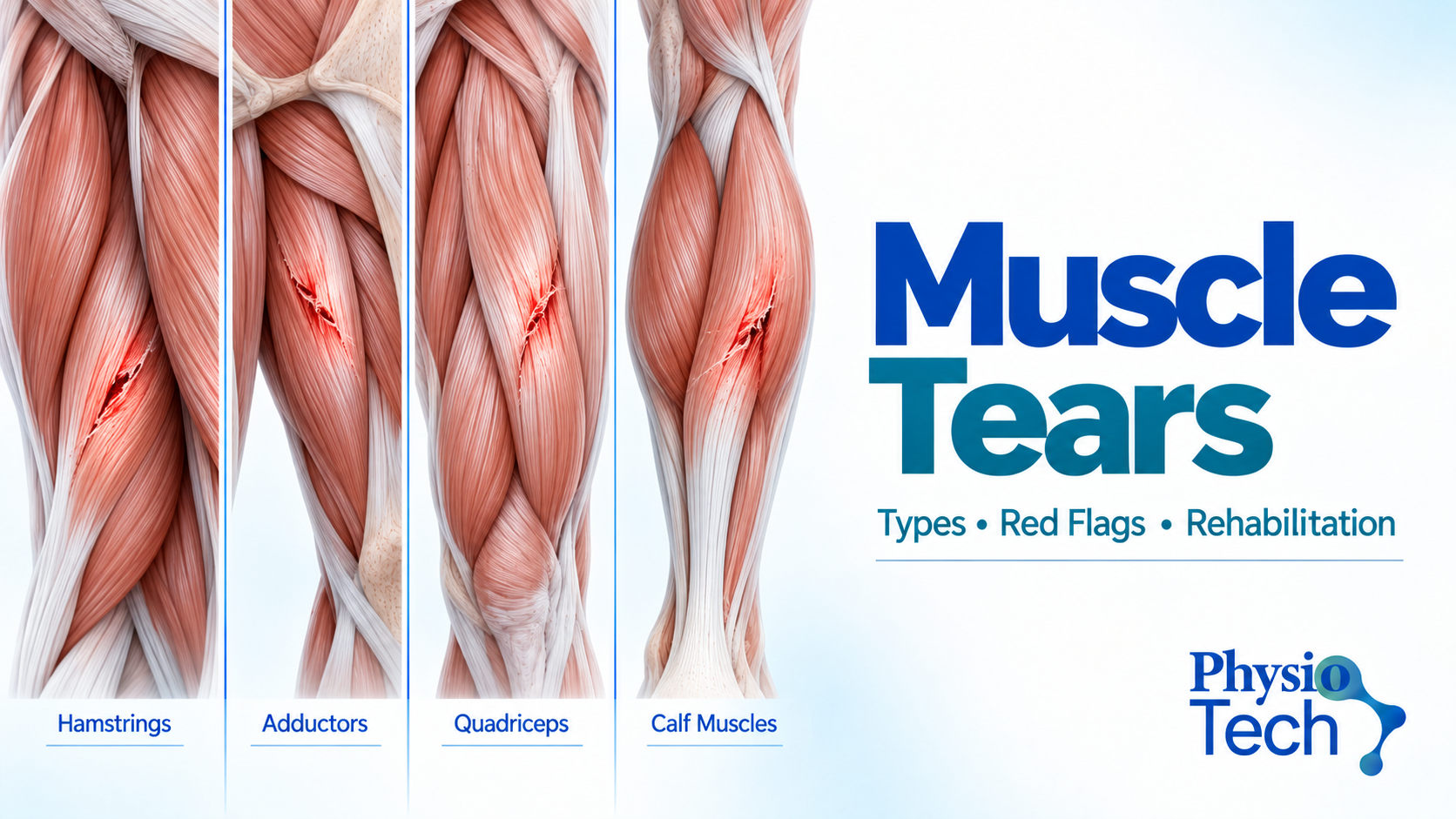
Hamstring strains often occur during sprinting, adductor tears during cutting or kicking, and quadriceps strains during sprinting or shooting. Each region has different functional demands and should have its own assessment.
Calf and lower leg
Calf injuries appear during push-off, acceleration and jumping. They must be distinguished from Achilles tendon injury and, when warning signs are present, deep-vein thrombosis.
Shoulder and rotator cuff
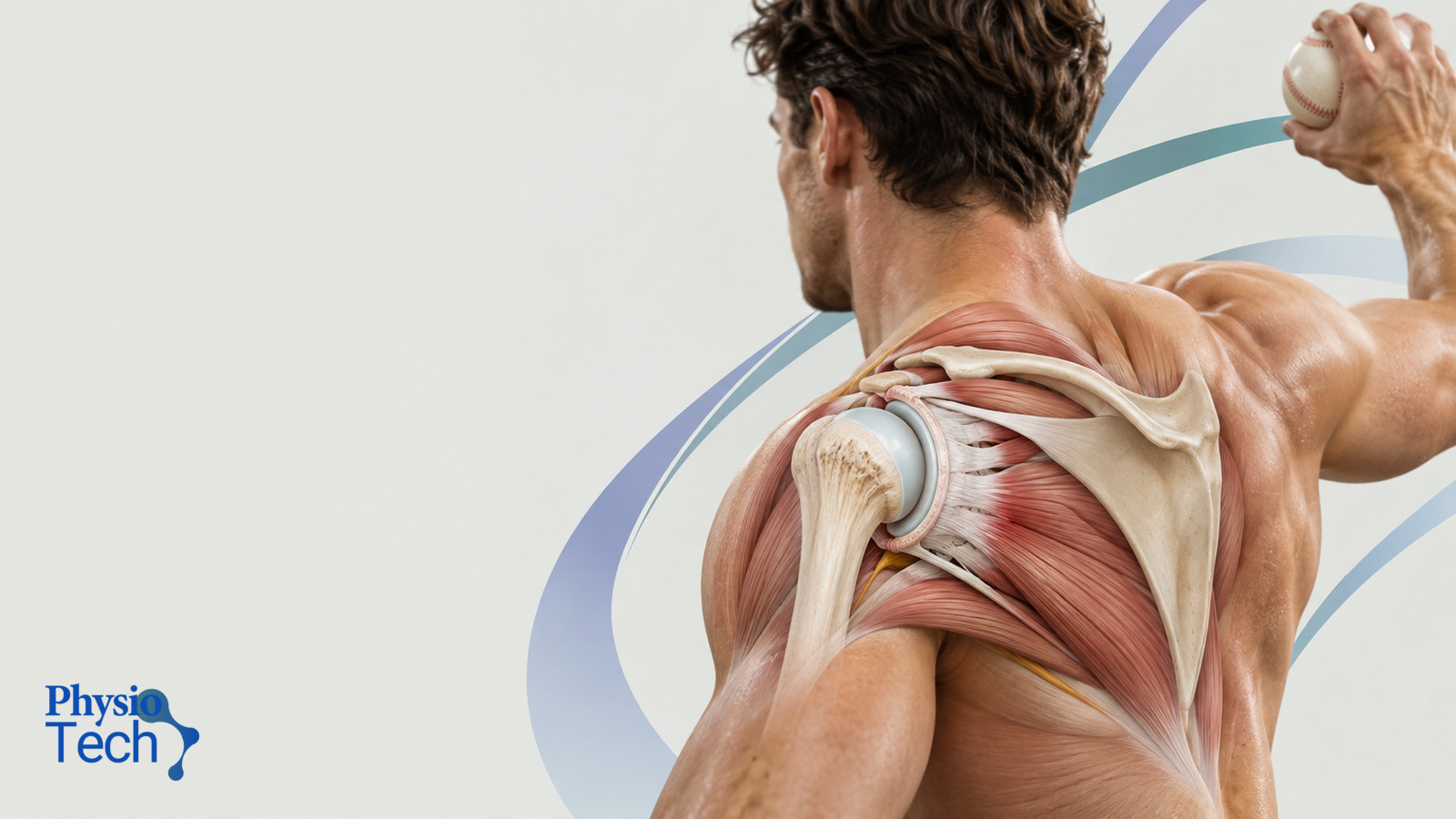
Many rotator-cuff tears primarily involve tendon rather than the muscle belly. Sudden weakness or an inability to raise the arm after trauma needs appropriate assessment.
Arm and chest
Biceps or pectoralis major injury may occur with heavy lifting or pressing. A pop followed by extensive bruising, a visible change in muscle shape and marked strength loss requires prompt medical assessment.
Abdominal and trunk muscles
The oblique or rectus abdominis can be injured during rotation, throwing or forceful coughing. Abdominal pain should not automatically be labelled muscular; severe pain or digestive or urinary symptoms require medical assessment.
Why grades are not the whole story
Injuries are often described as mild, partial or complete. However, muscle function, exact location, tendon involvement, activity demands and clinical progress determine rehabilitation. MRI grade alone should not set a fixed return date.
What to do initially
1. Stop the activity that produced sharp pain and avoid forcefully retesting the muscle.
2. Use temporary support if walking or limb use is unsafe.
3. Avoid aggressive massage or forced stretching over an acutely swollen or bruised area.
4. Seek assessment for major function loss, deformity, extensive bruising or unusual symptoms.
How physical therapy builds rehabilitation
Identify the pain source
Assessment determines whether the problem is muscular, tendinous, joint-related or neural, and measures motion, strength and function.
Progress loading
Exercise starts at a tolerable dose, then advances in resistance, range and speed. The plan evolves from basic contractions to strength, endurance and work- or sport-specific movement.
Return to activity
Running, jumping, lifting or throwing capacity is tested according to the injury. Success in daily activities does not automatically establish readiness for full-intensity sport.
Role of adjunct treatments
Manual therapy, dry needling, kinesio taping, electrotherapy and therapeutic ultrasound may help selected symptoms or movement limitations. They do not restore capacity alone and cannot replace assessment, exercise therapy and progressive loading.
When is urgent referral appropriate?
Prompt medical assessment is appropriate for inability to move a joint or bear weight, visible deformity or a palpable gap, rapidly extensive bruising, progressive numbness or weakness, calf swelling with shortness of breath or severe abdominal pain.
Frequently asked questions
Does every tear need MRI?
No. Imaging is most useful when it will change management or when a major tear, tendon injury or alternative diagnosis is suspected.
Is complete rest best?
Relative protection followed by graded movement and loading is usually more useful than prolonged complete rest.
Can recurrence be prevented?
No approach guarantees prevention, but restoring strength, speed and endurance while managing training load addresses modifiable risk factors.
When should I see a physical therapist?
When pain limits movement or sport, the injury recurs, progress stalls, or you need a measured return plan rather than trial and error.
Book an assessment at PhysioTech Clinic in Zahraa El Maadi for an individualized rehabilitation and return-to-activity plan.