Share:
86 views
#طقطقة لوح الكتف المؤلمة #Painful Snapping Scapula #علاج طبيعي #physiotherapy #Cairo
A grinding or snapping sensation beneath the shoulder blade can be alarming. When it hurts or limits overhead activity, the tissues between the scapula and rib cage may be irritated. Clicking without pain or loss of function is often much less concerning.
اقرأ المقال بالعربيةAt PhysioTech Clinic in Zahraa El Maadi, Cairo, treatment begins with the person’s symptoms, examination and goals rather than a technique selected from a label alone. This article explains the condition but cannot replace an individual assessment or urgent care when warning signs are present.
What Is Happening Anatomically?
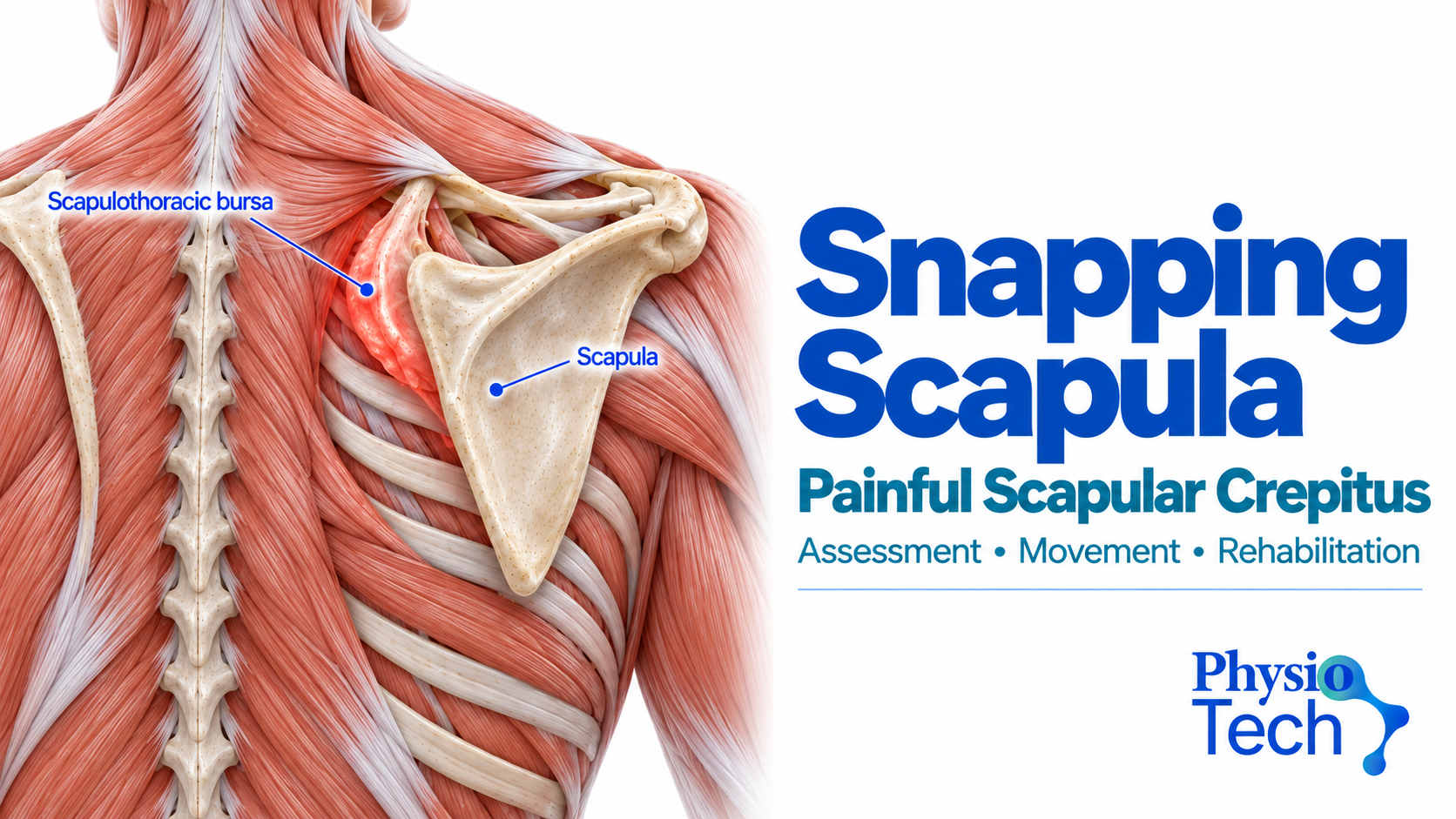
The scapula glides over the ribs, cushioned by soft tissue and bursae and controlled by several muscles. Bursal irritation, altered load or less commonly a bony variation may contribute to painful crepitus. This is distinct from an article on scapular dyskinesis, which describes movement rather than a specific painful interface.
Symptoms You May Notice
Pain can sit near the upper or inner scapular border with rough crepitus during arm elevation. Repeated overhead tasks, pressing exercises or a direct blow may trigger symptoms, but each story needs individual assessment.
How Is It Assessed?
We watch the actual movement that causes pain, examine the shoulder, neck, scapula and thoracic region, and measure relevant strength and workload. A mass, suspected bony problem or an atypical presentation warrants medical review and imaging when appropriate.
PhysioTech does not base a diagnosis on one scan or one provocative test. We connect the history with symptom distribution, daily behaviour, movement, strength and the tasks that matter to the patient. The working explanation is tested by changing a relevant load or treatment variable and measuring the response. If the findings do not fit, the diagnosis is reconsidered and the examination or referral pathway is expanded. This keeps care focused on measurable function rather than a label alone.
What Else Could It Be?
Rotator cuff disorders, glenohumeral problems and cervical referral may mimic this pain. A sound on examination does not by itself identify a bursa as the source.
Physiotherapy at PhysioTech
First Phase: Settle Provocative Load
An initial plan reduces provocative repetition without removing all activity. Scapular and shoulder endurance are built with graded pulling, pushing and overhead work. The exercise selection reflects the patient’s sport or job rather than an assumed universally correct scapular position.
Next Phase: Build Capacity
As symptoms settle, therapeutic exercise and graded loading are matched to your response and goals. Manual or symptom-relief techniques may be adjuncts when useful, but they do not replace exercise and repeated assessment. Recovery timelines vary with severity, health and activity demands.
A key part of the plan is understanding why each exercise was chosen and how to adjust its dose. We agree on an acceptable symptom response during activity, review what happens later and the next day, and then progress repetitions, resistance, speed or task complexity. The aim is not to make a session feel hard; it is to improve capacity for work, walking and sport without an escalating flare. Sleep, workload distribution, general health and confidence in movement are considered alongside local tissue loading.
Progression and Return to Activity
How Do We Measure Progress?
We track pain during meaningful tasks and the amount of work tolerated. Persistent painful snapping after structured rehabilitation or suspected structural pathology calls for specialist assessment.
What Can You Do at Home?
Avoid holding your shoulder blades rigidly all day. Log the loads and repetitions that aggravate symptoms and choose an intensity you can recover from.
When Is Medical Review Needed?
Severe pain after a fall, visible deformity, fever, enlarging mass or marked neurological weakness requires medical assessment.
Frequently Asked Questions
Is all scapular noise dangerous?
No. Painless clicking with normal function may need no treatment.
Is this the same as dyskinesis?
They can coexist, but painful scapulothoracic snapping is a different clinical question.
Do I need imaging?
History and examination determine whether imaging would change management.
Book an Assessment in Cairo
If Painful Snapping Scapula affects work, walking or sport, book an individual assessment at PhysioTech in Zahraa El Maadi, Cairo. We explain the findings clearly, decide whether physiotherapy is appropriate or medical referral is needed, and agree on measurable rehabilitation goals.