Share:
64 views
#اعتلال أوتار الشظية #Peroneal Tendinopathy
What Is Peroneal Tendinopathy?
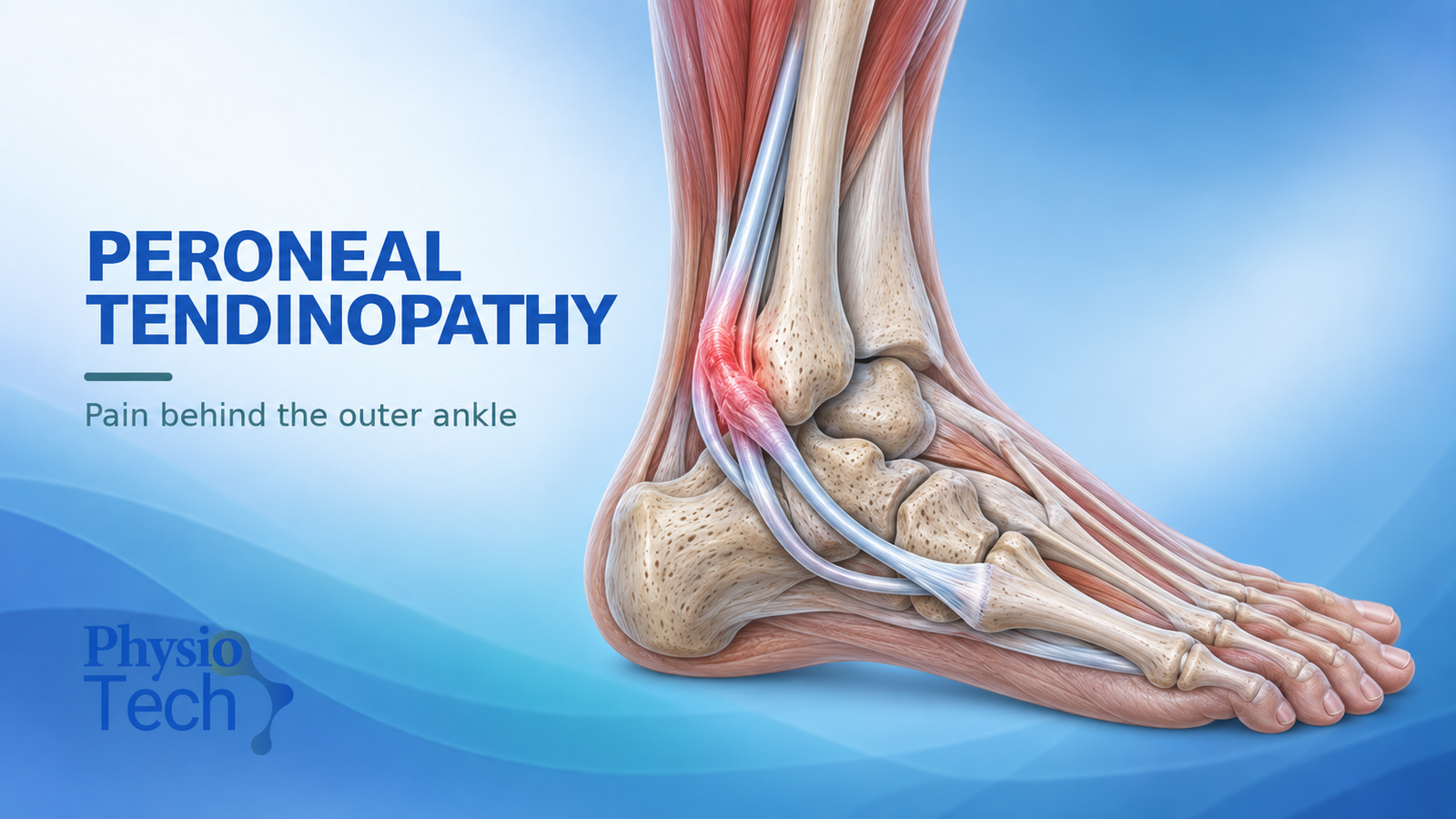
The peroneus longus and brevis tendons pass behind the outer ankle bone. They help control the foot and support the ankle during walking, running and changes of direction. Symptoms may develop when training load rises faster than the tendons can tolerate, after repeated ankle sprains, or following a rapid return to sport.
“Tendinopathy” does not necessarily mean a short-lived inflammatory problem. Persistent tendon pain may involve reduced load capacity, which is why prolonged complete rest is rarely a complete solution. The priority is to confirm the likely pain source and rebuild capacity progressively.
Common Symptoms
Symptoms may include:
• Pain behind or below the lateral malleolus.
• Pain during prolonged walking, running, jumping or cutting.
• Tenderness along the tendon path.
• Pain when pushing the foot outward against resistance.
• Reduced confidence or stability after previous ankle sprains.
Painful snapping, a sensation that a tendon is moving out of place, or marked swelling after an acute injury may indicate tendon instability or a tear and warrants appropriate medical assessment.
Why Pain Location Alone Is Not a Diagnosis
Outer ankle pain may also arise from the lateral ligaments, subtalar joint, fibula, a nerve, or a tendon tear. A scan finding or one tender spot should not be interpreted without the history and physical examination.
When Further Assessment Is Important
Seek medical review when weight bearing is not possible after trauma, there is deformity, major swelling, focal bone pain, progressive weakness, or persistent numbness. Imaging such as X-ray, ultrasound or MRI may be considered when the clinical findings indicate it.
How PhysioTech Assesses Outer Ankle Pain
At PhysioTech Clinic in Zahraa El Maadi, the assessment connects symptoms with movement, load and function. It considers injury history, training changes, footwear and previous ankle sprains rather than relying on a label alone.
Tendon, Ankle and Foot Examination
Assessment may include:
• Mapping pain and testing its response to movement and resistance.
• Measuring ankle and foot mobility.
• Testing the peroneal, calf, foot and hip muscles.
• Assessing single-leg balance and control.
• Observing walking, running, landing or cutting when relevant.
• Screening for instability or findings that require referral.
Identifying Modifiable Factors
Potential contributors include a sudden increase in running distance, sloped surfaces, reduced calf or peroneal capacity, limited ankle mobility, footwear changes or rapid return to sport. The plan targets factors demonstrated in the individual assessment rather than using the same checklist for everyone.
Physiotherapy Treatment
Load Management Without Prolonged Rest
Irritating activities may be adjusted temporarily while safe movement is maintained. The aim is not to avoid using the foot; it is to find a manageable load that settles symptoms without further reducing tendon capacity.
Strength and Progressive Loading
Exercise starts at a tolerable level and progresses according to response. It may include resisted eversion, calf raises, foot and hip strengthening, balance work, then hopping and change-of-direction tasks. Pain during activity, next-day response, strength and function help guide progression.
Manual Therapy and Mobility
Manual therapy may be relevant when an ankle or foot mobility restriction affects function. It is used to support movement within the wider programme and does not replace exercise or progressive loading.
Taping and Temporary Support
Kinesio taping or temporary ankle support may be considered in selected cases to improve comfort or confidence. These are adjuncts only and do not replace assessment, exercise therapy, graded loading and reassessment.
Returning to Running and Sport
Return is based on more than pain relief. The clinician may review brisk walking, single-leg calf raises, balance, hopping, landing and direction changes according to the patient’s sport. Distance, speed and lateral movements are reintroduced gradually while symptom response is monitored.
Peroneal Tendon Physiotherapy in Cairo and Maadi
PhysioTech Clinic in Zahraa El Maadi, Cairo provides individual assessment and measurable rehabilitation for outer ankle pain. The approach combines exercise therapy, load management and manual therapy when appropriate, with regular reassessment and a safe return to function.
Frequently Asked Questions
Is peroneal tendinopathy the same as an ankle sprain?
No. A sprain primarily affects ligaments, while peroneal tendinopathy affects tendons behind the outer ankle. They can occur together after the same injury, which is why examination matters.
Do I need an MRI?
Not everyone needs MRI. Clinical assessment may be sufficient. Imaging is more relevant when a tear, tendon instability, bone injury or an unexpected clinical course is suspected.
How long does recovery take?
It varies with symptom duration, irritability, activity demands and associated injuries. Progress is better judged by function, strength and response to loading than by a fixed timeline.
Can I keep running?
Some people can continue with adjusted distance, speed or frequency. The decision should reflect assessment findings and the symptom response during and after running.
Local CTA
If outer ankle pain keeps returning during walking or running, book an assessment at PhysioTech Clinic in Zahraa El Maadi to identify the likely source and build a progressive plan around your activity.
Suggested Internal Links
• Grade II Ankle Sprain Rehabilitation.
• Chronic Ankle Instability.
• Tarsal Tunnel Syndrome.
• Achilles Tendon Rehabilitation.
• Posterior Tibial Tendon Dysfunction.