Share:
59 views
#ألم قدم الإوزة بالركبة #Pes Anserine Pain
What Is the Pes Anserine Region?
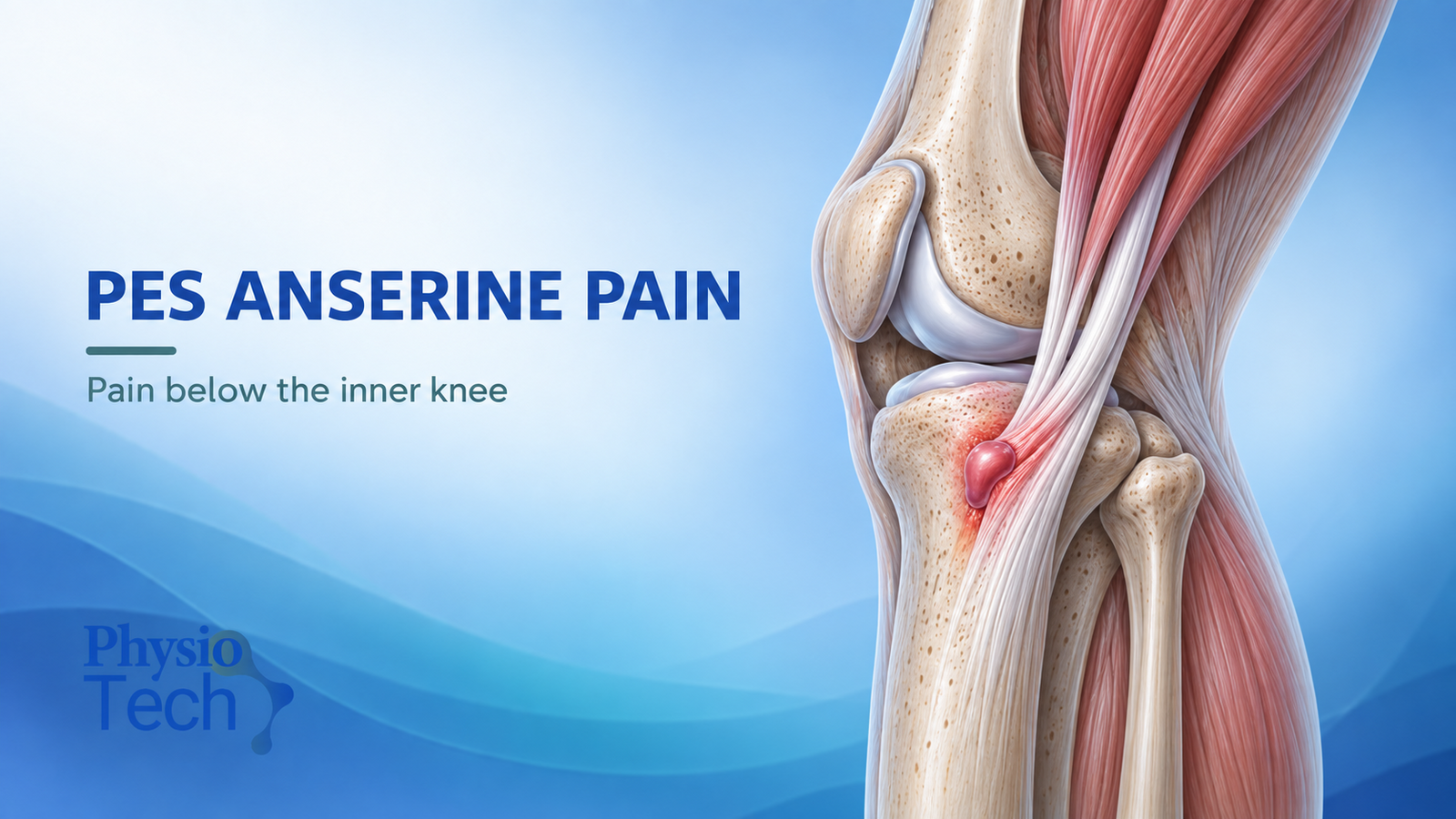
The pes anserinus is the combined insertion of the sartorius, gracilis and semitendinosus tendons on the upper inner tibia. A small bursa reduces friction nearby. Pain may therefore arise from the bursa, the tendons or surrounding tissues. “Pes anserine pain” can be more accurate than assuming that every case is confirmed bursitis.
Where Is the Pain and What Aggravates It?
Pain is usually felt on the inner upper shin, several centimetres below the knee joint line. It may increase with:
• Climbing or descending stairs.
• Rising from a chair.
• Running or a sudden increase in training.
• Resisted knee flexion.
• Side-lying with the knees pressing together in some cases.
Local tenderness is common. Marked swelling, redness and heat require medical assessment to exclude another cause.
What Can Mimic Pes Anserine Pain?
Similar symptoms may arise from the medial meniscus, medial collateral ligament, knee osteoarthritis, or referred pain from the hip or lower back. Inner knee location alone does not confirm the diagnosis.
When Medical Review Is Needed
Seek medical review after significant trauma, inability to bear weight, true knee locking, major swelling, redness and heat with fever, or progressive weakness or numbness.
How PhysioTech Assesses Inner Knee Pain
At PhysioTech Clinic in Zahraa El Maadi, assessment connects pain location and aggravating activities with knee, hip and functional testing. The aim is to identify the most likely pain source and relevant load factors rather than applying one label to every case of medial knee pain.
Distinguishing Tendon, Bursa and Joint Symptoms
Assessment may include:
• Mapping tenderness in relation to the knee joint line.
• Measuring knee and hip mobility.
• Testing hamstring, quadriceps, calf and hip strength.
• Assessing squatting, stairs, walking or running.
• Screening the meniscus and MCL when clinically indicated.
• Reviewing recent training volume, recovery and daily load.
Physiotherapy Treatment for Pes Anserine Pain
Activity Modification and Symptom Control
Highly provocative activities, such as repeated stairs or a sudden rise in running distance, may be reduced temporarily. This does not mean prolonged complete rest. Appropriate movement is maintained before load is rebuilt systematically.
Knee and Hip Strengthening
The programme may train the quadriceps, hamstrings, hip muscles and calf, then improve tolerance to squatting, stairs and running. Exercise selection and dosage follow the patient’s response rather than a fixed routine.
Mobility and Movement Control
When examination identifies a meaningful restriction at the knee, hip or ankle, manual therapy and mobility exercise may be used selectively. Stair or running mechanics may also be reviewed when they consistently reproduce symptoms.
Relevant Adjuncts
Kinesio taping, electrotherapy or therapeutic ultrasound may be considered in selected cases for short-term symptom relief. They are adjuncts and do not replace assessment, exercise therapy, graded loading and reassessment.
Are Imaging or Injections Always Required?
No. Many cases can be assessed clinically. Imaging may help when symptoms are atypical or another injury is suspected. Injection decisions require medical evaluation of diagnosis, risks and expected benefit; they should not replace management of load, strength and movement factors.
Returning to Stairs and Running
Progression is based on tolerance to walking, squatting and stairs without a sustained symptom increase. Speed, distance and effort are then increased gradually. Response during activity and the following day is reviewed using measurable goals.
Inner Knee Pain Treatment in Cairo and Zahraa El Maadi
PhysioTech Clinic in Zahraa El Maadi, Cairo provides individual assessment for medial knee pain. The treatment approach links symptoms with movement, identifies contributing factors, and uses measurable exercise therapy, progressive loading and manual therapy when appropriate.
Frequently Asked Questions
Does pes anserine pain always mean bursitis?
No. Symptoms may come from the bursa, tendons or another nearby structure. Clinical assessment helps identify the most likely source.
How is it different from a meniscus tear?
Pes anserine tenderness is usually below the joint line, while meniscal pain may sit on the joint line and include mechanical symptoms. Overlap occurs, so location alone is not enough.
Can exercise make it worse?
Appropriately dosed exercise aims to improve tissue capacity and knee function. A rapid increase or unsuitable dosage can irritate symptoms, which is why loading is monitored and progressed.
Can it occur with knee osteoarthritis?
Yes. Pain in this region may coexist with knee osteoarthritis. Assessment should clarify the likely symptom sources and functional limitations rather than assuming all pain comes from the bursa.
Local CTA
If inner knee pain limits stairs or running, book an assessment at PhysioTech Clinic in Zahraa El Maadi to identify the likely source and build a progressive plan around your needs.
Suggested Internal Links
• Medial Meniscus Tear.
• MCL Injury.
• Knee Osteoarthritis.
• Patellofemoral Pain Syndrome.
• Adductor Muscle Strain.