Share:
40 views
#ألم وتر الظنبوب الخلفي داخل الكاحل #Posterior Tibial Tendon Pain #علاج طبيعي #physiotherapy #Cairo
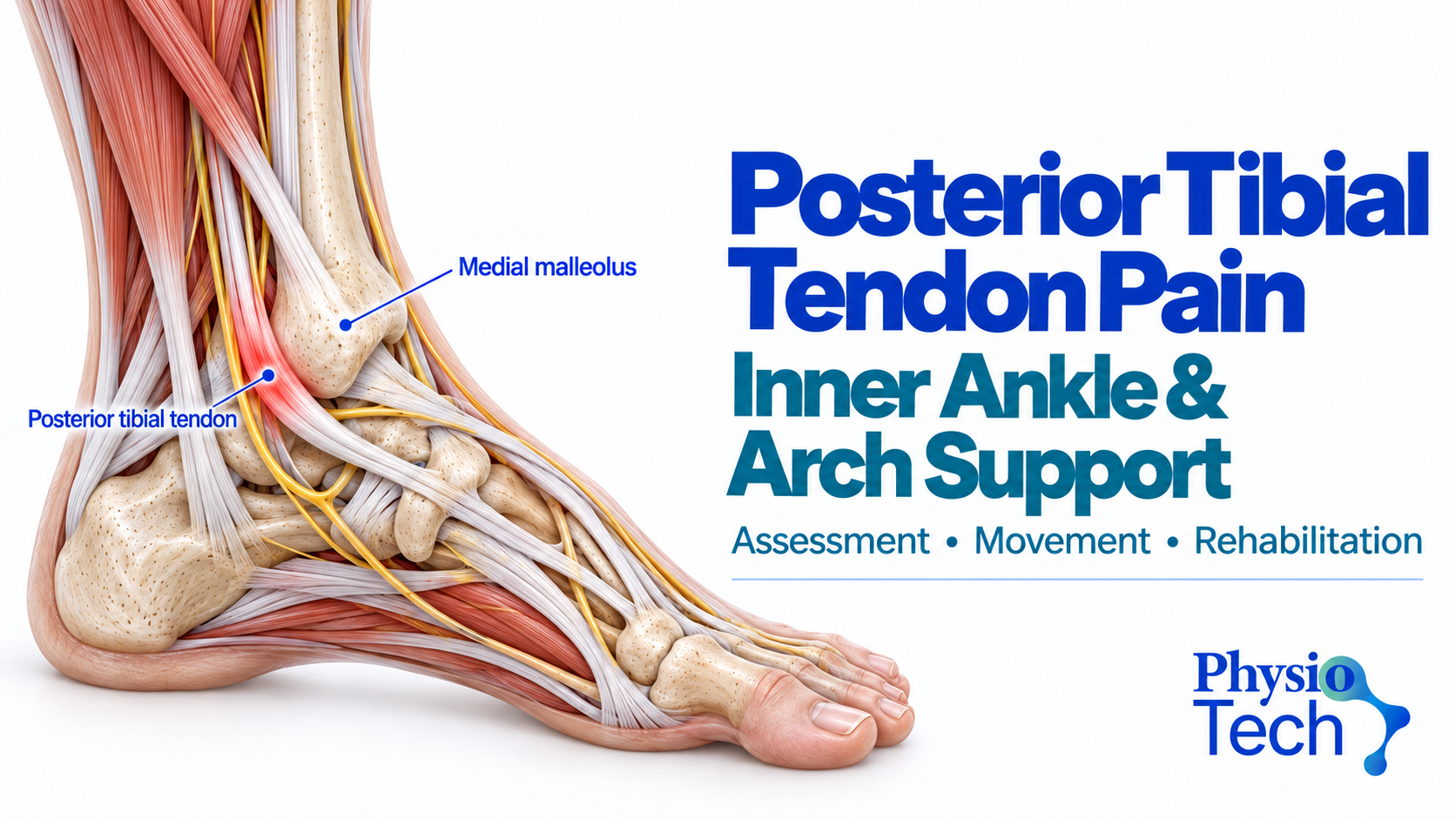
Pain behind the inner ankle bone or along the arch may involve the posterior tibial tendon. This structure helps support the foot during walking and heel raising, but not every inner ankle ache comes from the tendon.
اقرأ المقال بالعربيةAt PhysioTech Clinic in Zahraa El Maadi, Cairo, treatment begins with the person’s symptoms, examination and goals rather than a technique selected from a label alone. This article explains the condition but cannot replace an individual assessment or urgent care when warning signs are present.
What Is Happening Anatomically?
The tendon curves behind the medial malleolus and attaches to structures in the midfoot. Irritation can reduce walking tolerance and single-leg heel-rise capacity. In some people the arch changes progressively, which needs careful staging.
Symptoms You May Notice
Tenderness or swelling behind the inner ankle, fatigue during standing and difficulty with a single-leg heel raise are common clues. A static photo of a low arch does not determine the cause or severity by itself.
How Is It Assessed?
We assess local tenderness and swelling, foot alignment under load, ankle mobility, heel-rise performance and lower-limb strength. Questions include changes in walking, running, footwear, health conditions and the pace of any arch change.
PhysioTech does not base a diagnosis on one scan or one provocative test. We connect the history with symptom distribution, daily behaviour, movement, strength and the tasks that matter to the patient. The working explanation is tested by changing a relevant load or treatment variable and measuring the response. If the findings do not fit, the diagnosis is reconsidered and the examination or referral pathway is expanded. This keeps care focused on measurable function rather than a label alone.
What Else Could It Be?
Tibial nerve, deltoid ligament, joint and bony problems can cause similar pain. An acute tear or fixed deformity needs different specialist input from early tendinopathy.
Physiotherapy at PhysioTech
First Phase: Settle Provocative Load
In early presentations, temporary arch support and reducing provocative load may accompany progressive tendon and calf strengthening. Exercise is advanced from assisted heel rises toward functional tasks as tolerance improves. Neither orthoses alone nor severe pain during exercise is a complete rehabilitation strategy.
Next Phase: Build Capacity
As symptoms settle, therapeutic exercise and graded loading are matched to your response and goals. Manual or symptom-relief techniques may be adjuncts when useful, but they do not replace exercise and repeated assessment. Recovery timelines vary with severity, health and activity demands.
A key part of the plan is understanding why each exercise was chosen and how to adjust its dose. We agree on an acceptable symptom response during activity, review what happens later and the next day, and then progress repetitions, resistance, speed or task complexity. The aim is not to make a session feel hard; it is to improve capacity for work, walking and sport without an escalating flare. Sleep, workload distribution, general health and confidence in movement are considered alongside local tissue loading.
Progression and Return to Activity
How Do We Measure Progress?
Walking distance, heel-rise ability and next-day symptoms guide progression. Increasing swelling or changing foot shape should prompt reassessment and sometimes a foot-and-ankle specialist opinion.
What Can You Do at Home?
Use comfortable footwear for now, modify long walks or jumping that flare symptoms, and maintain activity that does not produce a next-day deterioration.
When Is Medical Review Needed?
An acute pop with loss of walking ability, marked swelling or rapid change in foot shape requires medical assessment.
Frequently Asked Questions
Does a flat arch prove the diagnosis?
No. Function and symptoms are more informative than appearance alone.
Are orthoses permanent?
Support is individualized and may be temporary alongside exercise.
When can I run again?
After walking and heel-rise capacity improve, with graded return.
Book an Assessment in Cairo
If Posterior Tibial Tendon Pain affects work, walking or sport, book an individual assessment at PhysioTech in Zahraa El Maadi, Cairo. We explain the findings clearly, decide whether physiotherapy is appropriate or medical referral is needed, and agree on measurable rehabilitation goals.