Share:
34 views
#قطع منشأ العضلة الخلفية #Proximal hamstring avulsion #تأهيل بعد جراحة العضلة الخلفية #ألم عظمة الجلوس #إصابات الملاعب
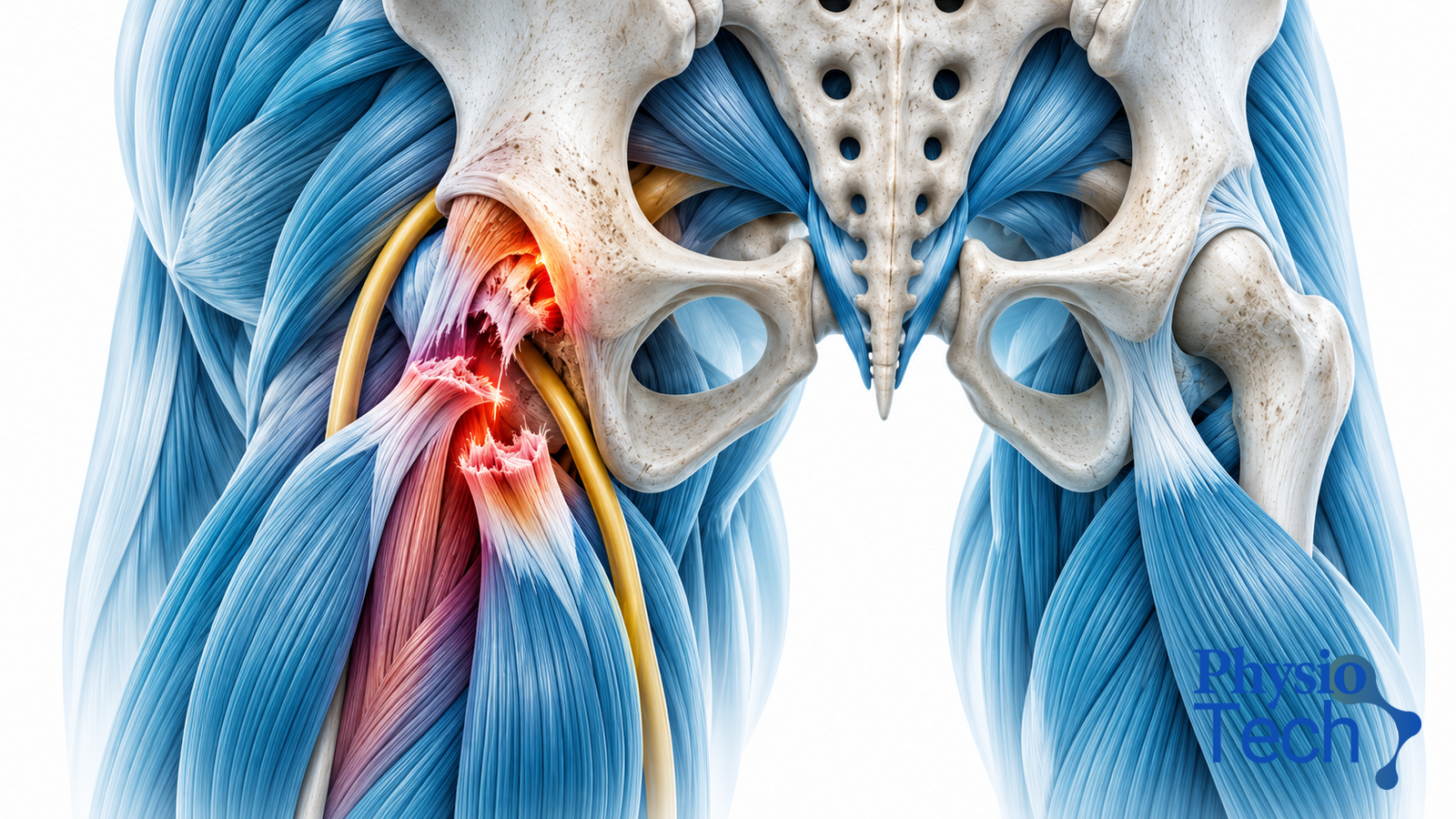
A proximal hamstring avulsion can occur during a slip or fall that forces hip flexion with knee extension. A pop, extensive bruising and difficulty sitting or walking may follow. Early assessment matters when multiple tendons may have detached.
اقرأ المقال بالعربيةThe following information is educational and does not replace an individual examination, especially after major trauma or when warning signs are present.
What Is the Condition?
Most hamstring tendons originate at the ischial tuberosity or sitting bone. Injury may be partial or complete, with variable tendon retraction. This differs from gradual tendinopathy or a mid-muscle strain.
Symptoms You May Notice
• A pop and sharp pain at the lower buttock.
• Bruising spreading down the posterior thigh.
• Pain with sitting and long-stride walking.
• Weak knee flexion or hip extension.
• Possible sciatic irritation or posterior-leg tingling.
Causes and Contributing Factors
Slips, falls and high-speed sport can cause acute avulsion, while tendon quality, age and previous injury may influence risk. Retraction, tendon number and activity goals affect management.
Conditions That Can Look Similar
Mid-muscle hamstring strain, chronic proximal tendinopathy, pelvic avulsion fracture, sciatic pain and hip-joint disorders.
How Is It Assessed at PhysioTech?
Mechanism, bruising and gait are reviewed, with cautious strength and sensory testing rather than aggressive stretching. Suspected complete or retracted tears need early orthopaedic review and imaging.
What Do We Measure?
After rehabilitation is cleared, wound status, weight bearing, gait and hip and knee motion are tracked, followed by knee-flexion and hip-extension strength, running, hopping and limb symmetry.
We record a meaningful task such as walking, running, stairs or reaching, the response during it and what happens later and the next day. Movement, strength, capacity and task quality are compared over time rather than judging progress only by short-term relief in the session.
When May Imaging or Medical Referral Be Needed?
A pop with extensive bruising and major weakness, increasing numbness, loss of foot control or inability to walk needs prompt medical review. Postoperative wound or clot symptoms are urgent.
Imaging is not required for every patient. It becomes important after major trauma, with warning signs, when progress is unexpectedly poor, or when the result would change loading, referral or surgical decisions. Imaging decisions are coordinated with the appropriate physician.
Proximal Hamstring Avulsion Treatment at PhysioTech
1. Protect the Area and Manage Load
After surgery, follow the surgeon’s brace, weight-bearing and stretch restrictions, train safe crutch use and maintain uninvolved capacity.
2. Restore Movement and Control
Restore gait and motion gradually without excessive early lengthening, adding specific hamstring activation when permitted.
3. Build Strength and Capacity
Progress from low-load contraction to resistance and eccentric work, hip and trunk strength and single-leg control while monitoring nerve and sitting symptoms.
4. Return to Activity or Sport
Return to running, sprinting and jumping uses strength, capacity and movement criteria, coordinated with the surgeon after repair.
A central part of care is understanding why each exercise was chosen and how to adjust the dose. We agree on an acceptable symptom response, then progress repetitions, resistance, speed or task complexity. We do not promise a fixed recovery date because injury severity, general health and activity demands vary.
The PhysioTech Treatment Philosophy in Cairo
At PhysioTech Clinic in Zahraa El Maadi, Cairo, care starts with assessment rather than an imaging label alone. We connect symptom behaviour with movement, strength, capacity and work or sport demands, record clear baseline measures and retest them. Manual therapy, dry needling, kinesio taping, electrotherapy or therapeutic ultrasound may be used for a defined purpose, but they do not replace education, therapeutic exercise and graded loading.
The attachment is protected early, then loading is progressed transparently instead of remaining fearful of the muscle. Criteria matter more than copying a fixed week.
Red Flags That Need Prompt Medical Review
Increasing leg weakness or numbness, foot drop, wound heat or discharge, sudden calf swelling, breathlessness, or a new pop with strength loss.
Frequently Asked Questions
Does every avulsion need surgery?
No. Tendon number, retraction, nerve findings and activity goals guide specialist decisions.
Why is early stretching restricted?
Excessive lengthening may stress the repair before adequate healing.
When can running restart?
After movement, strength and load criteria are met with team clearance, not on one universal date.
When Should You Book an Assessment?
After an acute proximal hamstring injury or repair, book staged rehabilitation at PhysioTech in Zahraa El Maadi, Cairo.
Trusted References
• pmc.ncbi.nlm.nih.gov
• ortho.wisc.edu