Share:
66 views
#كتف #تمزق أوتار #كفة مدورة #علاج طبيعي #المعادي
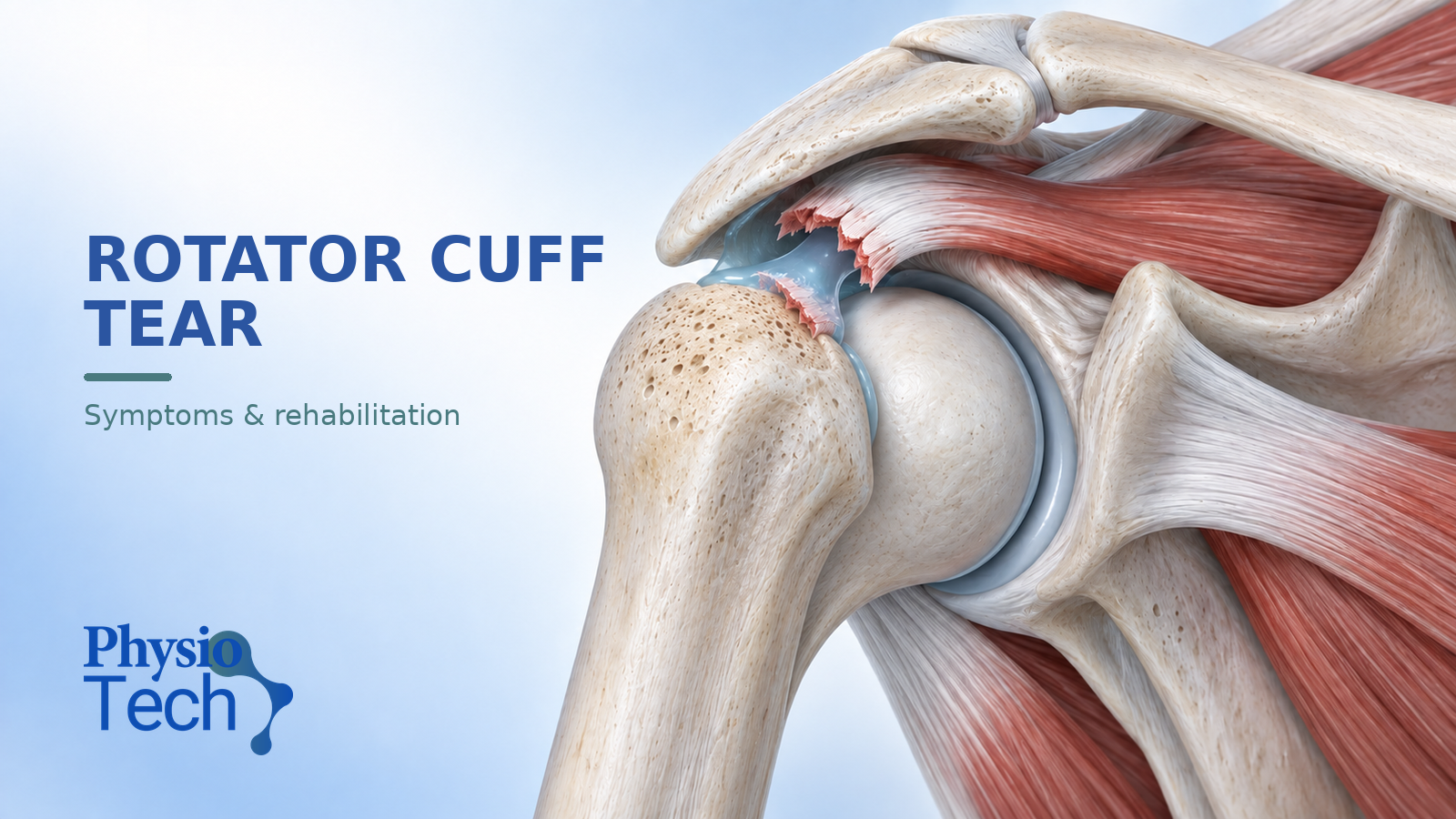
A rotator cuff tear is a partial or complete disruption of one or more tendons that stabilize the shoulder and help lift and rotate the arm. It may follow a sudden injury or develop gradually with age and repeated loading. A tear on imaging does not automatically mean surgery is required; symptoms, strength, function, tear characteristics, and personal goals all matter.A rotator cuff tear is a partial or complete disruption of one or more tendons that stabilize the shoulder and help lift and rotate the arm. It may follow a sudden injury or develop gradually with age and repeated loading. A tear on imaging does not automatically mean surgery is required; symptoms, strength, function, tear characteristics, and personal goals all matter.
اقرأ المقال بالعربيةCommon symptoms
Typical features include pain over the side of the shoulder or upper arm, night pain, discomfort when lying on the affected side, weakness when lifting or lowering the arm, and difficulty dressing or reaching overhead. A traumatic tear may cause sudden pain, marked weakness, or an inability to raise the arm.
Tear versus tendinopathy
Tendinopathy can be painful while the tendon fibers remain connected, whereas a tear involves partial or complete fiber disruption. Pain intensity alone does not reveal tear size, and some tears seen on scans cause little disability. Assessment should connect the history, strength, movement, and daily function rather than relying on imaging alone.
When to seek prompt medical assessment
Seek prompt assessment after a fall or dislocation, with sudden weakness, inability to lift the arm, deformity, or major swelling. Persistent night pain and weakness despite activity modification also deserve review, as do significant numbness or neck symptoms extending into the arm.
Assessment at PhysioTech
We review how symptoms started and which tasks provoke them, then examine shoulder and neck movement, rotator cuff and shoulder-blade strength, and tolerance for pushing, pulling, and lifting. Existing ultrasound or MRI findings are interpreted in context. Referral to a shoulder specialist may be recommended when examination suggests a large acute tear or progressive weakness.
Physiotherapy and progressive loading
Rehabilitation usually begins with load management and temporarily modifying highly provocative movements without completely resting the arm. Exercises then restore range, develop rotator cuff and scapular strength, and rebuild the capacity required for work, gym training, or sport. Manual techniques may help symptoms and movement but do not replace progressive exercise.
Is surgery always needed?
Many rotator cuff tears can be managed without surgery when pain and function improve through rehabilitation. Surgical review is more likely after a major acute injury, with substantial weakness, a large tear, or persistent disability despite an appropriate program. The decision should be shared between the patient, shoulder surgeon, and rehabilitation team.
Book a shoulder assessment in Maadi
If shoulder pain or weakness is limiting sleep, work, or training, book an individual assessment at PhysioTech Clinic in Zahraa El Maadi, Cairo. We identify the main impairments, measure movement and strength, and build a trackable plan with medical referral when needed.
Medical source
This article draws on patient guidance from the American Academy of Orthopaedic Surgeons on rotator cuff tears. It is educational and does not replace individual diagnosis.